
By Aina Arif | Updated June 2026 | 11 min read
Why Learning Games Are One of the Best Ways to Teach Kids
Children are naturally curious.
They love to explore, ask questions, move around, and discover new things. When learning is presented as a game instead of a lesson, children participate with excitement instead of feeling pressured.
That’s why learning games are so effective.
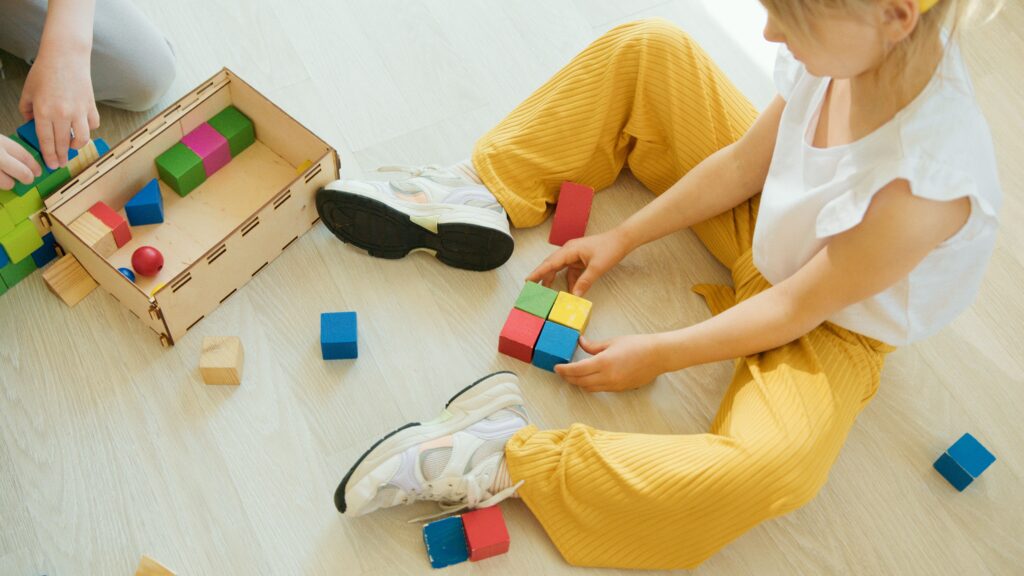
They combine education with fun, helping children develop important skills while enjoying the experience. Research shows that play-based learning supports children’s cognitive, social, emotional, and physical development because they learn best when they are actively engaged.
Whether your child is a toddler, preschooler, or early elementary learner, these simple games can turn everyday moments into valuable learning opportunities.
Let’s explore five fun learning games that are easy to play at home.
🎯 Game 1: Alphabet Treasure Hunt
🎯 Mission of the Day
Can your child become an alphabet explorer?
🧺 What You’ll Need
- Alphabet flashcards (optional)
- Paper and marker
- Household objects
🌱 How to Play
Choose one letter.
For example:
Today’s Letter: S
Now challenge your child to find objects around the house that begin with that letter.
Examples:
- Spoon
- Sock
- Soap
- Shoe
Each time they find an object, ask them to say its name aloud and repeat the beginning sound.
You can also ask:
- What color is it?
- What do we use it for?
🧠 Skills Developed
- Letter recognition
- Phonics awareness
- Vocabulary
- Observation
- Speaking skills
⭐ Easy Level
Find three objects.
🚀 Next Challenge
Choose two different letters and sort objects into the correct groups.
🧩 Game 2: Puzzle Challenge
🎯 Mission of the Day
Can your child solve today’s puzzle?
🧺 What You’ll Need
- Jigsaw puzzles
- Homemade paper puzzles
- Shape puzzles
- Wooden puzzles
🌱 How to Play
Start with an age-appropriate puzzle.
Allow your child to:
- Look at the picture.
- Find matching edges.
- Group similar colors.
- Complete the puzzle independently whenever possible.
Instead of giving answers, ask helpful questions like:
“Where do you think this piece belongs?”
🧠 Skills Developed
- Problem-solving
- Visual memory
- Concentration
- Patience
- Logical thinking
⭐ Easy Level
Use puzzles with 6–12 pieces.
🚀 Next Challenge
Complete a larger puzzle while using a timer.
🎨 Game 3: Color and Shape Sorting
🎯 Mission of the Day
Can your child organize everyday objects?
🧺 What You’ll Need
Household items like:
- Building blocks
- Buttons
- Bottle caps
- Pom-poms
- Toy animals
🌱 How to Play
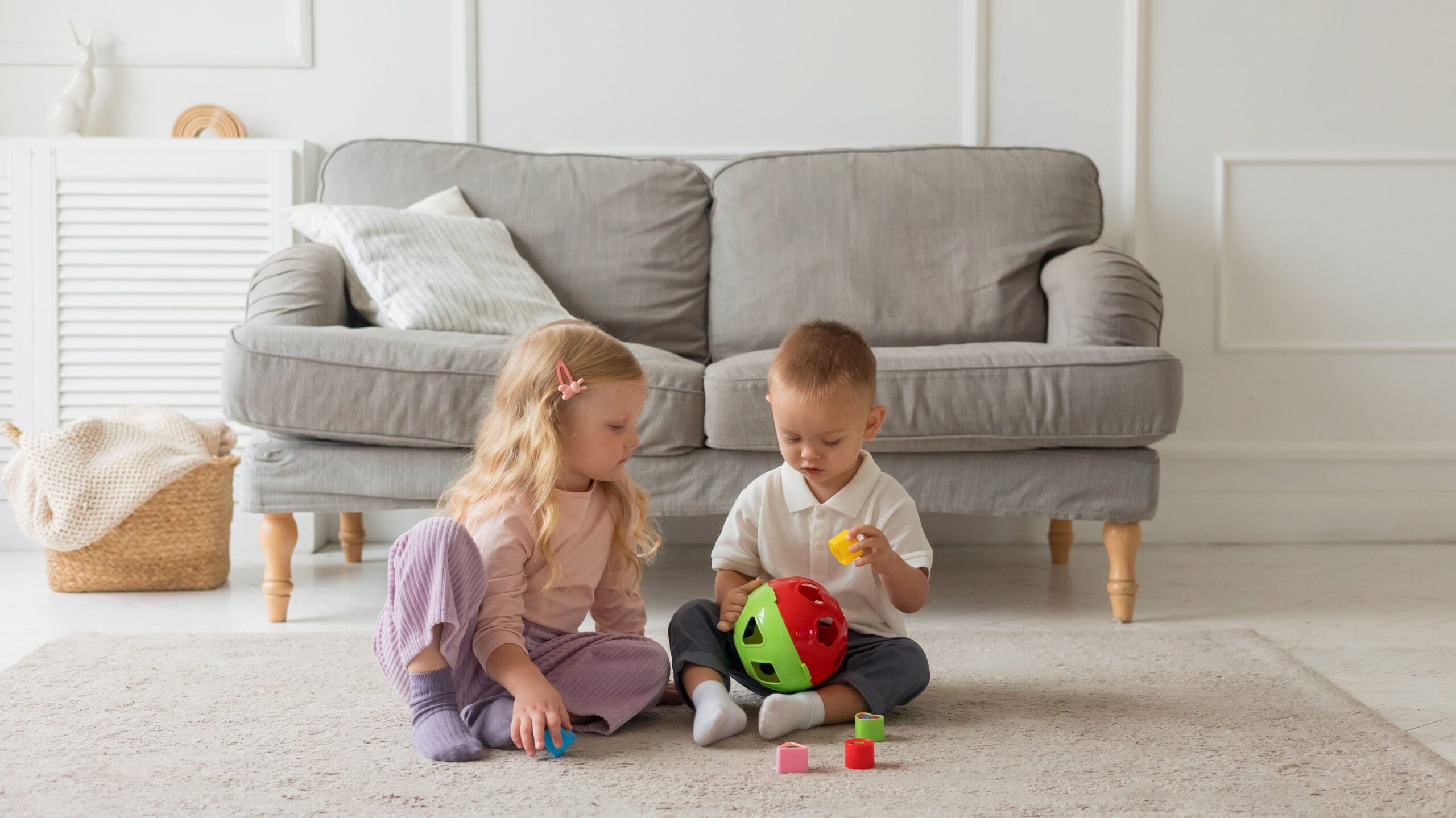
Mix all the objects together.
Ask your child to sort them by:
- Color
- Shape
- Size
- Material
After sorting, ask questions such as:
- Which group has the most objects?
- Which group has the fewest?
- Can you count each group?
🧠 Skills Developed
- Classification
- Counting
- Observation
- Early math skills
- Logical reasoning
⭐ Easy Level
Sort by one color only.
🚀 Next Challenge
Sort by two different features, such as color and size.
🎭 Game 4: Pretend Play Adventure
🎯 Mission of the Day
Can your child learn through imagination?
🧺 What You’ll Need
Simple household items such as:
- Toy phone
- Empty food boxes
- Dress-up clothes
- Toy doctor kit
- Shopping bag
🌱 How to Play
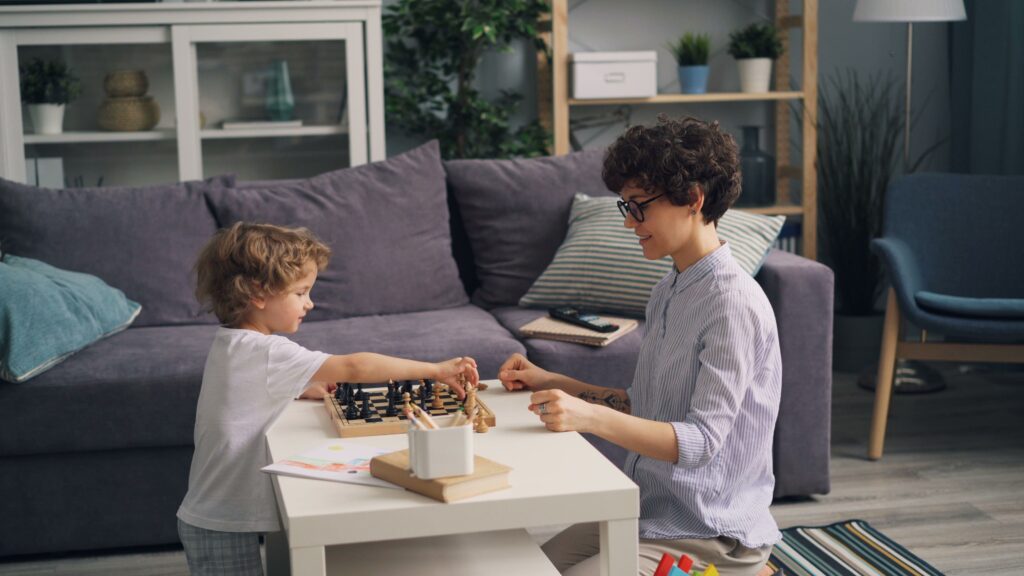
Create a pretend situation.
Ideas include:
- Grocery store
- Hospital
- Restaurant
- School
- Space mission
- Zoo
Join your child in the role-play.
Encourage conversations and let your child lead the story whenever possible.
Pretend play strengthens communication while allowing children to explore real-life situations in a safe and creative way.
🧠 Skills Developed
- Language development
- Creativity
- Social skills
- Emotional understanding
- Confidence
⭐ Easy Level
Play one simple role.
🚀 Next Challenge
Create an entire pretend town together.
🏃 Game 5: Action Word Challenge
🎯 Mission of the Day
Can your child move while learning?
🧺 What You’ll Need
No materials.
🌱 How to Play
Call out action words.
For example:
- Jump
- Clap
- Crawl
- Spin
- Hop
- Wave
- Stretch
- March
Your child performs the action immediately.
After several rounds, allow your child to become the leader.
Older children can combine several actions into one sequence.
Example:
“Jump, clap, spin, then sit.”
🧠 Skills Developed
- Listening skills
- Vocabulary
- Gross motor skills
- Memory
- Coordination
⭐ Easy Level
Use one action at a time.
🚀 Next Challenge
Create action sequences with five or more movements.
🌟 Why Learning Games Are So Effective
Unlike traditional lessons, games encourage children to explore, experiment, and solve problems without worrying about making mistakes.
Play-based learning helps children develop critical thinking, creativity, communication, and confidence while keeping them motivated to learn. Children are often more engaged and remember concepts better when learning feels enjoyable and meaningful.
💙 Parent Reminder
You don’t need expensive educational toys to help your child learn.
Simple household items, everyday conversations, and a few minutes of playful interaction can create meaningful learning experiences that children will remember.
✅ Learning Progress Checklist
Celebrate today’s achievements:
✔ Recognized letters and sounds
✔ Solved a puzzle independently
✔ Sorted objects correctly
✔ Used imagination during pretend play
✔ Followed action-word instructions
Game 6: Rhyming Word Challenge
🎯 Mission of the Day
Can your child discover words that sound alike?
🧺 What You’ll Need
No materials are required.
🌱 How to Play
Say a simple word and ask your child to think of another word that rhymes.
For example:
- Cat → Hat
- Ball → Tall
- Sun → Fun
- Bee → Tree
If your child is just beginning, give two options and let them choose the correct rhyme.
Example:
Which word rhymes with “Dog”?
- Log ✅
- Fish ❌
Rhyming games make children more aware of sounds in words, an important skill for early reading.
🧠 Skills Developed
- Phonemic awareness
- Vocabulary
- Listening skills
- Reading readiness
- Language development
⭐ Easy Level
Practice with three rhyming pairs.
🚀 Next Challenge
Create a funny rhyming sentence together.
🔢 Game 7: Number Bingo
🎯 Mission of the Day
Can your child find the correct number first?
🧺 What You’ll Need
- Homemade bingo cards
- Marker or crayons
- Small buttons or coins as markers
🌱 How to Play
Create a simple bingo card with numbers.
Call out numbers one by one.
Your child covers the matching number on the card.
The first player to complete a row wins.
For older children, call out simple math problems instead of numbers.
Example:
“What is 4 + 3?”
Your child covers 7.
🧠 Skills Developed
- Number recognition
- Mental math
- Listening
- Concentration
- Quick thinking
⭐ Easy Level
Use numbers from 1–10.
🚀 Next Challenge
Use numbers up to 100 or include multiplication facts.
🌍 Game 8: Around-the-House Science Hunt
🎯 Mission of the Day
Can your child become a young scientist?
🧺 What You’ll Need
- Magnifying glass (optional)
- Notebook (optional)
🌱 How to Play
Challenge your child to find examples of science in everyday life.
Ask them to look for:
- Something that floats
- Something magnetic
- Something smooth
- Something rough
- Something made of wood
- Something made of metal
Discuss why each object fits the category.
Encourage your child to ask questions and make predictions before testing their ideas.
🧠 Skills Developed
- Observation
- Scientific thinking
- Vocabulary
- Critical thinking
- Curiosity
⭐ Easy Level
Find three different objects.
🚀 Next Challenge
Conduct a simple experiment using one of the objects you found.
🧠 Game 9: Mystery Bag Guessing Game
🎯 Mission of the Day
Can your child identify an object without looking?
🧺 What You’ll Need
- A cloth bag or pillowcase
- Small household objects
Examples:
- Spoon
- Toy car
- Block
- Ball
- Key
- Hairbrush
🌱 How to Play
Place one object inside the bag.
Without looking, your child reaches inside and feels the object.
Ask questions like:
- Is it smooth or rough?
- Is it hard or soft?
- Is it round or square?
Finally, let them guess the object before taking it out.
🧠 Skills Developed
- Sensory awareness
- Vocabulary
- Memory
- Problem-solving
- Observation
⭐ Easy Level
Use familiar objects.
🚀 Next Challenge
Place several objects in the bag and guess them one by one.
📖 Game 10: Story Builder Dice
🎯 Mission of the Day
Can your child create an exciting story?
🧺 What You’ll Need
- One die
- Paper with six story ideas
Example:
- Dinosaur
- Pirate
- Princess
- Robot
- Jungle
- Space
🌱 How to Play
Roll the die.
Whatever number appears becomes the story theme.
Now ask your child to create a story using that topic.
To make it more exciting, roll again for:
- A character
- A place
- A problem
- A surprise ending
Every game creates a completely different story.
🧠 Skills Developed
- Creativity
- Storytelling
- Speaking confidence
- Imagination
- Vocabulary
⭐ Easy Level
Tell a story with three simple events.
🚀 Next Challenge
Write and illustrate the story together.
🌟 Tips for Making Learning Games More Effective
Children learn best when they are actively involved, so focus on creating a positive and relaxed environment.
Here are a few simple tips:
- Keep games short and enjoyable.
- Choose activities based on your child’s interests.
- Mix quiet games with active movement.
- Let your child make choices whenever possible.
- Celebrate effort, not just correct answers.
- Repeat favorite games to build confidence.
- End each session with praise and encouragement.
Learning should feel like an adventure, not a test.
💙 Parent Reminder
Your child doesn’t need to master every skill in one day.
Some days they may solve puzzles quickly.
Other days they may simply enjoy pretending, exploring, or asking questions.
Every playful moment contributes to their growth.
Stay patient, stay encouraging, and remember that small daily experiences often have the biggest impact over time.
🌈 Final Thoughts
The most valuable learning games aren’t necessarily the most expensive or complicated.
They are the games that spark curiosity, invite conversation, and encourage children to think, move, and create.
Whether you’re building stories, hunting for letters, solving puzzles, or pretending to run a grocery store, you’re helping your child develop skills that extend far beyond academics.
Learning becomes meaningful when children are engaged, supported, and having fun.
So keep playing, keep exploring, and enjoy the wonderful journey of learning together.
❓ Frequently Asked Questions
What age are learning games suitable for?
Learning games can be adapted for children of almost any age. Toddlers enjoy simple matching and movement games, while older children can handle more advanced problem-solving, reading, and math activities.
How often should we play learning games?
Aim for 15–30 minutes of learning games each day, depending on your child’s age and attention span. Even a few short sessions each week can make a positive difference.
Can learning games replace worksheets?
Learning games are an excellent complement to traditional learning. They help children understand concepts through hands-on experiences, making lessons more engaging and memorable.
What if my child loses interest during a game?
Switch to a different activity, include movement, or let your child choose the next game. Following their interests helps keep learning enjoyable and reduces frustration.
📚 References
- American Academy of Pediatrics – The Importance of Play
- UNICEF Parenting – Learning Through Play
- Harvard Center on the Developing Child – Play and Brain Development
- National Association for the Education of Young Children (NAEYC) – Developmentally Appropriate Practice
- TrustedCare – Benefits of Play-Based Learning
🌟 Continue Exploring on NatureNestia
- Easy Math Games for Kids at Home
- Best Memory Games for Kids at Home
- Fun English Learning Games for Kids at Home
- Educational Games for Kids Without Materials
- Screen-Free Activities for Kids at Home
- Problem-Solving Activities for Kids at Home

Aina Arif is a mother of two young children and the founder of NatureNestia. Based in Pakistan, she spent three years as an early childhood educator before becoming a full-time parent and writer. She writes about learning through play, managing difficult behaviour, and building strong family bonds.