

A backyard scavenger hunt is one of the simplest ways to get kids outside, moving, and learning without them even realizing it. All it takes is a list and a few minutes to set up, and you can reuse the idea again and again by changing the items. Here’s how to run one, plus 15 ready-to-use lists for different ages and themes.
Age group: 2 to 10 years
Time needed: 15 to 30 minutes
Cost: Free
Mess level: None to low
Why Scavenger Hunts Are Great for Kids
- Observation skills: Kids learn to really look at their surroundings instead of walking past them.
- Vocabulary building: Naming colors, shapes, textures, and nature items expands language skills.
- Physical activity: Searching, bending, and walking around the yard counts as active play.
- Problem solving: Figuring out where to look builds early reasoning skills.
- Independence: Older kids can do it solo, which also gives parents a short break.
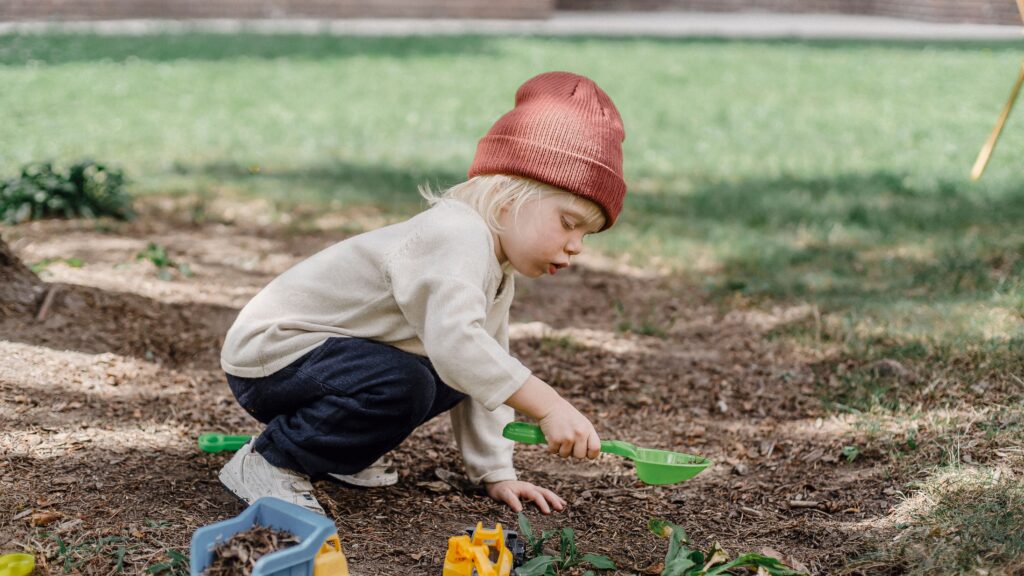
How to Set Up a Scavenger Hunt
Step 1: Choose a List
Pick one themed list below, or mix items from several. Keep it to 8 to 12 items for younger kids and up to 15 to 20 for older ones.
Step 2: Make It Visual for Younger Kids
For toddlers and preschoolers who can’t read yet, draw simple pictures or use printed photos next to each word instead of plain text.
[Add your photo: a printed or hand-drawn scavenger hunt sheet]
Step 3: Give Each Child a Bag or Basket
A small bag, bucket, or basket makes collecting items (where allowed) more exciting and keeps their hands free while searching.
Step 4: Set Boundaries
Before starting, point out where they can and cannot go, such as staying in the yard or avoiding the vegetable patch.
Step 5: Start the Hunt
Let them go at their own pace. Join in for younger children, or set a timer for older kids who enjoy a bit of competition.
[Add your photo: your child mid-hunt, checking off an item]
Step 6: Check Off Items Together
When they find something, have them cross it off the list or place it in the basket. Talk about each item: its color, shape, or where they found it.
15 Scavenger Hunt Lists
1. Nature Scavenger Hunt (Classic)
A leaf, a stick, a flower, a rock, a feather, an ant, a pinecone, grass, a weed, a worm or its tunnel.
2. Color Scavenger Hunt
Something red, something yellow, something green, something brown, something white, something you can’t name the color of.
3. Shape Scavenger Hunt
Something round, something pointy, something flat, something bumpy, something straight, something curved.

4. Texture Scavenger Hunt
Something smooth, something rough, something soft, something prickly, something wet, something dry.
5. Alphabet Scavenger Hunt
Find something starting with each letter of your child’s name, or the first five letters of the alphabet (A for ant, B for branch, and so on).
6. Counting Scavenger Hunt
Find 3 leaves, 5 small stones, 2 flowers, 1 feather, 4 blades of long grass, 6 pebbles.
7. Insect Hunt
An ant, a spider or web, a ladybug, a bee (observe from a distance), a butterfly, a beetle.
8. Sound Scavenger Hunt
Find a place where you can hear a bird, the wind in leaves, an insect buzzing, a dog barking, a car passing, silence for 10 seconds.
9. Sky Scavenger Hunt
A cloud shaped like something, a bird flying, the sun’s position, a tree taller than the house, something moving in the wind.
10. Senses Hunt
Something that smells nice, something rough to touch, something that makes a sound when shaken, something shiny, something that feels cool.
11. Garden Helper Hunt
A weed to pull, a dry leaf to pick up, a toy to put away, a stone to move off the path, litter to throw away.
12. Seasonal Hunt (Autumn Example)
A fallen leaf, an acorn, a pinecone, a dry twig, a leaf that has changed color, a spider web.
13. Measurement Hunt
Something longer than your hand, something shorter than your finger, something as big as your foot, something heavier than a stone.
14. Opposites Hunt
Something big and something small, something hard and something soft, something light and something dark, something wet and something dry.
15. Photo Scavenger Hunt (for older kids with a camera or tablet)
Take a photo of the tallest plant, the smallest bug you can find, your shadow, something symmetrical, something man-made and something natural side by side.
Making It Educational
Add a “describe it” step. After finding each item, ask your child to describe it in one sentence. This builds vocabulary and sentence structure.
Turn it into a sorting activity. Once the hunt is done, have them sort everything collected by color, size, or type.
Create a nature collage. Glue found items like leaves and petals onto paper to make art once the hunt is finished.
Keep a hunt journal. Older kids can record what they found and draw a picture of their favorite item.
Troubleshooting Common Problems
My child loses interest halfway through. Shorten the list to 5 to 6 items, or turn it into a timed challenge.
There isn’t much variety in my yard. Combine categories, like colors and shapes, so items are easier to find, or extend the hunt to include the street outside or a nearby park.
Siblings keep arguing over who finds things first. Give each child their own list with slightly different items, or focus on a shared basket instead of individual competition.

Safety Tips
- Supervise toddlers closely, especially around insects, small stones, and anything that could be a choking hazard.
- Teach kids to observe insects and plants without touching unfamiliar or prickly ones.
- Apply sunscreen and check for ticks or mosquitoes if the hunt runs long or in tall grass.
Frequently Asked Questions
What age is best for a scavenger hunt?
Children as young as 2 can join with a picture-based list and an adult’s help. Kids 5 and up can usually follow a written list independently.
Do I need to buy anything for this activity?
No. A piece of paper, a pencil, and your backyard are enough. A basket or bag is a nice addition but not required.
How long should a scavenger hunt take?
Most hunts with 8 to 12 items take 15 to 20 minutes for younger kids and a bit longer for older kids who search more thoroughly.
Can this work in a small yard or balcony?
Yes. Use a shorter list focused on items more likely to be nearby, like colors, shapes, and textures, rather than specific plants or insects.
Final Thoughts
A backyard scavenger hunt costs nothing, takes almost no setup, and keeps kids engaged far longer than you’d expect. Keep a few lists saved so you can pull one out anytime you need an easy outdoor activity, and switch up the theme to keep it fresh each time.
[Add your own experience here: which list your child enjoyed most, and anything funny or surprising they found.]

Aina Arif is a mother of two young children and the founder of NatureNestia. Based in Pakistan, she spent three years as an early childhood educator before becoming a full-time parent and writer. She writes about learning through play, managing difficult behaviour, and building strong family bonds.