
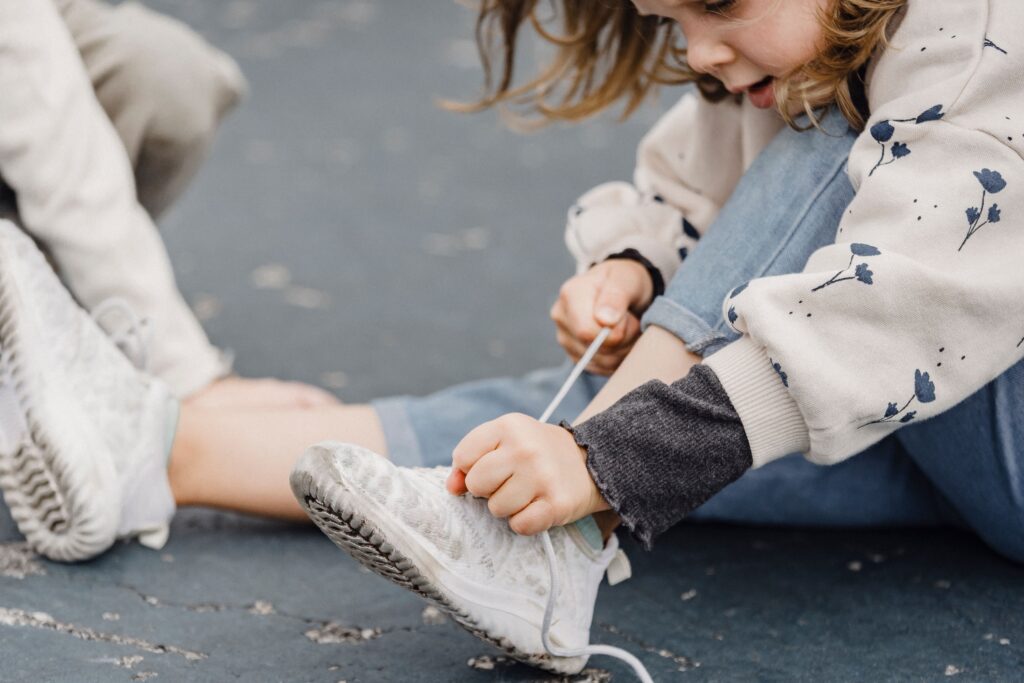
My daughter learned to tie her shoes three weeks before her sixth birthday, which meant, by the time it actually happened, I had spent close to two years quietly wondering if we were somehow doing this wrong. I want to write about it honestly, because I remember searching for reassurance during that stretch and mostly finding either vague “every child is different” comments or oddly specific milestone charts that made me feel worse, not better.
When I Started Worrying
I think the worry crept in around kindergarten, when I noticed other kids at pickup tying their own shoes without a second thought while my daughter still handed hers to me, laces trailing, without even attempting it herself. I hadn’t thought much about shoe-tying as a milestone before that. It wasn’t something I’d tracked the way I’d tracked walking or talking. But once I started noticing it in other kids, I couldn’t stop noticing it in mine.
I did what I usually do when a worry like this settles in: I looked it up. I found charts suggesting kids “typically” learn between ages five and seven, which should have been reassuring, since my daughter was well within that range. Instead, I fixated on the lower end of that range and treated anything past it as a quiet red flag, the way I think a lot of parents do with milestone charts in general — we read them as deadlines rather than the wide, blurry ranges they’re actually meant to represent.
The Things We Tried
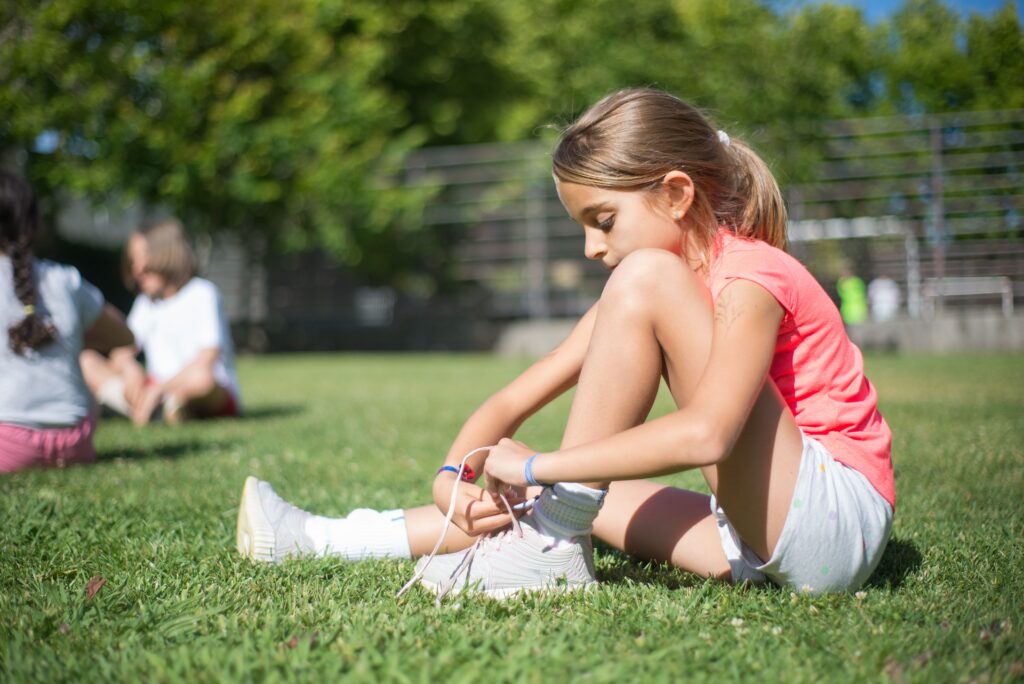
We went through what felt like every method available. I bought a shoe-tying practice board, the kind with a big fabric shoe and oversized laces, and we sat with it a handful of times before it got shoved in a drawer, mostly because my daughter found it boring rather than helpful — it didn’t feel like it connected to her actual shoes in any way that mattered to her.
We tried the “bunny ears” method, the two-loop version most of us grew up learning, and she got the first loop consistently but lost the thread every time on the second one, her hands seeming to freeze right at the exact moment it mattered most. We tried the single-loop method some tutorials swear is easier for small hands. That one didn’t click either.
At one point, a well-meaning family member suggested I just be more patient and stop making it “a whole thing,” which stung a little, mostly because I didn’t think I was making it a whole thing outwardly — but if I’m honest, some of the tension I felt about it was probably leaking through anyway, in the sighs I didn’t mean to let out, in the slightly-too-quick “let me just do it” when we were running late.
What I Eventually Realized
Somewhere in the second year of this low-grade worry, I talked to a friend whose son had also been a late shoe-tier, now nine and completely unbothered by the memory of it. She said something that stuck with me: “It’s not really a skill kids learn from being taught. It’s a skill kids learn when their hands are ready for it, and no amount of teaching moves that timeline much.”
That reframed things for me in a way the milestone charts hadn’t managed to. Shoe-tying requires a fairly specific level of fine motor coordination — two hands doing two different, coordinated things at once, while also holding a mental sequence of steps in a particular order. Some kids’ hands and brains get there earlier. Some get there later. It didn’t seem to correlate with intelligence, or attentiveness, or anything else I’d quietly worried it might reflect. It mostly seemed to correlate with exactly what my friend said: readiness that arrives on its own schedule.
Once I actually believed that, I stopped pushing formal practice sessions and just… let it go dormant for a while. We still used velcro shoes for most of that stretch, which solved the daily problem even while the skill itself sat unfinished in the background.
The Day It Actually Happened
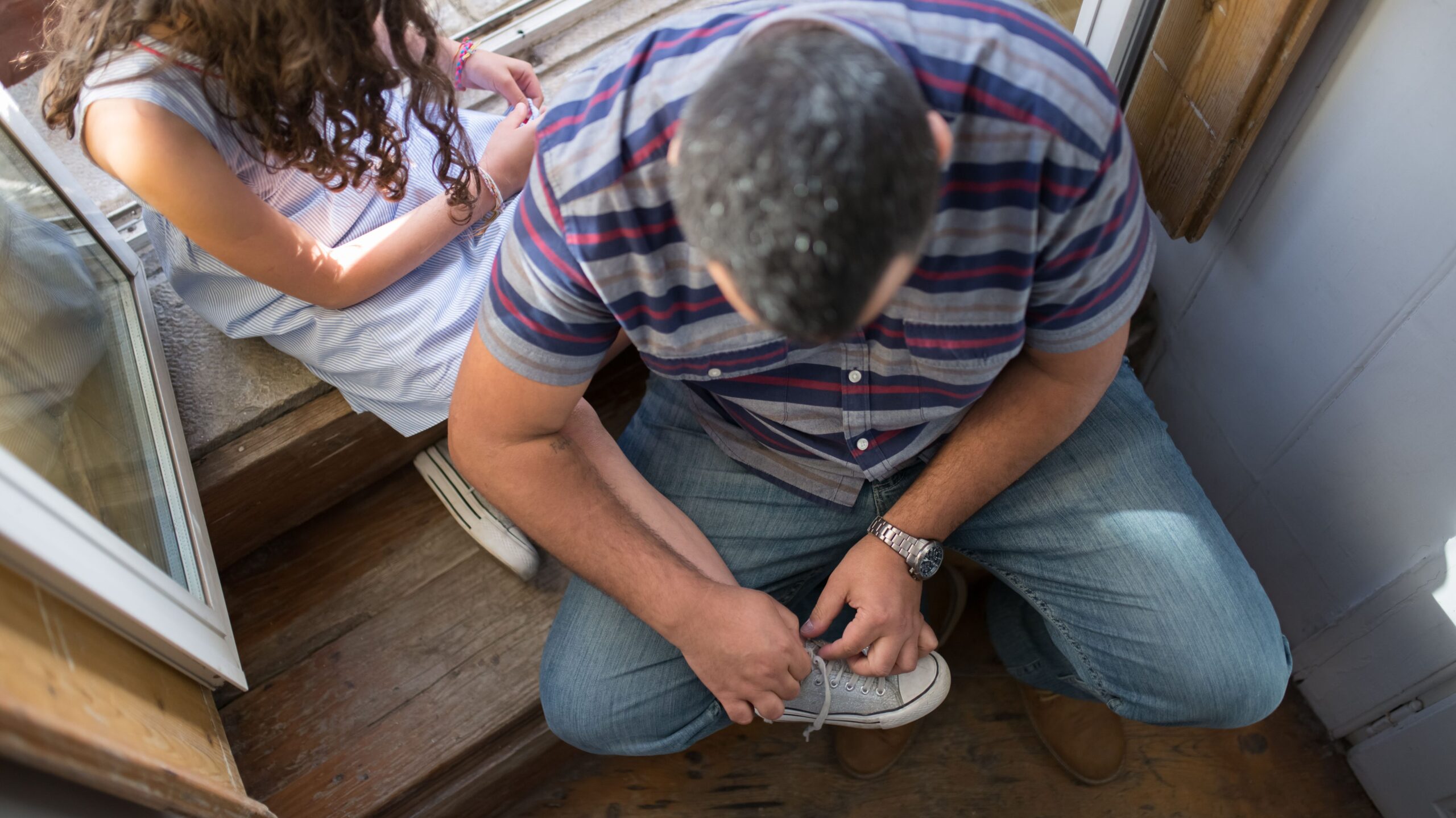
There was no dramatic breakthrough moment, no final successful practice session I can point back to. It happened on an ordinary Tuesday, getting ready for a friend’s birthday party, in a pair of lace-up shoes she’d insisted on wearing because they matched her dress. I was in the next room and heard her say, mostly to herself, “wait, I think I can do this,” and by the time I walked over, she’d already tied a slightly lopsided but completely functional bow, and was looking at her own hands with an expression somewhere between surprise and pride.
She didn’t need me to teach her that day. She needed, it turned out, about two years of her hands quietly getting ready for a moment I couldn’t have scheduled or rushed no matter how many practice boards I bought.
What I’d Tell Myself, Looking Back
If I could go back to that first anxious moment at kindergarten pickup, I’d tell myself that milestone ranges are wider and blurrier than they look on a chart, and that the low end of a range isn’t a deadline, it’s just an average starting point for some kids.
I’d tell myself that the tools and methods matter far less than I assumed at the time — we tried nearly everything available, and none of it was really what got her there. What got her there was time, and a level of physical readiness that had nothing to do with which method we happened to be using that week.
And I’d tell myself that the quiet worry I carried for those two years probably didn’t need to take up as much space as it did. She was, the whole time, a happy, capable kid who was behind on exactly one specific fine motor skill and completely on track for everything else, including plenty of things other kids her age hadn’t gotten to yet.
Where We Are Now
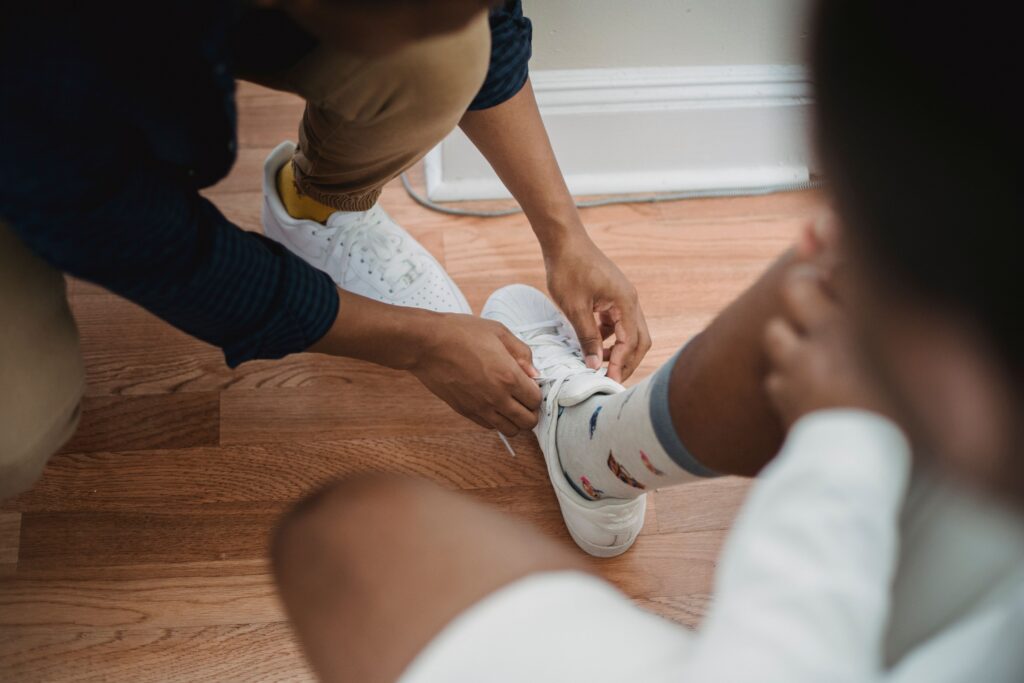
She ties her shoes without thinking about it now, the way most skills eventually become invisible once they’re learned — no memory, on her end, of the two years it took to get there, no sense that this was ever a source of worry for anyone. I’m the only one who remembers the practice board in the drawer, or the birthday party shoes, or the particular relief of hearing “wait, I think I can do this” from the next room.
If you’re in the middle of your own version of this right now, watching a milestone chart with more anxiety than it probably deserves, I understand the pull to worry. But in my experience, most of these skills arrive exactly when a child’s hands and brain are ready for them, on a timeline that has very little to do with how many practice sessions you schedule, and a lot more to do with patience you don’t always feel like you have enough of at the time.
Has your child had a “late bloomer” skill that eventually just clicked on its own? I’d love to hear about it — contact me here.

Aina Arif is a mother of two young children and the founder of NatureNestia. Based in Pakistan, she spent three years as an early childhood educator before becoming a full-time parent and writer. She writes about learning through play, managing difficult behaviour, and building strong family bonds.