
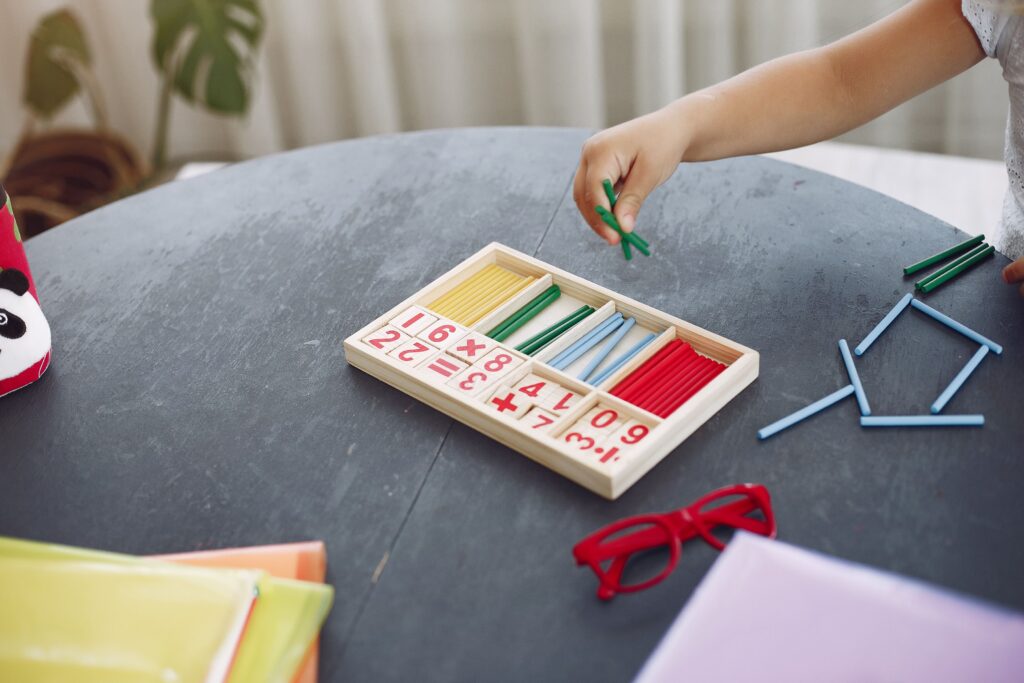
Why Math Games Make Learning Easier for Kids
For many children, math can seem difficult because it’s often taught through worksheets and repetition.
But numbers become much more exciting when children can touch, move, play, and explore while learning.
Math games help children understand concepts naturally instead of memorizing answers. Research shows that game-based learning increases engagement, improves problem-solving skills, and helps children retain math concepts more effectively than repetitive drills alone.
The best part?
You don’t need expensive learning kits.
Most math games can be played using everyday household items you already have.
These simple activities help children build:
- Number recognition
- Counting skills
- Addition and subtraction
- Logical thinking
- Pattern recognition
- Confidence with numbers
Let’s begin with five easy math games that make learning feel like play.
🎲 Game 1: Dice Roll & Count
🎯 Mission of the Day
Can your child count correctly after every dice roll?
🧺 What You’ll Need
- One or two dice
- Paper (optional)
- Pencil (optional)
🌱 How to Play
Roll one die.
Ask your child to:
- Say the number aloud.
- Clap that many times.
- Jump that many times.
- Collect that many blocks or toys.
If using two dice, ask them to add both numbers together.
For older children, try subtraction or multiplication.
🧠 Skills Developed
- Number recognition
- Counting
- Mental math
- Hand-eye coordination
- Concentration
⭐ Easy Level
Use one die only.
🚀 Next Challenge
Roll two or three dice and add the numbers together.
🍎 Game 2: Count & Sort Household Objects
🎯 Mission of the Day
Can your child become a little math detective?
🧺 What You’ll Need
Any household objects such as:
- Spoons
- Buttons
- Building blocks
- Fruits
- Bottle caps
- Toy animals
🌱 How to Play
Place several objects on the floor.
Ask your child to:
- Count them.
- Group them by color.
- Group them by size.
- Compare which group has more or fewer.
You can also ask:
- Which group has the most?
- Which group has the least?
- How many objects are left if we remove two?
🧠 Skills Developed
- Counting
- Sorting
- Comparing quantities
- Observation
- Early addition and subtraction
⭐ Easy Level
Use only five objects.
🚀 Next Challenge
Mix different objects and create larger groups.
🧩 Game 3: Number Hunt Around the House
🎯 Mission of the Day
Can your child find hidden numbers?
🧺 What You’ll Need
Nothing except your home.
🌱 How to Play
Challenge your child to search for numbers found around the house.
Look for numbers on:
- Clocks
- Calendars
- Books
- Food packages
- Measuring cups
- Remote controls
- House addresses (if outside)
Each time they find a number, ask:
- What number is it?
- Which number comes before it?
- Which comes after it?
- Is it odd or even? (for older children)
🧠 Skills Developed
- Number recognition
- Observation
- Number sequencing
- Vocabulary
⭐ Easy Level
Find numbers from 1–10.
🚀 Next Challenge
Find numbers higher than 20.
🏃 Game 4: Hop to the Answer
🎯 Mission of the Day
Can your child solve math while moving?
🧺 What You’ll Need
- Sticky notes
- Chalk
- Paper cards
Write numbers on each card.
Spread them across the floor.
🌱 How to Play
Call out a question.
Examples:
- What is 3 + 2?
- Find number 7.
- Which number is bigger than 5?
Your child hops to the correct answer.
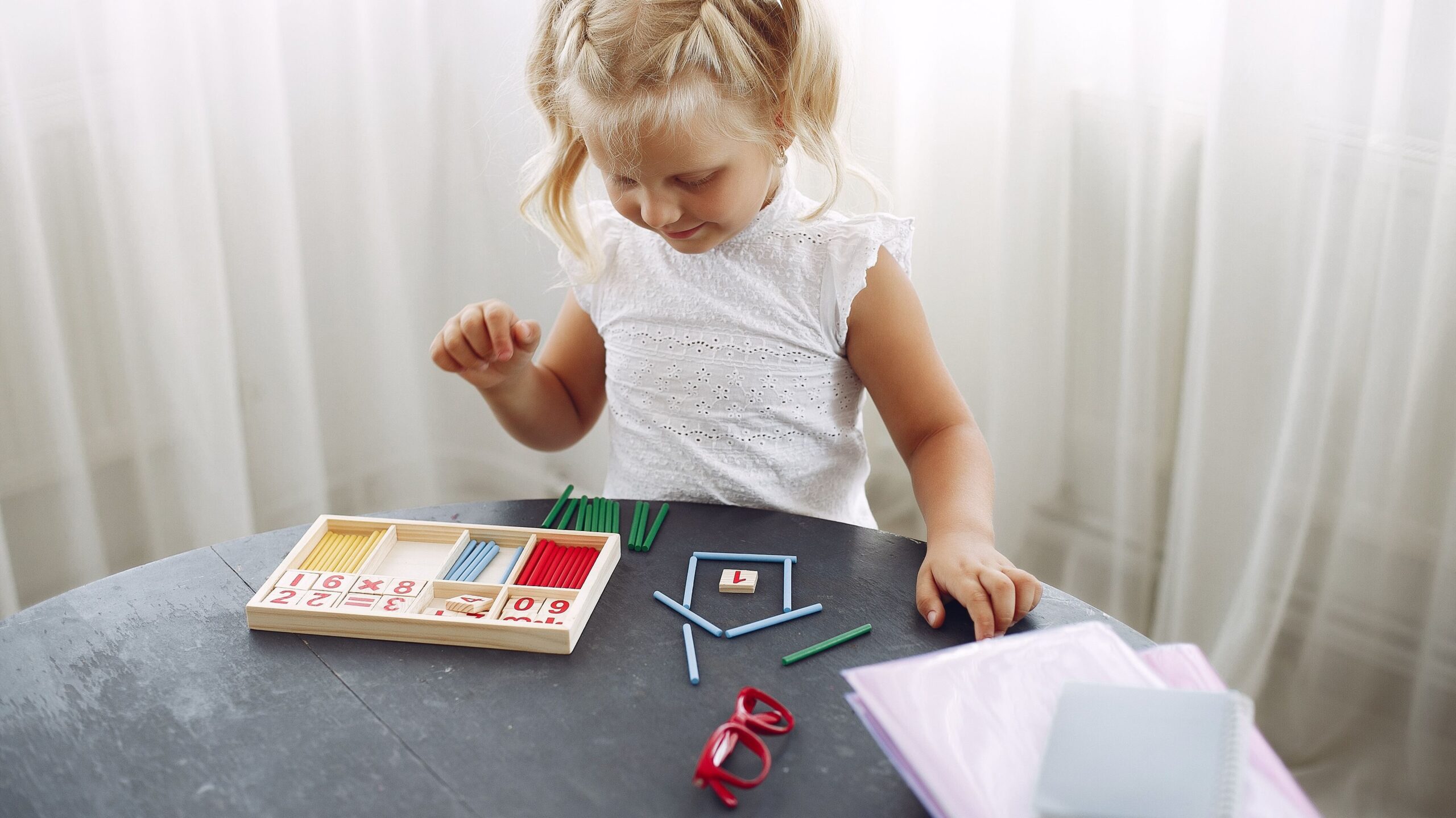
Movement keeps children engaged while reinforcing math concepts. Short, active games are especially effective for maintaining attention.
🧠 Skills Developed
- Addition
- Number recognition
- Listening
- Gross motor skills
- Quick thinking
⭐ Easy Level
Use numbers from 1–10.
🚀 Next Challenge
Create multiplication or subtraction questions.
🛒 Game 5: Pretend Grocery Store
🎯 Mission of the Day
Can your child become today’s shopkeeper?
🧺 What You’ll Need
- Empty food boxes
- Toys
- Paper price tags
- Play money (optional)
🌱 How to Play
Turn your living room into a mini grocery store.
Give each item a simple price.
For example:
- Apple = $2
- Juice = $3
- Bread = $4
Ask your child to:
- Add the prices.
- Count the money.
- Give the correct change.
- Stay within a spending limit.
Pretend shopping helps children practice real-life math in a fun and meaningful way.
🧠 Skills Developed
- Addition
- Subtraction
- Money concepts
- Decision-making
- Practical math
⭐ Easy Level
Use prices from 1–5.
🚀 Next Challenge
Offer discounts or buy-two-get-one challenges.
🌟 Why Play-Based Math Works
Children learn mathematics more effectively when they actively participate instead of simply memorizing answers.
Games encourage children to:
- Explore different solutions
- Learn from mistakes
- Build confidence
- Think critically
- Enjoy practicing numbers
When math feels like play, children are more willing to keep trying and develop a positive attitude toward learning.
💙 Parent Reminder
Don’t worry about teaching every math concept in one day.
Just 10–15 minutes of playful math activities can strengthen your child’s number sense and build confidence over time.
Remember, the goal isn’t to finish quickly—it’s to enjoy learning together.
✅ Math Skills Checklist
Celebrate today’s progress:
✔ Counted everyday objects
✔ Recognized different numbers
✔ Solved simple addition problems
✔ Practiced comparing quantities
✔ Used math during pretend play
Game 6: Build and Count Block Towers
🎯 Mission of the Day
Can your child build towers while practicing counting?
🧺 What You’ll Need
- Building blocks
- Plastic cups
- Wooden blocks
- Cardboard boxes
🌱 How to Play
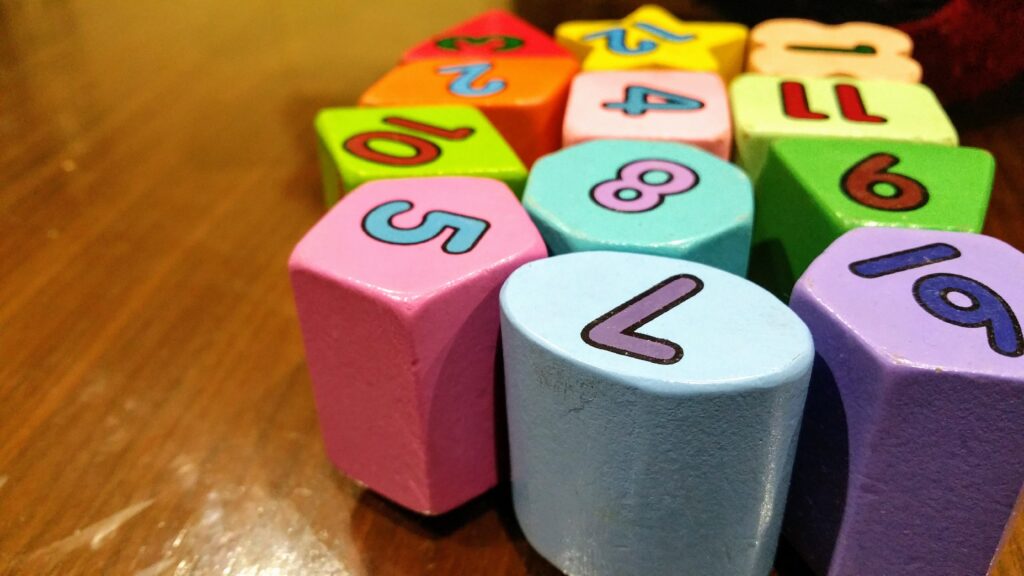
Ask your child to build towers with a specific number of blocks.
For example:
- Build a tower with 5 blocks.
- Build another with 8 blocks.
- Which tower is taller?
- How many more blocks does the shorter tower need?
You can also ask your child to predict whether the tower will stay balanced before adding another block.
🧠 Skills Developed
- Counting
- Number comparison
- Measurement concepts
- Problem-solving
- Fine motor skills
⭐ Easy Level
Build towers with numbers from 1–5.
🚀 Next Challenge
Build towers using only even or odd numbers.
🍕 Game 7: Fraction Fun with Food
🎯 Mission of the Day
Can your child discover fractions during snack time?
🧺 What You’ll Need
- Sandwiches
- Pizza
- Apples
- Bananas
- Oranges
🌱 How to Play
Cut food into equal parts.
Talk about the pieces using simple fraction words.
Examples:
- One whole apple
- Two halves
- Four quarters
Ask questions like:
- Which piece is bigger?
- How many quarters make one whole?
- What happens if we eat one half?
Young children understand fractions much better when they can see and touch them.
🧠 Skills Developed
- Fraction awareness
- Comparing sizes
- Observation
- Everyday math vocabulary
⭐ Easy Level
Practice halves only.
🚀 Next Challenge
Introduce thirds and quarters.
🎯 Game 8: Target Number Toss
🎯 Mission of the Day
Can your child score points while practicing math?
🧺 What You’ll Need
- Paper cups
- Sticky notes
- Bean bags, soft balls, or rolled-up socks
🌱 How to Play
Write numbers on each cup.
Examples:
2, 5, 8, 10
Place the cups a short distance away.
Your child tosses a soft ball into the cups.
Add together the numbers they score.
For older children, ask them to subtract or multiply the numbers after several throws.
🧠 Skills Developed
- Addition
- Mental math
- Hand-eye coordination
- Number recognition
- Concentration
⭐ Easy Level
Use numbers from 1–5.
🚀 Next Challenge
Set a target score and challenge your child to reach it using the fewest throws.
⏰ Game 9: Learn Time Through Daily Routines
🎯 Mission of the Day
Can your child connect time with everyday life?
🧺 What You’ll Need
- Wall clock
- Toy clock (optional)
🌱 How to Play
Talk about time throughout the day.
Ask questions such as:
- What time do we wake up?
- When do we eat lunch?
- What comes after dinner?
- Which activity happens in the morning?
Older children can practice reading the clock.
Younger children can simply learn the order of daily events.
🧠 Skills Developed
- Time awareness
- Sequencing
- Daily routine understanding
- Observation
⭐ Easy Level
Learn morning, afternoon, and evening.
🚀 Next Challenge
Practice reading o’clock and half-past times.
🧩 Game 10: Shape Detective Challenge
🎯 Mission of the Day
Can your child find shapes hidden around the house?
🧺 What You’ll Need
Nothing except your surroundings.
🌱 How to Play
Choose one shape.
For example:
Circle.
Ask your child to find everything shaped like a circle.
Examples:
- Plate
- Clock
- Coin
- Bowl
Continue with:
- Squares
- Rectangles
- Triangles
- Ovals
Older children can count how many sides each shape has.
🧠 Skills Developed
- Shape recognition
- Observation
- Geometry basics
- Vocabulary
- Classification
⭐ Easy Level
Search for one shape at a time.
🚀 Next Challenge
Create shape patterns using household objects.
🌟 Tips for Making Math Fun Every Day
Children don’t need long lessons to become confident with numbers.
Instead, include math naturally throughout the day.
Simple ideas include:
- Count steps while climbing stairs.
- Compare the sizes of fruits and vegetables.
- Measure ingredients while cooking.
- Read house numbers during walks.
- Sort laundry by color or size.
- Estimate how many toys fit inside a basket.
When math becomes part of everyday life, children begin to see that numbers are useful—not just something found in textbooks.
💙 Parent Reminder
It’s perfectly okay if your child makes mistakes.
Mistakes are part of learning.
Instead of saying:
“That’s wrong.”
Try asking:
- “Can we solve it another way?”
- “Let’s count together.”
- “What do you notice?”
Encouragement builds confidence, and confident children are more willing to keep trying.
🌈 Final Thoughts
Math is much more than solving equations.
It’s about noticing patterns, solving everyday problems, making decisions, and understanding the world around us.
The best math lessons often happen during ordinary family moments—while cooking dinner, building towers, shopping, or playing games together.
By making math playful, practical, and enjoyable, you’re helping your child develop skills they’ll use for a lifetime.
Remember, every counted step, every sorted toy, and every playful question is another opportunity to grow.
❓ Frequently Asked Questions
At what age can children start learning math through games?
Children can begin exploring basic math concepts as toddlers through counting, sorting, matching, and recognizing shapes. As they grow, games can gradually include addition, subtraction, measurement, and simple problem-solving.
How long should math games last?
Most young children benefit from 10 to 20 minutes of math play at a time. Short, engaging sessions are usually more effective than long lessons.
Do math games really improve learning?
Yes. Hands-on math games help children build number sense, confidence, logical thinking, and problem-solving skills while making learning enjoyable.
Can I teach math without worksheets?
Absolutely. Everyday activities like cooking, shopping, building, gardening, and playing games provide excellent opportunities to practice math naturally.
📚 References
- American Academy of Pediatrics – Learning Through Play
- National Association for the Education of Young Children (NAEYC) – Early Mathematics Learning
- ORIGO Education – Math Games and Play-Based Learning
- Mathnasium – Fun Math Activities for Families
- UNICEF Parenting – Supporting Early Learning Through Everyday Activities
🌟 Continue Exploring on NatureNestia
- Best Memory Games for Kids at Home
- Fun Math Games for Kids at Home
- Educational Games for Kids Without Materials
- Problem-Solving Activities for Kids at Home
- Screen-Free Activities for Kids at Home
- Simple Daily Learning Routine for Kids at Home

Aina Arif is a mother of two young children and the founder of NatureNestia. Based in Pakistan, she spent three years as an early childhood educator before becoming a full-time parent and writer. She writes about learning through play, managing difficult behaviour, and building strong family bonds.