
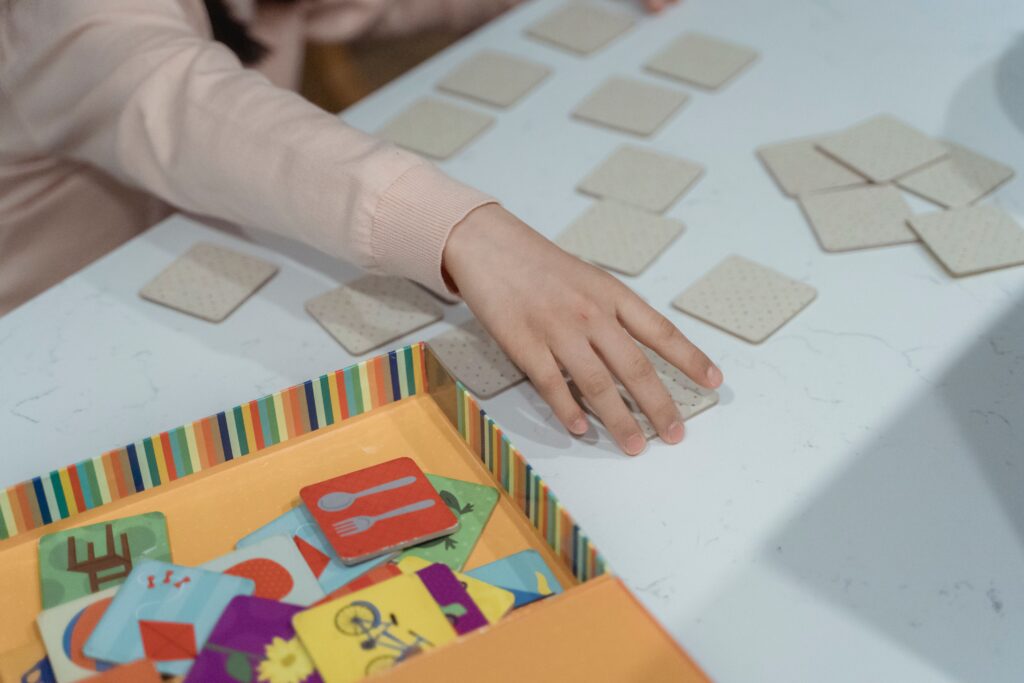
Why Memory Games Are Important for Children
Memory is one of the most important skills children develop during their early years.
Every day, children use memory to:
- Remember new words
- Follow instructions
- Recognize letters and numbers
- Recall stories
- Solve problems
- Complete everyday tasks
The good news is that memory isn’t something children are simply born with—it’s a skill that grows stronger through regular practice and playful experiences.
Memory games help children strengthen working memory, attention, concentration, and recall in a fun, pressure-free way. These skills support learning both at home and at school.
The best part?
Most memory games require little or no preparation and can be played using everyday household items.
Let’s explore some exciting memory games your child will love.
🃏 Game 1: Classic Memory Matching Game
🎯 Mission of the Day
Can your child remember where the matching pictures are hiding?
🧺 What You’ll Need
- Matching cards (store-bought or homemade)
- Or draw simple pairs on paper
Examples:
- 🍎 Apple
- 🐶 Dog
- 🚗 Car
- ⭐ Star
- 🌸 Flower
🌱 How to Set Up
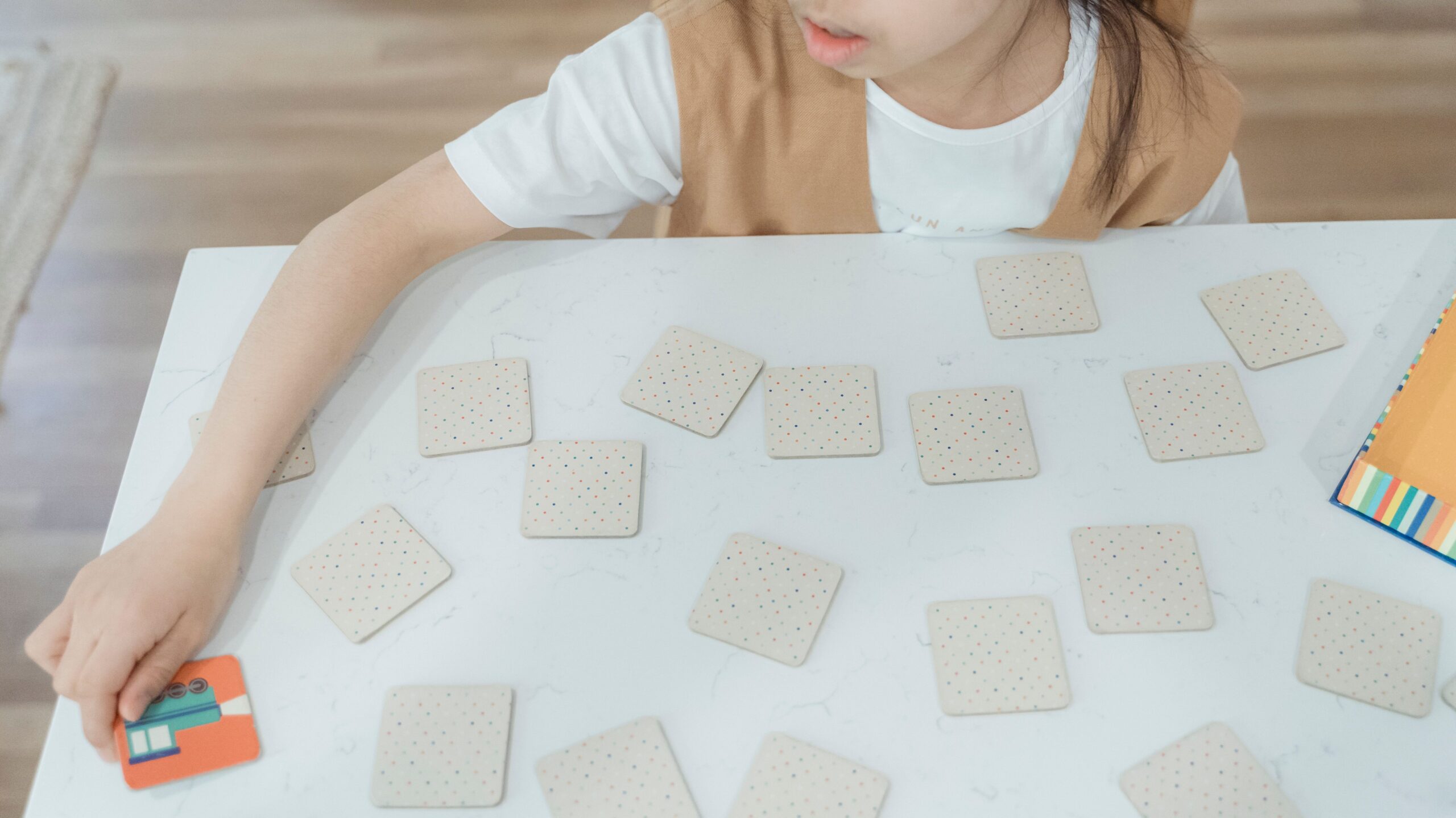
Place all the cards face down in neat rows.
Each player flips over two cards.
If they match, the player keeps the pair.
If they don’t, turn them back over and let the next player try.
🎮 How to Play
Encourage your child to remember where each picture is located.
The more they play, the easier it becomes to remember the positions.
🧠 Skills Developed
- Visual memory
- Concentration
- Attention to detail
- Patience
- Turn-taking
⭐ Easy Level
Start with only six pairs.
🚀 Next Challenge
Increase to twelve or more pairs.
👀 Game 2: What’s Missing?
🎯 Mission of the Day
Can your child discover which object disappeared?
🧺 What You’ll Need
Five to eight household objects, such as:
- Spoon
- Toy car
- Pencil
- Book
- Ball
- Cup
🌱 How to Set Up
Arrange all the objects on a tray or table.
Give your child about 30 seconds to look carefully.
Now ask them to close their eyes.
Quietly remove one object.
Ask:
“Which object is missing?”
🎮 How to Play
After each round, rearrange the objects and remove a different one.
Allow your child to take turns removing an object for you.
🧠 Skills Developed
- Observation
- Short-term memory
- Focus
- Visual recall
- Problem-solving
⭐ Easy Level
Use only four objects.
🚀 Next Challenge
Remove two objects instead of one.
🎵 Game 3: Sound Sequence Challenge
🎯 Mission of the Day
Can your child remember a pattern of sounds?
🧺 What You’ll Need
Nothing except your hands or simple household objects.
Examples:
- Clap
- Tap the table
- Snap fingers
- Stomp feet
🌱 How to Play
Start with a simple sequence:
👏 Clap
👏 Clap
👣 Stomp
Your child repeats exactly.
Gradually make the patterns longer.
For example:
👏
👏
👣
👏
👣
🧠 Skills Developed
- Auditory memory
- Listening skills
- Concentration
- Pattern recognition
⭐ Easy Level
Use two sounds.
🚀 Next Challenge
Create six-step sound patterns.
🛍️ Game 4: Shopping List Memory Game
🎯 Mission of the Day
Can your child remember everything on the shopping list?
🧺 What You’ll Need
Nothing.
🌱 How to Play
Start by saying:
“We’re going shopping. We need…”
- Milk
Your child repeats:
“Milk.”
Now add another item.
“Milk and bananas.”
Continue adding one new item every turn.
Example:
Milk
Milk, bananas
Milk, bananas, bread
Milk, bananas, bread, eggs
Keep going until someone forgets an item.
🧠 Skills Developed
- Working memory
- Language skills
- Listening
- Sequencing
- Vocabulary
⭐ Easy Level
Use only food items.
🚀 Next Challenge
Ask your child to repeat the list backwards.
🧩 Game 5: Follow the Action
🎯 Mission of the Day
Can your child remember a growing sequence of movements?
🧺 What You’ll Need
No materials.
🌱 How to Play
Begin with one action:
👏 Clap.
Your child copies it.
Now add another action:
👏 Clap
🦘 Jump
Continue adding movements:
👏 Clap
🦘 Jump
👋 Wave
🔄 Spin
The sequence gets longer with every round.
🧠 Skills Developed
- Working memory
- Gross motor skills
- Listening
- Coordination
- Concentration
⭐ Easy Level
Use only three actions.
🚀 Next Challenge
Create a sequence with eight or more movements.
🌟 Why Memory Games Work
Memory games don’t just help children remember things—they also strengthen attention, concentration, visual recognition, and thinking skills. Because they’re playful, children stay engaged while exercising important brain functions like working memory and recall.
💙 Parent Reminder
Children improve their memory through regular practice—not perfection.
Keep each game short, celebrate effort, and make it fun.
Even 10–15 minutes of memory play several times a week can support healthy cognitive development.
✅ Memory Skills Checklist
Celebrate these achievements:
✔ Remembered matching cards
✔ Identified missing objects
✔ Repeated sound patterns
✔ Recalled shopping items
✔ Followed movement sequences
Game 6: Picture Tray Memory Challenge
🎯 Mission of the Day
Can your child remember everything they saw?
🧺 What You’ll Need
- A tray
- 8–12 small household objects
For example:
- Pencil
- Spoon
- Toy car
- Coin
- Key
- Button
- Eraser
- Leaf
- A cloth or towel
🌱 How to Set Up
Arrange all the objects neatly on the tray.
Give your child 30–60 seconds to observe everything carefully.

Cover the tray with a cloth.
Now ask:
“Can you remember all the objects?”
Let your child name as many items as possible.
🎮 How to Play
After naming the objects, uncover the tray and see how many were remembered correctly.
Play several rounds by changing the objects each time.
🧠 Skills Developed
- Visual memory
- Observation
- Attention to detail
- Recall ability
- Concentration
⭐ Easy Level
Use only five objects.
🚀 Next Challenge
Increase to twelve objects and reduce the viewing time.
🎨 Game 7: Color Sequence Memory Game
🎯 Mission of the Day
Can your child remember the correct color order?
🧺 What You’ll Need
- Colored paper
- Building blocks
- Crayons
- Colored cups
🌱 How to Play
Arrange a simple color pattern.
Example:
🔴 Red
🟡 Yellow
🔵 Blue
Let your child observe it for a few seconds.
Mix the colors and ask them to recreate the same sequence.
Gradually make the pattern longer.
🧠 Skills Developed
- Visual memory
- Pattern recognition
- Concentration
- Color recognition
⭐ Easy Level
Use three colors.
🚀 Next Challenge
Create patterns using six or more colors.
📖 Game 8: Story Memory Challenge
🎯 Mission of the Day
Can your child remember important details from a story?
🧺 What You’ll Need
- A short storybook
or
Tell a simple story yourself.
🌱 How to Play
Read a short story.
After finishing, ask questions like:
- Who was the main character?
- Where did the story happen?
- What problem did they have?
- How did the story end?
- Which part did you like most?
Encourage your child to answer in complete sentences whenever possible.
🧠 Skills Developed
- Listening comprehension
- Long-term memory
- Language skills
- Sequencing
- Story recall
⭐ Easy Level
Read stories with pictures.
🚀 Next Challenge
Ask your child to retell the entire story in their own words.
🧺 Game 9: Packing Bag Memory Game
🎯 Mission of the Day
Can your child remember everything needed for an imaginary trip?
🧺 What You’ll Need
- A small backpack
- Household items
Examples:
- Hat
- Water bottle
- Book
- Sunglasses
- Toy
- Socks
🌱 How to Play
Tell your child:
“We’re going on a picnic.”
Show several items for one minute.
Hide them.
Ask:
“What should we pack?”
Let your child collect everything they remember.
Afterward, compare their choices with the original items.
🧠 Skills Developed
- Working memory
- Organization
- Observation
- Decision-making
- Practical thinking
⭐ Easy Level
Pack only four items.
🚀 Next Challenge
Add 10–12 different objects.
🎭 Game 10: Copy My Actions Game
🎯 Mission of the Day
Can your child remember and repeat an action sequence?
🧺 What You’ll Need
Nothing at all.
🌱 How to Play
Perform a sequence of actions such as:
👏 Clap
👋 Wave
🦘 Jump
🔄 Spin
Your child watches carefully and then copies the exact order.
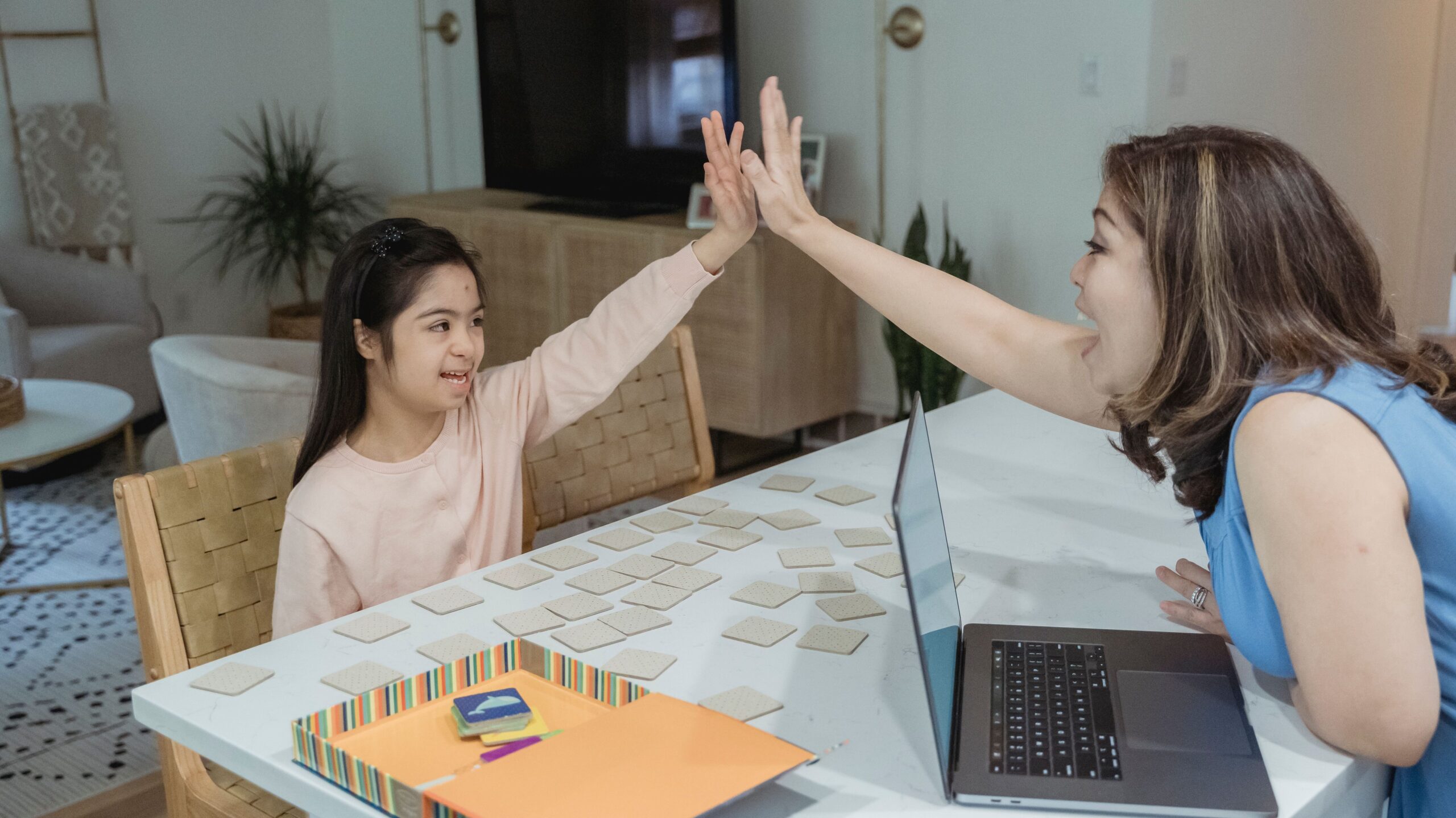
Each round, add one more action.
The sequence becomes longer and more challenging.
🧠 Skills Developed
- Working memory
- Body coordination
- Listening
- Focus
- Sequential thinking
⭐ Easy Level
Use only three actions.
🚀 Next Challenge
Create a sequence of ten actions.
🌟 Tips to Improve Your Child’s Memory Naturally
Memory grows stronger with regular practice and healthy daily habits.
You can support your child’s memory by:
- Reading together every day.
- Encouraging active play instead of passive screen time.
- Playing memory and matching games regularly.
- Asking open-ended questions about stories and daily experiences.
- Getting enough sleep each night.
- Providing nutritious meals and staying hydrated.
- Keeping learning sessions short and enjoyable.
Small, consistent habits often have a bigger impact than long study sessions.
💙 Parent Reminder
Every child remembers information differently.
Some children learn best by seeing.
Others remember better by listening, moving, or doing activities themselves.
Be patient and encourage progress instead of expecting perfection.
Confidence plays an important role in helping children develop stronger memory skills.
Final Thoughts
Memory isn’t just about remembering facts for school.
It helps children solve problems, follow directions, understand stories, and build confidence in everyday life.
The best memory games don’t feel like lessons.
They feel like family fun.
By spending just a few minutes each day playing these simple games, you’re helping your child strengthen important brain skills while creating happy memories together.
Learning becomes even more meaningful when it is filled with laughter, curiosity, and connection.
❓ Frequently Asked Questions
At what age can children start playing memory games?
Simple memory games can begin around 2 to 3 years of age using pictures, matching cards, and everyday objects. As children grow, you can gradually introduce more challenging activities.
How often should we play memory games?
Playing 10–20 minutes, three to five times a week is usually enough to help children strengthen memory skills while keeping activities enjoyable.
Can memory games improve school performance?
Memory games help develop attention, working memory, and concentration, which support learning in reading, mathematics, and everyday classroom activities.
Are digital memory games better than physical games?
Both can be helpful, but physical, screen-free memory games often encourage more family interaction, movement, and hands-on learning experiences.
📚 References
- American Academy of Pediatrics – The Importance of Play
- Harvard Center on the Developing Child – Brain Development Through Play
- NAEYC – Developmentally Appropriate Practice
- Empowered Parents – Memory Games for Children
- UNICEF Parenting – Learning Through Play
🌟 Continue Exploring on NatureNestia
- Fun English Learning Games for Kids at Home
- Educational Games for Kids Without Materials
- Problem-Solving Activities for Kids at Home
- Screen-Free Activities for Kids at Home
- Simple Daily Learning Routine for Kids at Home
- Fun Math Games for Kids at Home

Aina Arif is a mother of two young children and the founder of NatureNestia. Based in Pakistan, she spent three years as an early childhood educator before becoming a full-time parent and writer. She writes about learning through play, managing difficult behaviour, and building strong family bonds.