
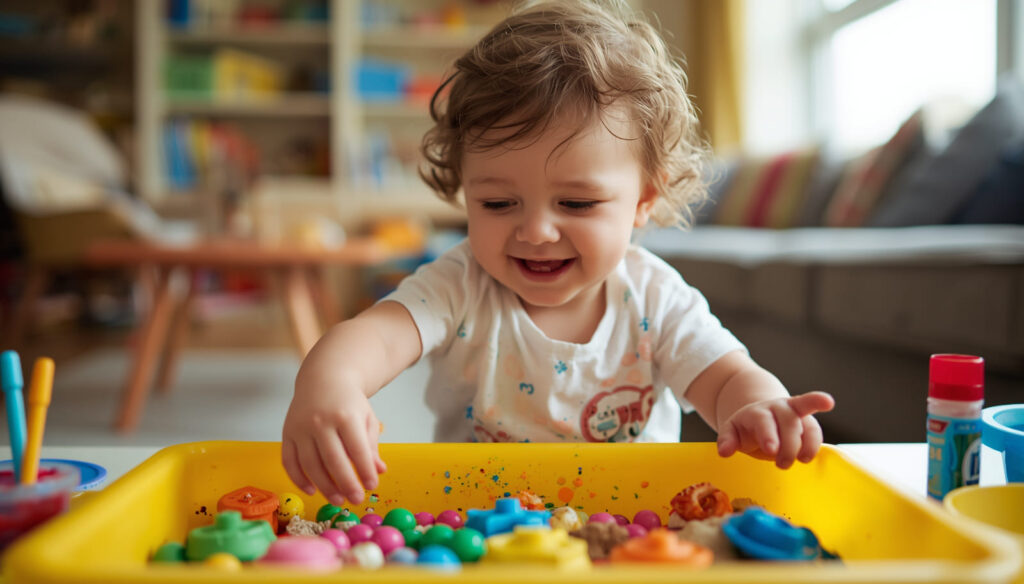
Your 1-year-old doesn’t need expensive toys to learn and grow. All they need is their five senses — and a little help from you.
At one year old, babies are soaking up the world like tiny sponges. Every texture they touch, every sound they hear, and every color they see is building brand new connections in their developing brain. That’s the magic of sensory play.
At Nature Nestia, we believe the best learning happens when children are connected to the natural world around them. That’s why this list focuses on simple, nature-inspired sensory activities you can do right at home — most of them using things you already have in your kitchen, backyard, or pantry.
Here are 20 of the best sensory activities for 1 year olds at home that are safe, easy to set up, and genuinely fun for your little one.
What Is Sensory Play for 1 Year Olds?
Sensory play is any activity that engages one or more of a baby’s five senses — touch, sight, sound, smell, and taste. At one year old, babies are in a critical period of brain development. Every new texture they squeeze, every new sound they shake, and every new color they discover is literally building neural pathways in their brain.
Research shows that sensory-rich play in the first two years of life supports language development, fine motor skills, cognitive growth, and emotional regulation. In other words, letting your baby squish oatmeal is not just messy fun — it’s genuinely good for their brain.
The best part? You don’t need to spend money. The most powerful sensory experiences for 1 year olds come from simple, everyday materials.
Safety First — Before You Start
Before diving into the activities, here are a few important safety tips:
- Always supervise your child during sensory play. Never leave them alone, even for a moment.
- Watch for choking hazards. Avoid small items like beads, buttons, or dry beans for babies who still put everything in their mouth.
- Choose edible materials when possible for babies in the oral stage. Yogurt, oats, and cooked pasta are all safe if swallowed.
- Check for allergies before using food-based materials like flour, oats, or eggs.
- Start small. You don’t need to do all 20 activities at once. Start with one or two and see what your baby enjoys most.
20 Sensory Activities for 1 Year Olds at Home
Group 1: Nature-Based Sensory Activities
These are our favorites at Nature Nestia — simple outdoor activities that connect your baby with the natural world.
Activity 1: Leaf Texture Exploration
What you need: A few different leaves from your garden or yard
How to do it: Collect 4 to 5 leaves of different shapes, sizes, and textures — smooth, bumpy, soft, and dry. Sit with your baby on the floor or outside and let them touch, crinkle, and explore each leaf. Name the textures as they explore: “This one is smooth. This one is rough.”
Skill developed: Tactile awareness, vocabulary, cause and effect (crinkling sounds)
Activity 2: Sand and Soil Sensory Bin
What you need: A shallow plastic tub, some garden soil or sand, small cups and spoons
How to do it: Fill the tub with a thin layer of garden soil or clean sand. Add a few small cups, spoons, and safe toys. Let your baby scoop, pour, and pat the soil. Take it outside on a warm day for easy cleanup.
Skill developed: Fine motor skills, cause and effect, tactile exploration
Activity 3: Water Pouring with Cups
What you need: A shallow basin or baby bathtub, small plastic cups
How to do it: Fill the basin with a small amount of lukewarm water. Give your baby a few different-sized cups and let them pour, splash, and explore. You can do this on the grass outside on a warm day for a double sensory experience.
Skill developed: Fine motor skills, cause and effect, early math concepts (volume and pouring)
Activity 4: Rock and Stone Sorting
What you need: A handful of smooth, clean rocks of different sizes — make sure they are large enough to not be a choking hazard
How to do it: Collect a mix of smooth and rough rocks. Let your baby hold each one, feel the texture, and move them from hand to hand. You can also place them in a small bowl for them to take out and put back in.
Skill developed: Tactile discrimination, fine motor skills, object permanence
Activity 5: Barefoot Grass Play
What you need: A safe patch of grass in your garden
How to do it: Take your baby’s shoes off and let them stand or sit on grass. Let them feel the blades between their toes, pat the ground, and explore. If the weather allows, try different outdoor textures — grass, mud, and smooth pavement.
Skill developed: Sensory integration, gross motor development, connection to nature
Group 2: Kitchen and Pantry Activities
These activities use everyday items from your kitchen — cheap, safe, and easy to set up.
Activity 6: Rice Sensory Bin
What you need: A shallow tub or baking dish, dry white rice, small cups and spoons
How to do it: Pour a layer of dry rice into the tub. Add small cups, spoons, and safe toys for your baby to dig through. Let them scoop, pour, and run their fingers through the rice. Lay a towel underneath for easy cleanup.
Skill developed: Fine motor skills, cause and effect, tactile exploration
Note: Watch closely to make sure your baby does not put large amounts of rice in their mouth.
Activity 7: Edible Finger Paint
What you need: Plain yogurt, food coloring, paper or a high chair tray
How to do it: Mix plain yogurt with a few drops of different food coloring to create colorful, edible “paints.” Put a few spoonfuls onto your baby’s high chair tray or a large sheet of paper and let them swipe, smear, and explore. Completely safe if swallowed.
Skill developed: Visual stimulation, fine motor skills, creative expression
Activity 8: Pasta Play
What you need: Cooked pasta (cooled), a shallow tub
How to do it: Cook a batch of pasta and let it cool completely. Place it in a shallow tub and let your baby squeeze, pull, and squish it. You can also use dry pasta for a very different texture experience — just supervise carefully.
Skill developed: Tactile awareness, fine motor skills, hand strength
Activity 9: Oat and Flour Tray
What you need: A baking tray, oats or flour
How to do it: Pour a thin layer of oats or flour onto a large baking tray. Let your baby pat it, rake their fingers through it, and make marks. You can draw simple shapes or letters and let them erase with their hand.
Skill developed: Tactile exploration, fine motor skills, early mark-making (pre-writing)
Activity 10: Ice Cube Exploration
What you need: Ice cubes, a shallow tray or bowl
How to do it: Place a few ice cubes in a shallow tray. Let your baby touch, slide, and explore the ice. Watch their face as the cold sensation surprises them! You can add a drop of food coloring to make colored ice cubes for extra visual interest.
Skill developed: Temperature awareness, cause and effect, sensory tolerance
Group 3: Touch and Texture Activities
Activity 11: DIY Texture Board
What you need: A piece of thick cardboard, glue, and different textured materials — cotton balls, sandpaper, foil, bubble wrap, fabric scraps
How to do it: Glue different materials onto sections of the cardboard to create a “texture board.” Sit with your baby and guide their hand over each texture, naming it as you go: “Soft. Rough. Bumpy. Smooth.”
Skill developed: Tactile discrimination, language development, sensory processing
Activity 12: Homemade Playdough
What you need: 1 cup flour, ½ cup salt, ½ cup water, 1 tablespoon oil, food coloring
How to do it: Mix all ingredients together and knead until smooth. Divide into portions and add a different food color to each. Let your baby poke, squeeze, and pull the dough. Supervise closely as this recipe is not meant to be eaten.
Skill developed: Fine motor skills, hand strength, creative exploration
Activity 13: Sponge Squeeze Play
What you need: A few clean sponges, a shallow bowl of water
How to do it: Fill a shallow bowl with a small amount of water. Give your baby a sponge and let them dip it in the water and squeeze it out. This simple activity keeps babies busy for a surprisingly long time.
Skill developed: Hand strength, fine motor skills, cause and effect
Activity 14: Mess-Free Sensory Bag
What you need: A ziplock bag, hair gel, glitter or small colorful beads, strong tape
How to do it: Fill a large ziplock bag with hair gel and add glitter or small sequins. Seal it tightly and tape the edges with strong tape. Let your baby push, squish, and move the gel around without any mess.
Skill developed: Visual tracking, tactile stimulation, cause and effect
Activity 15: Crinkle Paper Play
What you need: Tissue paper, wrapping paper, or newspaper
How to do it: Give your baby sheets of tissue paper or wrapping paper and let them crinkle, scrunch, and tear it. The sound alone is fascinating to babies at this age. Layer different types of paper for different sound and texture experiences.
Skill developed: Auditory stimulation, fine motor skills, hand strength
Group 4: Sound and Sight Activities
Activity 16: DIY Shaker Bottles
What you need: Clean plastic bottles with secure lids, rice, dried beans, or small pebbles, strong glue
How to do it: Fill each bottle about one-quarter full with a different material — rice in one, pebbles in another. Glue the lids shut tightly. Let your baby shake, roll, and listen to the different sounds each bottle makes.
Skill developed: Auditory discrimination, cause and effect, gross motor skills
Activity 17: Glitter Calm Bottle
What you need: A clear plastic bottle, warm water, glitter glue, fine glitter, strong glue
How to do it: Fill the bottle with warm water and add glitter glue and fine glitter. Seal the lid tightly with strong glue. Shake it and watch the glitter slowly settle. Babies are captivated by the slow-moving sparkles.
Skill developed: Visual tracking, calming and self-regulation, cause and effect
Activity 18: Color Mixing with Water
What you need: Clear plastic cups, water, food coloring
How to do it: Fill several clear cups with water and add a different food color to each. Let your baby watch as you mix the colors together — red and yellow make orange, blue and yellow make green. Use a dropper or spoon for easy mixing.
Skill developed: Visual stimulation, early color recognition, cause and effect
Activity 19: Bubble Play
What you need: Bubble solution, a bubble wand
How to do it: Blow bubbles in front of your baby and let them reach, swipe, and pop them. The visual tracking of bubbles floating through the air is excellent for eye development at this age.
Skill developed: Visual tracking, gross motor skills (reaching), eye-hand coordination
Activity 20: Mirror Exploration
What you need: A baby-safe mirror (or a regular mirror that is secured safely)
How to do it: Sit your baby in front of a mirror and let them look at their own reflection. Make faces together, point to body parts, and watch their reaction as they explore who that baby is looking back at them.
Skill developed: Self-awareness, social-emotional development, visual stimulation
How Often Should You Do Sensory Play?
You do not need to do sensory activities every day — although if you enjoy them, go ahead! Even two to three sensory play sessions per week make a meaningful difference in your baby’s development.
Each session doesn’t need to be long either. Fifteen to twenty minutes is more than enough for a 1 year old. Follow your baby’s lead — when they lose interest or start to fuss, the session is over. There is no right or wrong amount of time.
The most important thing is consistency. A few simple sensory experiences each week, repeated over months, builds the neural pathways your baby needs to thrive.
Final Thoughts
Sensory play doesn’t need to be complicated, expensive, or messy (well, a little messy is okay!). The activities on this list use things you already have at home — oats from your pantry, leaves from your backyard, or a simple tray of water.
At Nature Nestia, our philosophy is simple: the best learning happens when children are connected to the world around them. Try one or two activities from this list this week and watch your baby light up as they discover something new.
Which activity will you try first? Let us know in the comments below!
Related Articles You Might Love
- 20 Gross Motor Activities for Toddlers at Home
- 15 Best Fine Motor Activities for 2 Year Olds at Home
- 15 Best Pre-Writing Activities for Preschoolers
Frequently Asked Questions
When can babies start sensory play? Babies can enjoy gentle sensory experiences from birth. At 1 year old, they are perfectly ready for all of the activities on this list.
What are the best sensory activities for a 1 year old? The best activities are simple, safe, and use natural or household materials — rice bins, water play, leaf exploration, and edible finger painting are all excellent choices for this age.
How long should sensory play last for a 1 year old? Fifteen to twenty minutes per session is ideal. Always follow your baby’s lead and stop when they lose interest.
Is sensory play safe for babies who put things in their mouth? Yes, as long as you choose safe materials. Many activities on this list — like yogurt paint, edible playdough, and oat trays — are completely safe if swallowed. Always supervise closely.
Do I need to buy sensory toys? No! The activities on this list use everyday household items. Rice, pasta, water, leaves, and yogurt are all you need to give your baby a rich sensory experience.

“I’m Aina Arif, a mama of boy and early childhood education enthusiast. At Nature Nestia, I share fun, simple learning activities that help children grow through play. Based in Pakistan, helping parents worldwide.”
Pingback: 18 sensory activities for babies at home free, simple and developmentally perfect - Nature Nestia