
Sensory play is one of the most valuable — and most underrated — parts of early childhood development. When kids touch, squish, pour, smell, and explore different textures, they’re not just having fun. They’re building neural connections that support language development, fine motor skills, emotional regulation, and problem-solving.
The good news? You don’t need a Pinterest-perfect setup or a trip to the craft store to make it happen. Most of the best sensory activities use things you already have in your kitchen or pantry. Below are 15 tried-and-tested DIY sensory activities, organized by type, along with tips on age suitability, mess control, and the specific skills each one builds.
Why Sensory Play Matters
Before diving into the activities, it helps to understand what’s actually happening when a toddler squeezes cold spaghetti through their fingers or a preschooler digs through a bin of rice.
Sensory play engages one or more of the eight sensory systems: touch, sight, sound, smell, taste, vestibular (balance/movement), proprioceptive (body awareness), and interoceptive (internal body signals). Activities that stimulate these systems help children:
- Build and strengthen neural pathways during critical brain development windows
- Develop fine and gross motor skills through pouring, scooping, and squeezing
- Practice self-regulation, since many sensory activities have a calming effect
- Expand vocabulary as they describe textures, temperatures, and sensations
- Build tolerance for new textures, which can help picky eaters and kids with sensory sensitivities
With that context, here are activities broken into categories so you can pick what fits your child’s mood, age, and your tolerance for mess.
Taste-Safe Sensory Bins (Best for Ages 1-3)
Babies and young toddlers explore with their mouths, so taste-safe options matter for this age group.
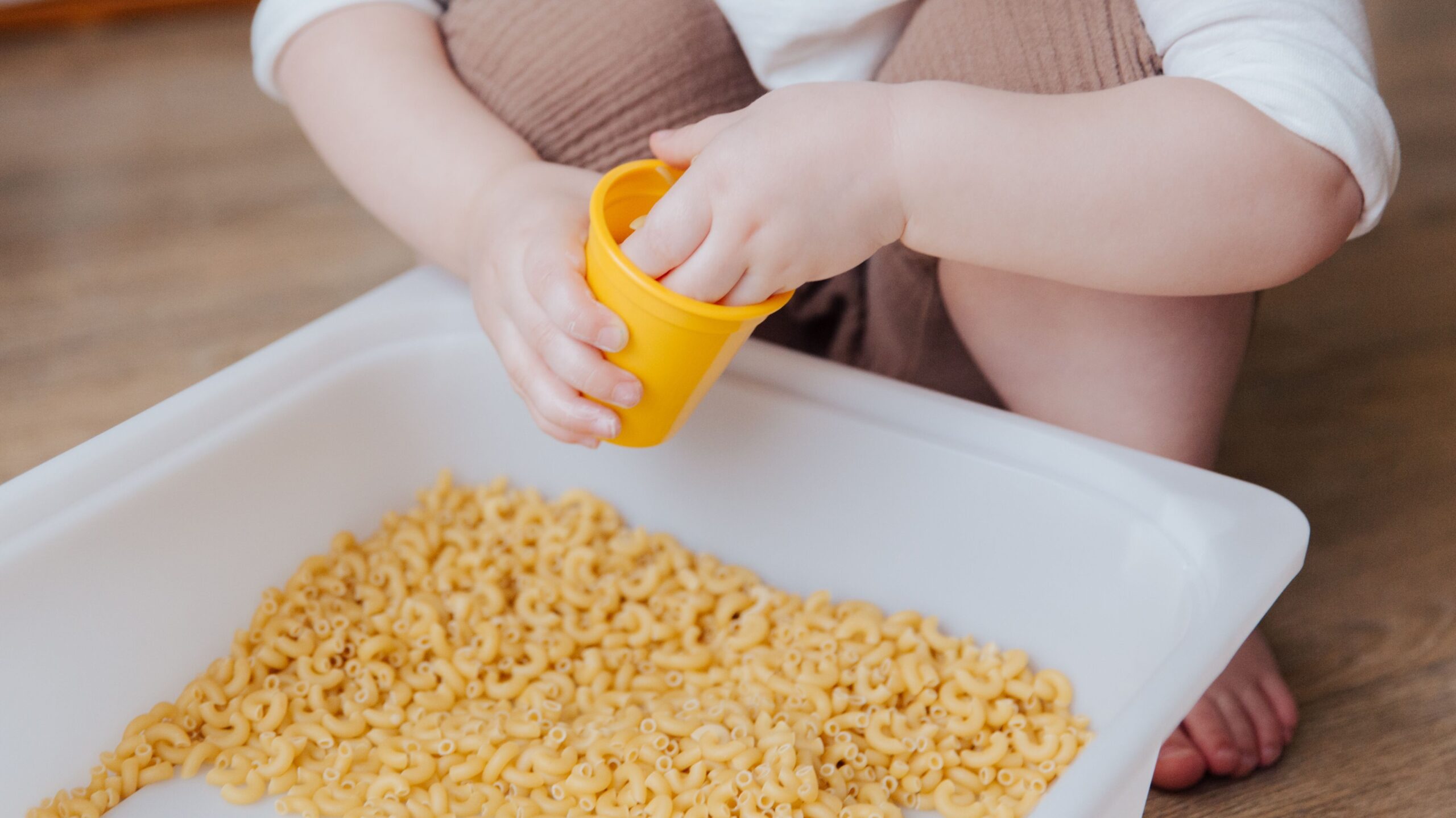
1. Colored Rice Bin Mix uncooked rice with a few drops of food coloring and a splash of vinegar in a zip-top bag, shake, then spread on a tray to dry for an hour. Add measuring cups, spoons, and small containers for scooping and pouring practice.
2. Oatmeal Dig Dry oatmeal has a satisfying texture and is completely safe if a curious toddler decides to taste it. Bury small toys or textured objects inside and let your child hunt for them.
3. Edible Finger Paint Mix plain yogurt with a few drops of food coloring for a paint that’s safe for babies who still explore with their mouths. Spread on a highchair tray or large sheet of paper.
4. Frozen Fruit Squish Bags Put soft fruit like bananas or berries in a sealed zip-top bag and let toddlers squish it between their fingers. The bag keeps things contained while still delivering full sensory feedback.
Texture-Based Activities (Best for Ages 2-6)
Once taste-testing is less of a concern, you can introduce a wider range of textures.
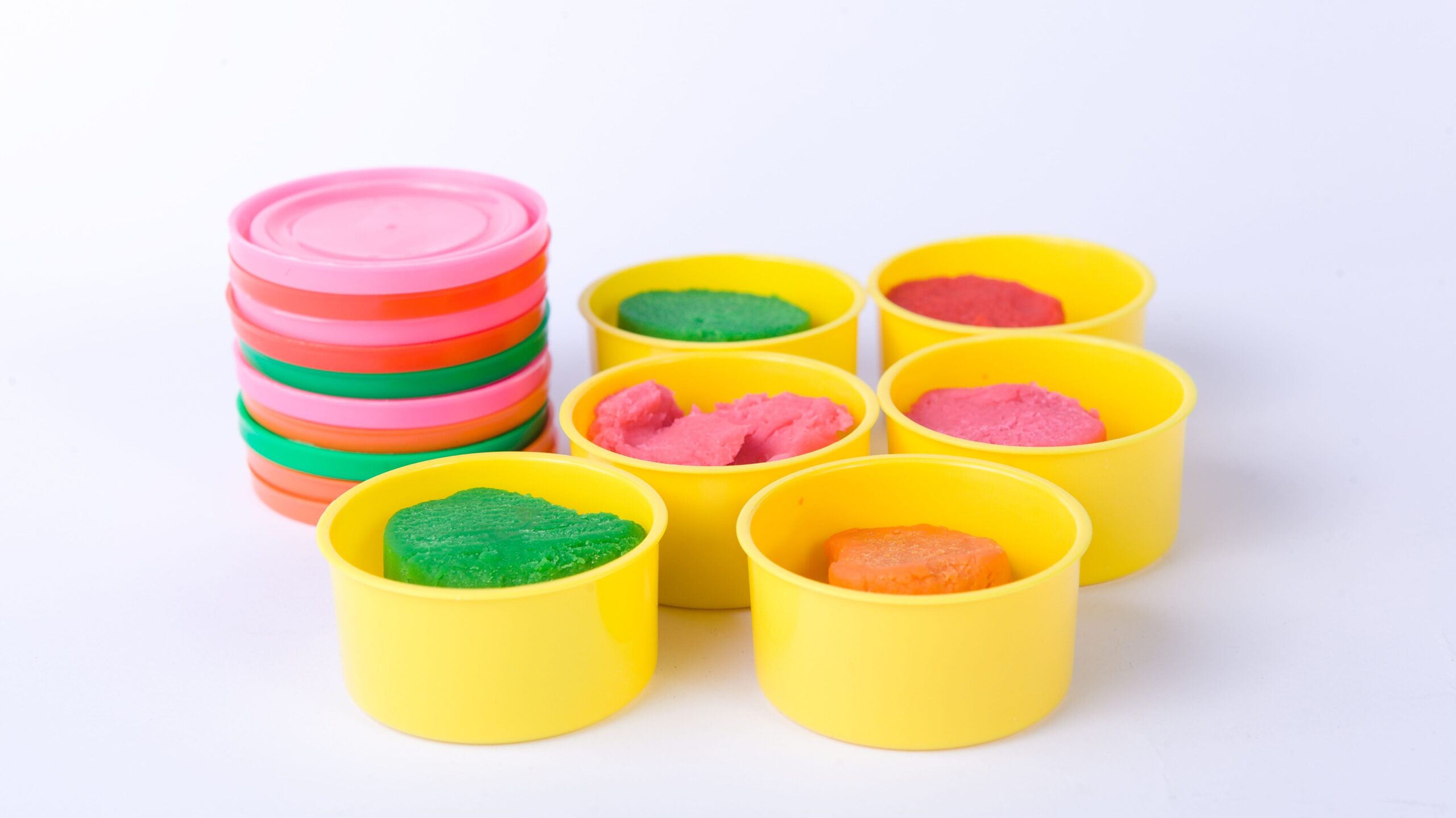
5. Homemade Playdough Combine 2 cups flour, 1 cup salt, 2 tablespoons cream of tartar, 2 tablespoons oil, and 1.5 cups boiling water. Cook over low heat, stirring until it forms a dough, then knead once cooled. Add food coloring or a few drops of essential oil for an extra sensory layer.
6. Cloud Dough Mix 8 cups of flour with 1 cup of baby oil. It holds a shape like wet sand but stays soft and moldable, making it ideal for scooping, building, and molding without the stickiness of playdough.
7. Water Beads Small polymer beads expand dramatically when soaked in water, creating a squishy, slippery texture kids love. Note: these are not taste-safe and should only be used with children old enough not to put things in their mouths, under close supervision.
8. Shaving Cream Art Spread shaving cream on a table or tray and let kids draw shapes, letters, or pictures with their fingers. It doubles as an early handwriting practice tool.
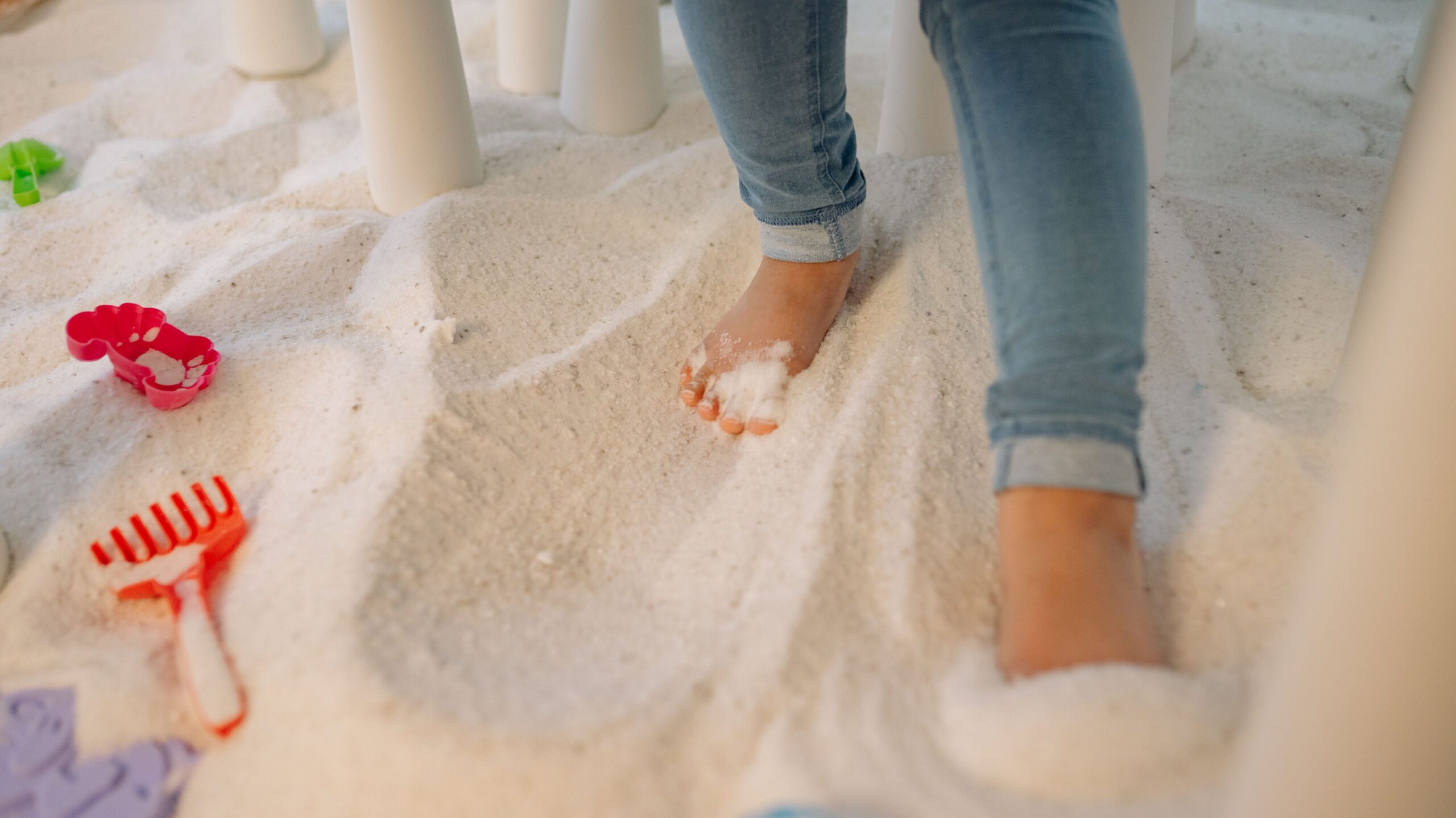
9. Kinetic Sand Mix 2 cups of fine sand with 1 tablespoon of cornstarch and a small amount of water until it holds together but crumbles when broken. It’s less messy than regular sand and cleans up easily.
Nature-Based Sensory Play (Best for Ages 3-8)
Outdoor sensory play adds fresh air and gross motor movement to the mix.
10. Mud Kitchen Set up an outdoor “kitchen” with old pots, spoons, and containers, then let kids mix dirt, water, leaves, and flowers into “recipes.” This activity is especially good for imaginative and open-ended play.
11. Nature Texture Walk Give kids a small bag and send them on a hunt for five different textures outside — smooth, rough, bumpy, soft, prickly. Afterward, sort and describe each item together.
12. Ice Excavation Freeze small toys or natural items like leaves and flowers in a container of water overnight. Give kids a spray bottle of warm water and a small tool to “excavate” the frozen treasures — a favorite for building patience and fine motor control.
Sound and Movement Sensory Activities (Best for Ages 1-5)
Not all sensory play is about touch. These activities target auditory and vestibular systems.
13. Homemade Shakers Fill small plastic bottles or containers with rice, beans, or bells and seal tightly. Let kids experiment with different fillings to compare sounds.
14. Balance Beam Walk Use painter’s tape to create a line on the floor, or a low balance beam if you have one, and have kids walk heel-to-toe. This builds proprioceptive awareness and body control.
15. Bubble Wrap Stomp Tape bubble wrap to the floor and let kids stomp, jump, or crawl across it. The popping sound and resistance under their feet make this a simple but highly engaging sensory-motor activity.
Tips for Sensory Play Success
- Match the activity to the child’s tolerance. Some children are naturally more sensitive to textures. Start with drier, less intense options (rice, oatmeal) before moving to wetter or stickier ones (playdough, water beads).
- Set boundaries before you start. A simple rule like “sensory materials stay in the bin” helps manage expectations and cleanup.
- Lay down a sheet or mat. A cheap plastic tablecloth under a sensory bin saves significant cleanup time.
- Rotate activities. Kids tend to stay more engaged when sensory bins are refreshed every week or two rather than left out indefinitely.
- Supervise closely with small items. Water beads, buttons, and other choking hazards should never be used with children who still mouth objects.
Final Thoughts
Sensory play doesn’t require an expensive kit or a dedicated playroom — a bag of rice, a bowl of oatmeal, or a patch of mud in the backyard can deliver the same developmental benefits as store-bought sensory toys. The key is variety: rotating between textures, sounds, and movement-based activities keeps kids engaged while supporting different areas of development.
Try one or two activities from this list this week and see which ones yo

Aina Arif is a mother of two young children and the founder of NatureNestia. Based in Pakistan, she spent three years as an early childhood educator before becoming a full-time parent and writer. She writes about learning through play, managing difficult behaviour, and building strong family bonds.