
Introduction
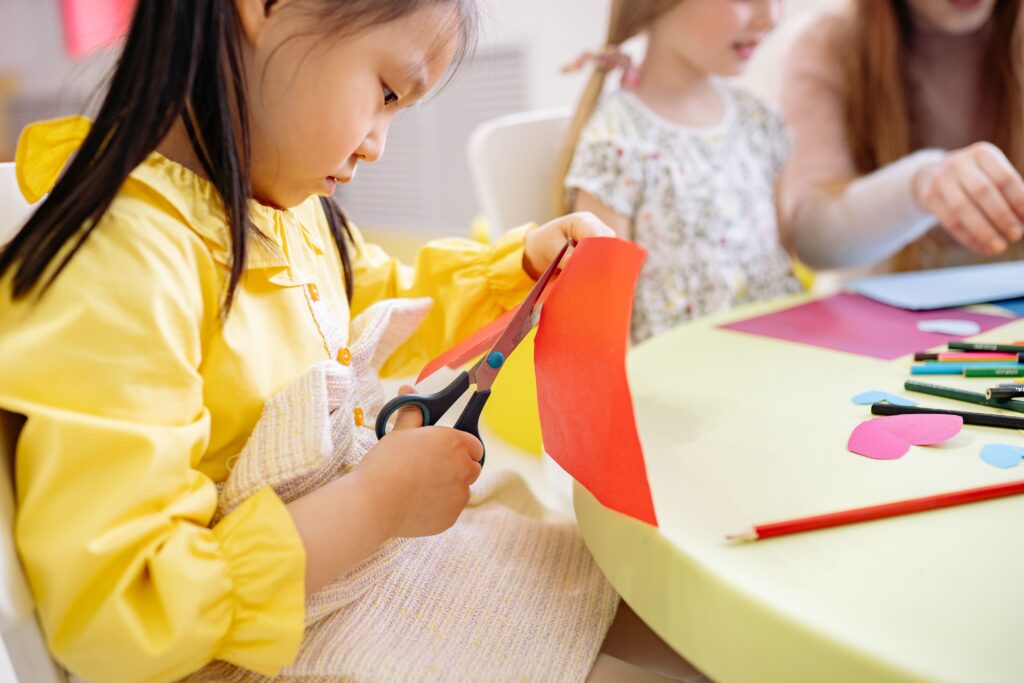
Learning to use scissors is an important milestone in early childhood. For preschoolers, cutting isn’t simply about making lines on paper. It requires children to coordinate both hands, control their fingers, follow a visual path, and use their eyes and hands together.
The good news is that children don’t need complicated worksheets to develop these skills. Simple activities using paper, playdough, cardboard, magazines, and other child-friendly materials can make cutting practice fun and meaningful.
Scissor skills activities for preschoolers can also support fine motor development, hand strength, coordination, concentration, and independence. With regular practice and appropriate supervision, children can gradually move from simple snipping to cutting lines, curves, shapes, and eventually more detailed pictures.
This guide shares 25 fun cutting activities for preschoolers, along with tips for teaching scissor skills, age-appropriate ideas, safety advice, and common mistakes to avoid.
What Are Scissor Skills?
Scissor skills refer to a child’s ability to safely hold and operate scissors while controlling the cutting movement.
Successful cutting requires several skills working together. Children need to open and close the scissors with their fingers, stabilize the paper with their other hand, move the paper and scissors in coordination, and visually follow the cutting path.
These abilities develop gradually.
A child may begin by making random snips and eventually progress to:
Snipping → Cutting straight lines → Cutting curves → Cutting simple shapes → Cutting detailed shapes
Every child develops at a different pace, so there’s no need to rush through these stages.
Why Are Scissor Skills Important?
Cutting activities provide children with valuable opportunities to strengthen their hands and develop coordination.
Regular practice can support:
- Fine motor development
- Hand strength
- Finger coordination
- Hand-eye coordination
- Bilateral coordination
- Visual tracking
- Concentration
- Spatial awareness
- Following directions
- Independence
- Confidence
These skills can also support other everyday activities such as dressing, opening containers, drawing, coloring, and eventually handwriting.
When Should Preschoolers Start Using Scissors?
Children can begin exploring scissors when they are developmentally ready and can use them safely with adult supervision.
Younger preschoolers generally start with simple snipping activities, while older preschoolers may gradually practice cutting lines and shapes.
There is no single age at which every child should be able to cut perfectly. Development, experience, hand strength, and interest all vary.
Always choose scissors and activities that are appropriate for the child’s developmental level.
How to Choose Scissors for Preschoolers
Choosing suitable scissors can make cutting practice much easier.
Look for:
- Child-sized scissors
- Comfortable finger holes
- Blunt or rounded tips
- A size appropriate for small hands
- Scissors designed for children’s use
Some scissors are specifically designed for beginners and may make simple snipping easier.
Adults should supervise children whenever scissors are being used.
How to Teach a Preschooler to Use Scissors
Start slowly rather than expecting a child to cut a complete shape immediately.
Show the child how to hold the scissors comfortably and keep fingers away from the blades.
Teach them to use their other hand to hold and turn the paper.
You can use a simple phrase:
“Thumb up, open, close, and move.”
Demonstrate the motion first, then allow the child to practice.
Keep early sessions short and positive.
25 Scissor Skills Activities for Preschoolers
1. Snip the Paper
Start with strips of paper and let children make simple snips along the edge.
They don’t need to follow a line at first.
This introduces the basic open-and-close movement of scissors.
Skill focus: Scissor control and hand strength.
2. Cut Straight Lines
Draw thick, straight lines on pieces of paper.
Ask children to cut directly along the lines.
Start with short lines before introducing longer ones.
You can turn the lines into roads, train tracks, or paths for toy characters.
Skill focus: Directional control and visual tracking.
3. Cut Wavy Lines
Once children are comfortable with straight lines, introduce gentle curves and waves.
Draw large, easy-to-follow paths.
Tell your child to slowly follow the road with the scissors.
Skill focus: Cutting control and coordination.
4. Zigzag Cutting
Draw large zigzag lines across paper.
Children can practice following the peaks and valleys.
Keep the zigzags wide at first because tight turns can be difficult for beginners.
Skill focus: Direction changes and hand-eye coordination.
5. Grass Cutting
Draw a large patch of grass on green paper.
Add vertical lines along the top.
Children can snip along the lines to create grass.
This turns simple cutting practice into a fun craft.
Skill focus: Repeated snipping and control.
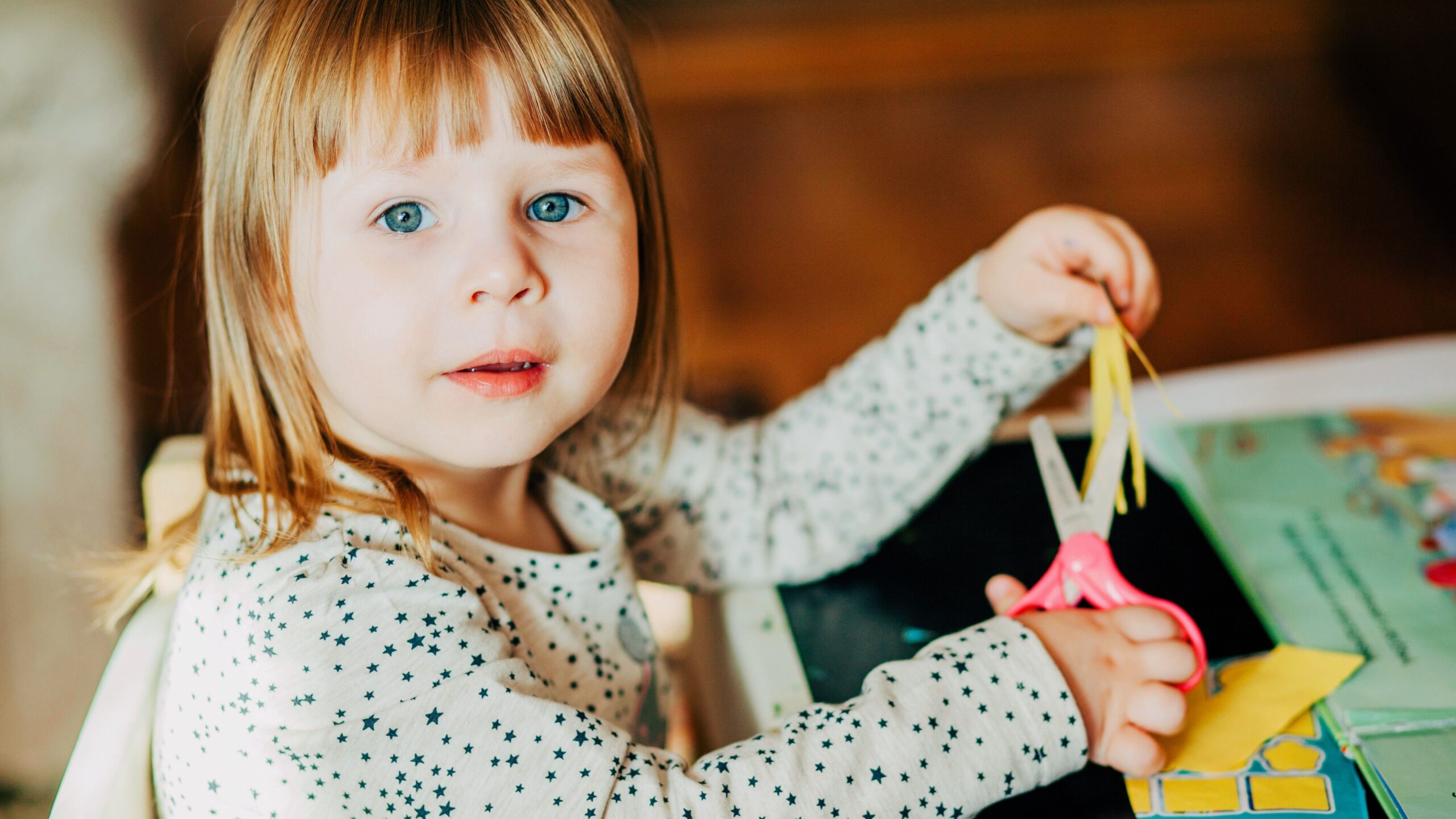
6. Fringe Cutting
Fold or hold a strip of paper and make several straight cuts from one side without cutting all the way through.
The result looks like fringe.
Children can use the fringe to create hair, grass, animal fur, or decorations.
Skill focus: Controlled cutting and stopping.
7. Playdough Cutting
Give children playdough and child-safe scissors.
They can practice cutting playdough into small pieces.
This can be easier for some beginners because the material stays in place.
Skill focus: Hand strength and scissor movement.
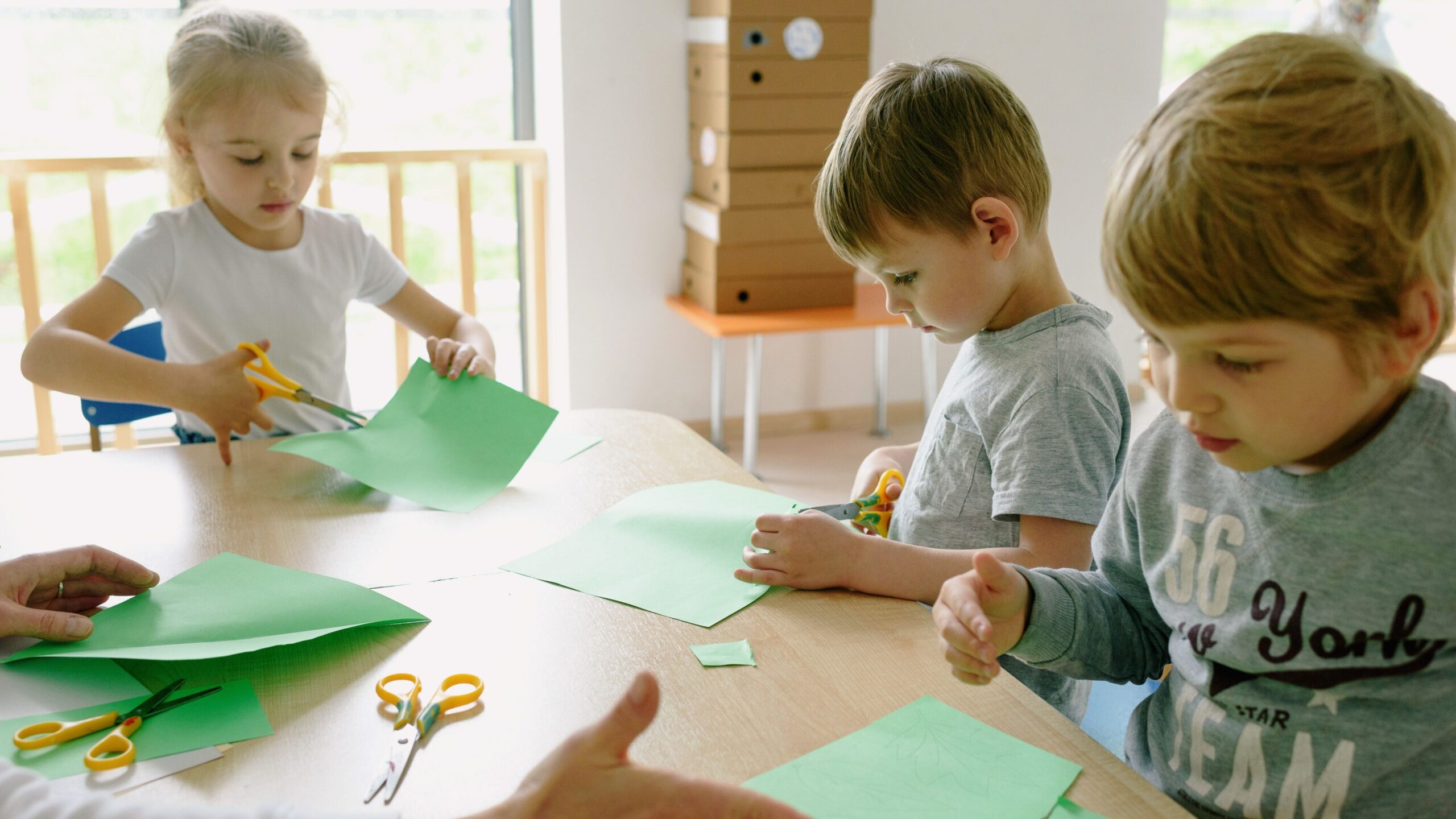
8. Cut Paper Strips
Give children several strips of colorful paper.
Ask them to cut each strip into smaller pieces.
They can then use the pieces for a collage.
This combines cutting practice with creativity.
Skill focus: Repeated cutting and hand coordination.
9. Make a Paper Haircut
Draw simple faces on paper.
Give children strips of paper around the top of the head to represent hair.
Let them cut the “hair” into different styles.
They might make short hair, long hair, or funny hairstyles.
Skill focus: Controlled snipping.
10. Cut Around Simple Shapes
Start with large circles, squares, and triangles.
Draw a thick outline around each shape.
Ask children to slowly cut around the outside.
Large shapes are easier for beginners than tiny or detailed designs.
Skill focus: Curved and directional cutting.
11. Make a Paper Garden
Draw or print simple flowers.
Children can cut them out and glue them onto green paper.
Add stems, leaves, grass, and a sun to create a complete garden.
Skill focus: Shape cutting and creative expression.
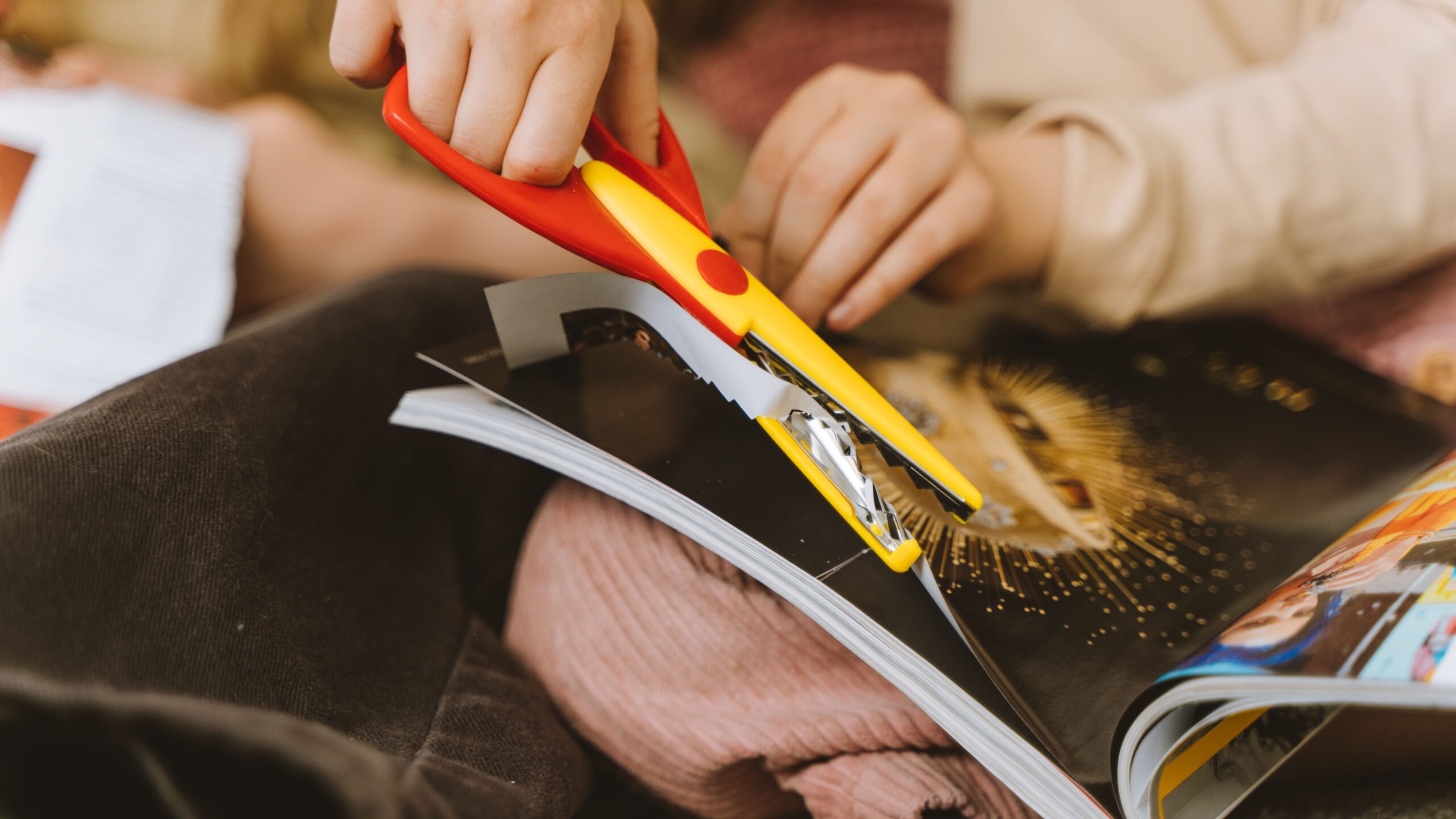
12. Cut Magazine Pictures
Use old magazines or printed pictures.
Ask children to cut out large, simple pictures and create a collage.
Choose publications without inappropriate content and supervise the activity.
Skill focus: Following irregular shapes and visual attention.
13. Animal Cutting Activity
Draw simple animals such as fish, butterflies, or birds.
Children can cut around the shapes and decorate them afterward.
For beginners, keep the shapes large with smooth outlines.
Skill focus: Shape recognition and cutting control.
14. Make a Paper Chain
Give children strips of paper.
They can cut strips from larger sheets and use the pieces to create a paper chain with adult assistance.
Paper chains can be used for classroom or home decorations.
Skill focus: Straight-line cutting and sequencing.
15. Snip the Monster’s Hair
Draw a silly monster with long paper strips sticking from its head.
Invite children to give the monster a haircut.
They can make the hair short, uneven, or extra funny.
This playful approach can make repeated snipping much more enjoyable.
Skill focus: Repeated snipping and confidence.
16. Cut Along a Road
Draw roads with straight lines, curves, and gentle turns.
Children can cut along the road while pretending they’re helping a car travel to its destination.
Start with wide roads and gradually make them narrower.
Skill focus: Visual tracking and directional control.
17. Paper Snowflakes
Older preschoolers can try making simple paper snowflake designs with adult guidance.
Begin with basic folding and simple cuts.
Avoid complicated patterns that may be frustrating for beginners.
Skill focus: Cutting precision and following a design.
18. Cut and Sort Colors
Provide sheets of different colored paper.
Children cut the paper into strips or small pieces and then sort the pieces by color.
This combines fine motor practice with early learning.
Skill focus: Cutting, sorting, and color recognition.
19. Make a Paper Collage
Give children different types of paper.
They can cut or snip the paper into pieces and glue them onto a larger sheet to create an abstract collage.
There doesn’t need to be a specific finished picture.
Skill focus: Creative cutting and hand control.
20. Cut Out Numbers
Create large, simple number outlines.
Children can cut around the numbers and then decorate them.
This combines scissor practice with number recognition.
Skill focus: Shape awareness and early math learning.
21. Cut Out Letters
For preschoolers who are ready, provide large letters with simple outlines.
Children can cut around the letters and use them to spell their name.
Don’t expect perfect cutting.
The goal is to provide practice while keeping the experience enjoyable.
Skill focus: Cutting precision and letter awareness.
22. Paper Plate Snipping
Draw lines around the edge of a paper plate.
Children can carefully make small cuts toward the center without reaching the middle.
The finished plate can become a sun, flower, lion’s mane, or colorful decoration.
Skill focus: Controlled snipping and stopping.
23. Nature-Themed Cutting Craft
Create a simple paper nature scene.
Children can cut out leaves, flowers, clouds, or grass and glue them onto a background.
This is especially useful when learning about seasons or nature.
Skill focus: Shape cutting and creativity.
24. Make a Paper Puppet
Children can cut out large paper shapes for a simple puppet.
For example, they can cut ears, eyes, a mouth, and other features before assembling the character with adult help.
Once complete, use the puppet for storytelling.
Skill focus: Cutting shapes, creativity, and language development.
25. Cut-and-Paste Picture
Draw a simple picture divided into several large pieces.
Children cut out the pieces and glue them onto another sheet to recreate the picture.
For example, create a simple house with a roof, windows, door, and tree.
Skill focus: Cutting, visual-spatial skills, and following a sequence.
Scissor Activities for 3-Year-Olds
Younger preschoolers are usually best supported with simple activities that focus on basic snipping.
Try:
- Snipping paper strips
- Cutting playdough
- Making grass
- Fringe cutting
- Cutting short straight lines
- Paper plate snipping
Keep materials large and easy to handle.
The focus should be exploration rather than perfect cutting.
Scissor Activities for 4-Year-Olds
Four-year-olds may be ready for more controlled cutting activities.
Try:
- Straight-line cutting
- Wavy lines
- Zigzags
- Simple shapes
- Paper collages
- Cutting pictures
- Paper gardens
- Simple crafts
Continue to provide plenty of opportunities for free practice.
Scissor Activities for 5-Year-Olds
Older preschoolers may be ready to work with more detailed shapes.
Try:
- Curved shapes
- Simple letters
- Numbers
- More detailed pictures
- Cutting around pictures
- Paper puppets
- Paper snowflakes with adult guidance
- Cut-and-paste scenes
Remember that age is only a general guide. Choose activities based on the child’s current abilities.
How to Make Scissor Practice More Fun
Cutting practice doesn’t have to feel like homework.
Turn it into a story or game.
For example:
“The monster needs a haircut!”
“Can you cut the road so the car can reach the house?”
“Let’s make a garden full of paper flowers.”
Children are often more motivated when they have a purpose for their cutting.
Use Different Materials
Once children understand basic cutting, introduce different textures and thicknesses of paper.
You can try construction paper, thin cardboard, tissue paper, or magazines, depending on the child’s skill level.
Let Children Create
Don’t always provide an exact finished product.
Give children materials and let them decide what they want to make.
Creative freedom can make fine motor practice much more enjoyable.

Scissor Safety Tips for Preschoolers
Safety should always come first.
Teach children to:
- Use scissors while sitting in an appropriate place.
- Keep fingers away from the blades.
- Cut only approved materials.
- Carry scissors with the blades closed and pointed downward.
- Hand scissors to another person handle-first.
- Return scissors to their storage place after use.
Always supervise young children during scissor activities.
Choose child-appropriate scissors and replace damaged scissors.
What If My Child Is Afraid of Scissors?
Some children may initially feel nervous about using scissors.
Don’t force them.
Begin with activities that build hand strength, such as playdough, blocks, tongs, or clothespins.
Then allow the child to watch an adult demonstrate safe cutting.
When they’re ready, start with very simple snipping.
Confidence often develops through gradual exposure and successful experiences.
Common Scissor Skill Mistakes
Expecting Perfect Cutting
Preschool cutting doesn’t need to be perfectly accurate.
Wobbly lines and uneven shapes are part of learning.
Starting With Difficult Shapes
Don’t begin with tiny circles or complicated pictures.
Start with short straight lines and gradually increase difficulty.
Giving Too Much Help
Adults should provide guidance and safety supervision, but children also need opportunities to practice independently.
Practicing for Too Long
Young children can become tired quickly.
Short, enjoyable activities are often more effective than long sessions.
Comparing Children
Children develop fine motor skills at different rates.
Focus on your child’s progress rather than comparing them with siblings or classmates.
Scissor Skills and Pre-Writing Development
Scissor practice can complement other fine motor and pre-writing activities.
Cutting requires children to coordinate both hands and control small movements. Similar coordination is useful for drawing and eventually handwriting.
For a balanced preschool learning routine, combine cutting with:
- Drawing
- Coloring
- Playdough
- Tracing
- Building blocks
- Threading
- Sticker activities
- Puzzles
- Sensory play
This gives children a variety of ways to strengthen and coordinate their hands.
Frequently Asked Questions
What are the best scissor skills activities for preschoolers?
Simple snipping, straight-line cutting, wavy lines, playdough cutting, paper strips, fringe cutting, and simple shape cutting are excellent starting activities.
What age should children start using scissors?
Children can begin learning basic scissor skills during the preschool years when they are developmentally ready to use scissors safely. The exact timing varies from child to child.
How can I teach my preschooler to hold scissors?
Demonstrate a comfortable, safe grip and encourage the child to keep the thumb oriented upward when appropriate for the scissors being used. Follow the manufacturer’s guidance for the specific scissors.
How can I improve my child’s scissor skills?
Provide regular opportunities for short, enjoyable cutting activities. Start with easy snipping and straight lines before progressing to curves and shapes.
What can children cut besides paper?
Depending on the scissors and child’s skill level, children can practice with playdough, thin cardboard, magazines, and other suitable materials. Always ensure the material is safe and appropriate.
Is cutting good for fine motor skills?
Yes. Cutting involves finger movement, hand strength, coordination, visual tracking, and the coordinated use of both hands.
What should I do if my child struggles with scissors?
Return to simpler activities and provide opportunities to strengthen hand and finger muscles through playdough, blocks, tongs, threading, and other fine motor activities. If you have persistent concerns about your child’s motor development, discuss them with a pediatrician, teacher, or qualified child-development professional.
Conclusion
Scissor skills are an important part of preschool development, but children don’t need to master them overnight. Learning to cut is a gradual process that begins with simple snipping and can eventually progress to straight lines, curves, shapes, and more detailed designs.
The 25 scissor skills activities for preschoolers in this guide provide plenty of opportunities to practice while keeping learning playful. From paper strips and playdough to colorful collages and creative crafts, children can strengthen their hands and improve coordination without feeling like they’re doing formal exercises.
Remember to choose activities that match your child’s current abilities, provide appropriate supervision, and celebrate effort rather than perfection. When children are given patient guidance and plenty of opportunities to practice, they can gradually become more confident and independent with scissors.
Most importantly, make cutting fun. A simple pair of child-friendly scissors and some paper can turn an ordinary afternoon into an opportunity for creativity, learning, and skill development.

Aina Arif is a mother of two young children and the founder of NatureNestia. Based in Pakistan, she spent three years as an early childhood educator before becoming a full-time parent and writer. She writes about learning through play, managing difficult behaviour, and building strong family bonds.