
By Aina Arif | Updated June 2026 | 11 min read
Why 5-Minute Learning Activities Are So Powerful
Many parents think meaningful learning requires long lessons, special worksheets, or expensive educational toys.
In reality, children often learn best in short, engaging bursts of activity. Young learners have naturally shorter attention spans, so five-minute activities can keep them interested while helping them build new skills. Research suggests that brief, play-based learning experiences support children’s attention, motivation, and knowledge retention without overwhelming them.
The best part?
You can fit these activities into everyday moments—before school, while dinner is cooking, or during a short break.
⏱️ 5-Minute Challenge 1: Alphabet Speed Hunt
Goal
Find as many objects as possible that begin with one letter.
You’ll Need
Nothing except your home.
How to Play
Choose one letter.
Example:
Letter B
Set a timer for 5 minutes.
Your child searches for:
- Book
- Bottle
- Ball
- Basket
Count how many items they found before the timer ends.
Skills Built
- Letter recognition
- Vocabulary
- Observation
- Phonics
⭐ Quick Tip: Change the letter every day.
🔢 5-Minute Challenge 2: Count Everything
Goal
Practice counting using real-life objects.
You’ll Need
Any household items.
Examples:
- Socks
- Cups
- Toys
- Fruits
- Blocks
How to Play
Ask your child:
- Count 10 spoons.
- Count all the blue toys.
- Count the pillows.
- Count the chairs.
Then ask:
“Which group has more?”
Skills Built
- Counting
- Comparing quantities
- Number recognition
- Observation
⭐ Quick Tip: Let your child become the teacher and give you counting challenges.
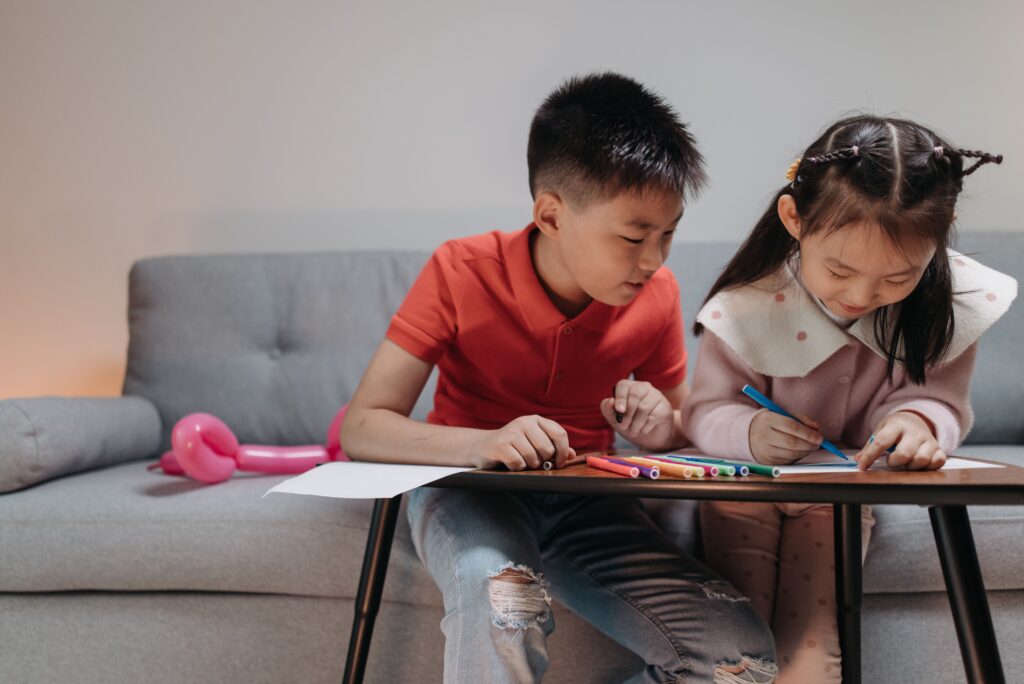
🎨 5-Minute Challenge 3: Draw in One Minute
Goal
Think fast and draw creatively.
You’ll Need
- Paper
- Crayons
How to Play
Give a fun prompt like:
- Draw your dream pet.
- Draw a flying car.
- Draw an underwater house.
Set a timer.
When time is up, ask your child to explain their drawing.
Skills Built
- Creativity
- Speaking
- Imagination
- Fine motor skills
⭐ Quick Tip: Don’t judge the artwork—celebrate the ideas behind it.
📚 5-Minute Challenge 4: Story Starter
Goal
Create a story together.
How to Play
Start with one sentence.
“One rainy morning, a tiny dragon knocked on our door…”
Take turns adding one sentence until the timer finishes.
Every story will be different.
Skills Built
- Creativity
- Language
- Listening
- Storytelling
⭐ Quick Tip: The sillier the story, the better.
🏃 5-Minute Challenge 5: Move and Learn
Goal
Combine movement with learning.
How to Play
Call out simple instructions:
- Hop 5 times.
- Clap 8 times.
- Spin twice.
- Jump 10 times.
- Touch something red.
Mix math, colors, and actions together.
Skills Built
- Gross motor skills
- Listening
- Number recognition
- Coordination
⭐ Quick Tip: Let your child invent the next movement challenge.
🌟 Why These Mini Activities Work
Children don’t always need long study sessions to learn something new.
Five-minute activities are easy to repeat, fit naturally into busy family routines, and help children practice important skills through active participation instead of passive learning. Short, playful experiences can be especially effective for maintaining attention and building confidence over time.
💡 Quick Parent Tips
Instead of trying to complete every activity in one day:
- Pick one challenge each morning.
- Rotate different activities throughout the week.
- Focus on fun instead of perfection.
- Celebrate curiosity and effort.
- End while your child is still excited to play.
✅ Today’s 5-Minute Wins
☐ Found objects beginning with one letter
☐ Counted everyday items
☐ Created a quick drawing
☐ Invented a funny story
☐ Moved while learning
5-Minute Challenge 6: Shape Detective
🎯 Today’s Mission
Can your child find different shapes hiding around the house before the timer ends?
⏱️ Time Needed
5 minutes
🧺 You’ll Need
Nothing—just your home!
▶️ How to Play
Choose one shape and start the timer.
Challenge your child to find as many examples as possible.
Try searching for:
- 🔵 Circles (clock, plate, coin)
- 🟨 Squares (coasters, tiles)
- ▭ Rectangles (books, doors)
- 🔺 Triangles (toy blocks, decorations)
When time is up, count how many shapes they discovered.
🌟 Skills Practiced
- Shape recognition
- Observation
- Vocabulary
- Visual discrimination
💡 Bonus Idea: Ask your child to draw their favorite shape afterward.
🧠 5-Minute Challenge 7: Memory Master
🎯 Today’s Mission
Can your child remember everything before time runs out?
⏱️ Time Needed
5 minutes
🧺 You’ll Need
- 6–10 household objects
- A towel or cloth
▶️ How to Play
Arrange the objects on a tray.
Give your child one minute to observe them.
Cover the objects with a towel.
Now ask them to name everything they remember.
Reveal the objects and see how many were correct.
🌟 Skills Practiced
- Working memory
- Concentration
- Observation
- Recall
💡 Bonus Idea: Increase the number of objects every week.
🎵 5-Minute Challenge 8: Music Freeze
🎯 Today’s Mission
Can your child freeze like a statue?
⏱️ Time Needed
5 minutes
🧺 You’ll Need
- Music
- A phone or speaker
▶️ How to Play
Play your child’s favorite song.
Everyone dances.
Pause the music randomly.
When it stops…
Everyone freezes!
Anyone who moves performs a funny action like:
- Roar like a lion.
- Waddle like a penguin.
- Hop like a frog.
🌟 Skills Practiced
- Listening
- Self-control
- Balance
- Coordination
💡 Bonus Idea: Add educational instructions like “Freeze while holding up three fingers.”
🌍 5-Minute Challenge 9: Nature Explorer
🎯 Today’s Mission
Can your child discover nature’s tiny treasures?
⏱️ Time Needed
5 minutes
🧺 You’ll Need
Nothing except access to a garden, balcony, or outdoor space.
▶️ How to Play
Set a timer.
Challenge your child to find:
🍃 One leaf
🌼 One flower
🐜 One insect (observe safely)
🪨 One small stone
☁️ One interesting cloud
Talk about what they found before going inside.
🌟 Skills Practiced
- Observation
- Science awareness
- Curiosity
- Vocabulary
💡 Bonus Idea: Take photos and create a simple nature album together.
📖 5-Minute Challenge 10: Question of the Day
🎯 Today’s Mission
Can your child become today’s biggest thinker?
⏱️ Time Needed
5 minutes
🧺 You’ll Need
Only your imagination.
▶️ How to Play
Ask one fun question.
Examples:
- If animals could talk, what would your pet say?
- What would happen if it rained chocolate?
- Which superpower would you choose?
- If you could invent something, what would it be?
There are no wrong answers.
Simply enjoy the conversation.
🌟 Skills Practiced
- Critical thinking
- Speaking
- Creativity
- Confidence
💡 Bonus Idea: Write down your child’s funniest answers in a notebook.
🌈 Create Your Own “5-Minute Challenge Jar”
Write different activities on small pieces of paper.
Examples include:
- Read one page.
- Count backward from 20.
- Draw your favorite animal.
- Find something blue.
- Build the tallest block tower.
- Sing the alphabet.
- Balance on one foot.
- Tell a joke.
- Name five fruits.
- Hop across the room.
Place them in a jar.
Each day, let your child pick one challenge at random.
It adds excitement because they never know which activity they’ll get next.
🌟 Why Small Learning Moments Matter
Children don’t always need long lessons to make meaningful progress.
Short, enjoyable activities encourage regular practice, reduce frustration, and help children stay motivated. Over time, these small moments build important skills in language, math, creativity, problem-solving, and confidence.
When learning fits naturally into daily life, children are more likely to stay curious and develop positive attitudes toward discovering new things.
💙 Parent Reminder
Some days you’ll have plenty of time.
Other days you’ll only have five minutes.
Both are enough.
What matters most isn’t the length of the activity—it’s the quality of the interaction.
A few minutes of focused attention, encouragement, and shared laughter can leave a lasting impression on your child’s learning journey.
🌟 Final Thoughts
Learning doesn’t have to wait for a classroom or a long study session.
With just five minutes and a little creativity, you can turn ordinary moments into exciting opportunities for growth.
Whether you’re counting spoons, dancing to music, telling stories, or exploring nature, you’re helping your child build confidence, curiosity, and essential life skills.
Remember, it’s not about doing more—it’s about making the moments you already have more meaningful.
Start with one challenge today, and watch how those five minutes can inspire a lifelong love of learning.
❓ Frequently Asked Questions
Are 5-minute learning activities really effective?
Yes. Young children often learn best through short, engaging activities that match their attention span. Regular five-minute challenges can build important skills over time.
What age are these activities suitable for?
Most activities work well for children between 2 and 8 years old, with simple adjustments based on your child’s abilities and interests.
How many challenges should we do each day?
One or two challenges are enough. If your child is enjoying them, you can always add more, but it’s better to end while they’re still having fun.
Do I need special educational toys?
No. Most of these activities use everyday household items or require no materials at all, making them easy and budget-friendly.
📚 References
- American Academy of Pediatrics – Learning Through Play
- UNICEF Parenting – Everyday Learning Activities
- Harvard Center on the Developing Child – Brain Development Through Play
- National Association for the Education of Young Children (NAEYC)
- Parentify – Short Learning Activities for Young Children
🌟 Continue Exploring on NatureNestia
- Fun Learning Games for Kids at Home
- Easy Math Games for Kids at Home
- Best Memory Games for Kids at Home
- Screen-Free Activities for Kids at Home
- Educational Games for Kids Without Materials
- Simple Daily Learning Routine for Kids at Home

Aina Arif is a mother of two young children and the founder of NatureNestia. Based in Pakistan, she spent three years as an early childhood educator before becoming a full-time parent and writer. She writes about learning through play, managing difficult behaviour, and building strong family bonds.
Pingback: Fun Learning Games for Kids at Home -
yes
Pingback: Easy Math Games for Kids at Home -
Pingback: Best Memory Games for Kids at Home -