
By Aina Arif | Published: May 2026 | 7 min read
Before children can read books, write stories, or spell their names, they first need to become familiar with one of the most important building blocks of language—the alphabet.
For adults, the letters A to Z seem simple because we’ve known them for years.
For a young child, however, every letter is a brand-new symbol waiting to be discovered.
That’s why alphabet learning should never feel like memorizing a long list of shapes. Instead, it should feel like an exciting adventure filled with games, movement, music, creativity, and exploration. Research consistently shows that young children learn letters more effectively through playful, multisensory experiences than through repetition alone.
Whether you’re teaching at home, in a preschool classroom, or through homeschooling, these alphabet learning activities will help children build confidence while having fun every step of the way.
Every Great Reader Starts With Letter Recognition
Imagine giving a child their favorite storybook.
Before they can read even one sentence, they first need to recognize the letters on the page.
Letter recognition is one of the strongest early predictors of later reading success.
When children quickly identify both uppercase and lowercase letters, they become better prepared for:
- Learning letter sounds
- Beginning phonics
- Writing simple words
- Reading beginner books
- Building vocabulary
- Developing confidence
Instead of rushing through the alphabet, focus on helping children truly understand each letter.
Mission 1: Meet the Alphabet
Rather than introducing all 26 letters in one week, slow down.
Children remember information better when it’s introduced in small, meaningful steps.
A simple routine could be:
- Learn one or two new letters each week.
- Review previously learned letters every day.
- Connect each letter with familiar objects.
- Practice through songs and games instead of drills.
Small successes build lasting confidence.
Activity 1: Alphabet Treasure Hunt
Turn your living room into an alphabet adventure.
Hide magnetic letters, foam letters, or printed alphabet cards around the room.
Give your child a small basket.
As they find each letter, encourage them to:
- Say the letter name.
- Say its sound (when appropriate).
- Think of something that starts with that letter.
For example:
B
“B says /b/. B is for Ball.”
This combines movement, observation, and early literacy into one playful activity.
Activity 2: Build Giant Letters
Children often remember shapes better when they create them.
Instead of writing with a pencil immediately, use everyday materials to build large letters.
Try using:
- Craft sticks
- LEGO bricks
- Pipe cleaners
- String
- Playdough
- Cotton swabs
Ask your child:
“Can you build the letter M?”
Hands-on construction strengthens both visual memory and fine motor development.
Activity 3: Alphabet Sensory Tray
Fill a shallow tray with:
- Colored rice
- Sand
- Salt
- Flour
Call out a letter.
Invite your child to trace it slowly using one finger.
The textured surface provides gentle sensory feedback, making letter formation easier to remember.
This activity is especially helpful for children who aren’t yet ready to write with a pencil.
Activity 4: Alphabet Art Studio
Choose one letter.
For example:
A
Create an art project using only objects beginning with that letter.
You might glue:
- Apple pictures
- Ant drawings
- Acorns
- Airplane stickers
Repeat the activity with different letters throughout the week.
Children begin connecting letters with meaningful words instead of memorizing isolated symbols.
Activity 5: Sing, Dance, and Move
Young children naturally learn through rhythm and movement.
Instead of simply singing the ABC song, make it interactive.
Ideas include:
- Clap for every vowel.
- Jump whenever you hear the target letter.
- March while singing.
- Freeze when the music stops and identify a flashcard.
Movement keeps children engaged while strengthening memory.
Why Repetition Doesn’t Have to Be Boring
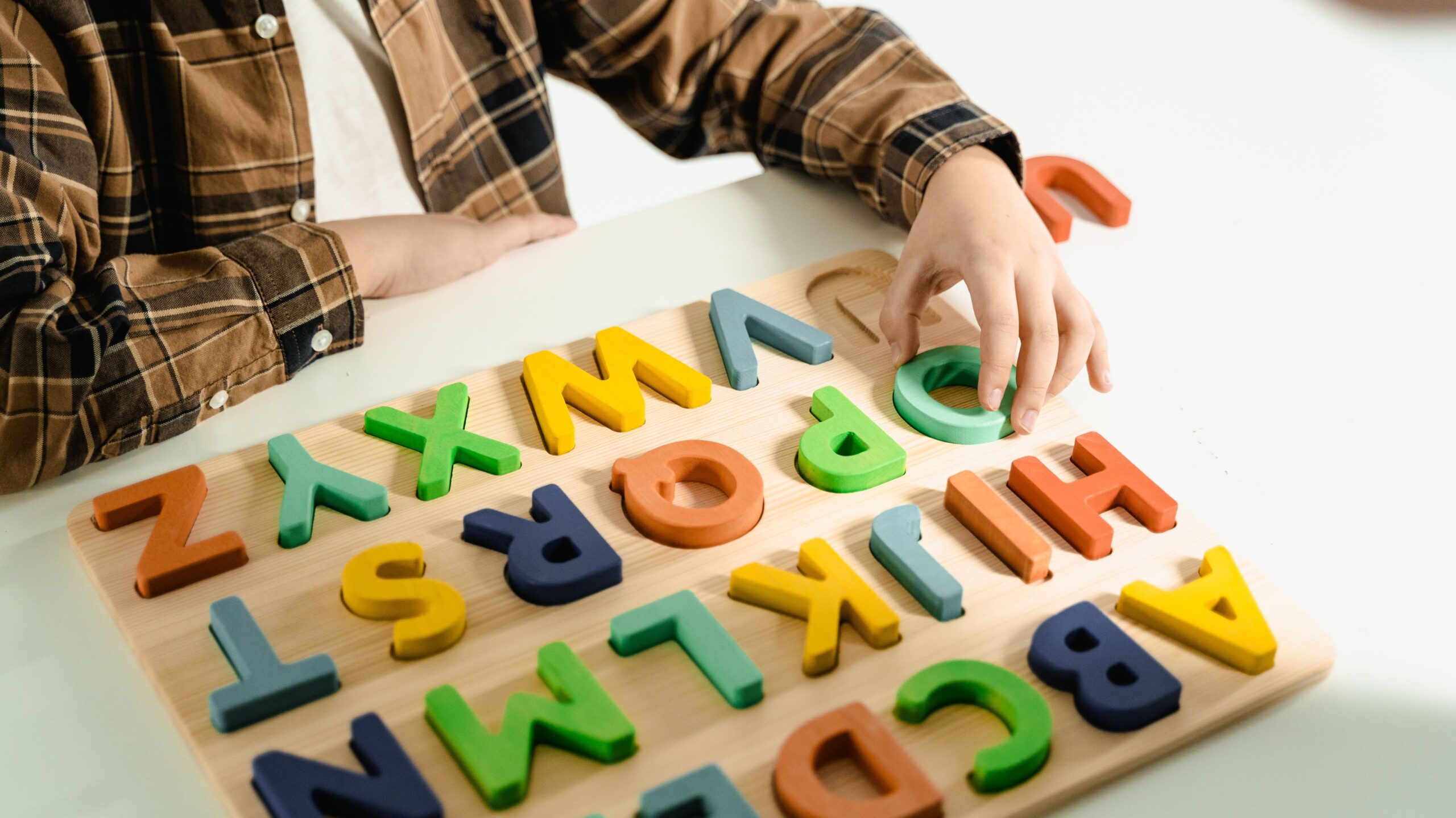
Children need repeated exposure to letters before they remember them confidently.
Fortunately, repetition doesn’t mean repeating the exact same activity every day.
One week you might:
- Paint letters.
- Build them with blocks.
- Trace them in sand.
- Find them during a scavenger hunt.
Although the activities change, the learning goal stays the same.
This variety keeps motivation high while reinforcing recognition.
Mission 2: Connect Letters With Real Life
Letters become much more meaningful when children notice them outside learning time.
Instead of limiting alphabet practice to books and worksheets, encourage your child to become a “Letter Detective.”
During everyday routines, ask questions like:
- Can you find the letter S on a street sign?
- Which cereal box starts with C?
- Do you see the first letter of your name anywhere?
These small moments help children realize that letters are everywhere.
Activity 6: My Name Comes First
A child’s own name is often the most exciting word they’ll ever learn.
Begin with the letters in their name before introducing less familiar ones.
For example, if your child’s name is Liam, practice:
- L
- I
- A
- M
Children usually recognize these letters more quickly because they see them regularly.
Learning becomes personal—and therefore more memorable.
Activity 7: Match Uppercase and Lowercase Letters
Many children recognize capital letters first.
Once they’re comfortable, introduce lowercase letters through matching games.
Create two sets of cards:
- Uppercase letters
- Lowercase letters
Challenge your child to find the matching pairs.
You can also turn it into a memory game for extra excitement.
Activity 8: Alphabet Obstacle Course
Transform learning into physical play.
Place alphabet cards around the room.
Give instructions like:
- Hop to H.
- Crawl to C.
- Tiptoe to T.
- Jump to J.
Combining movement with learning helps many children stay focused for longer.
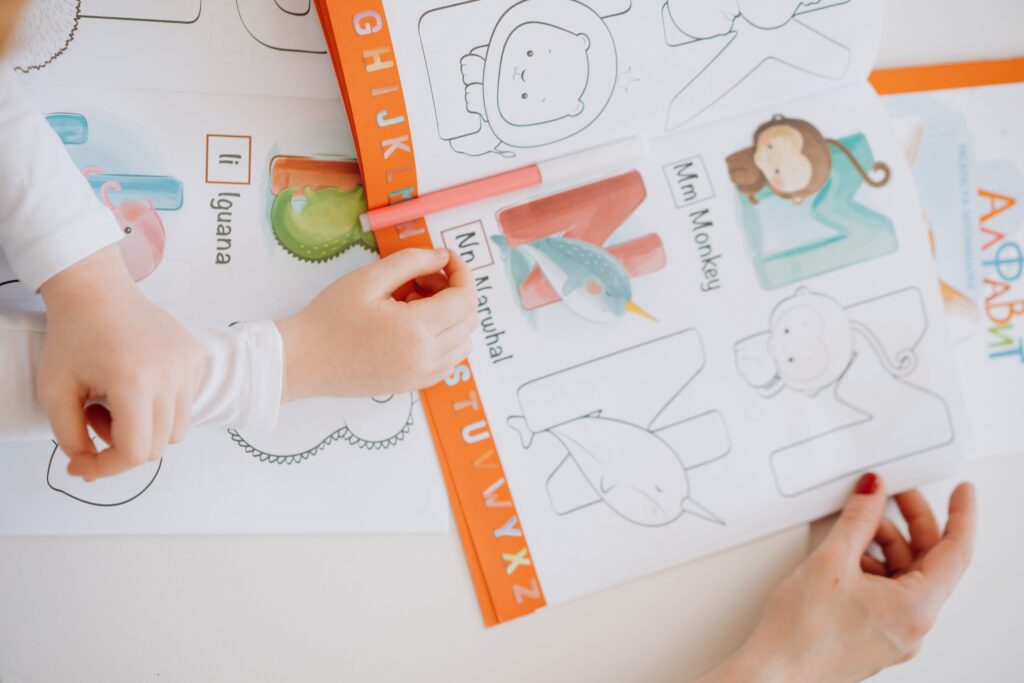
Activity 9: Read Alphabet Books Together
Alphabet books introduce letters within meaningful stories and colorful illustrations.
While reading:
- Point to each featured letter.
- Repeat its sound.
- Ask your child to find the letter elsewhere on the page.
- Talk about objects beginning with that letter.
Shared reading strengthens both literacy and parent-child connection.
Activity 10: Alphabet Sorting Game
Collect everyday objects or picture cards.
Examples:
- Ball
- Spoon
- Banana
- Toy car
- Apple
- Doll
Invite your child to place each item beneath the correct beginning letter.
Sorting encourages careful listening while strengthening beginning-sound awareness.
Progress Happens One Letter at a Time
Parents sometimes worry because their child doesn’t learn the entire alphabet immediately.
Remember:
Learning 26 letters is a big achievement.
Some children master several letters quickly.
Others need repeated practice over many weeks.
The goal isn’t speed.
The goal is helping children enjoy learning enough that they keep coming back for more.
Mission 3: Turn Letter Recognition Into Everyday Adventures
By now, your child may recognize several letters and enjoy alphabet games.
The next step is helping them notice letters naturally throughout the day.
Instead of setting aside extra study time, weave alphabet learning into ordinary routines.
For example:
While grocery shopping, ask:
“Can you find a box that starts with the letter B?”
During a walk:
“Which road sign has the letter S?”
At bedtime:
“Let’s find three words on this page that begin with M.”
These tiny moments add up over time and help children see that letters are part of the world around them—not just something found in workbooks.
Activity 11: Alphabet Nature Walk
Take learning outdoors.
Bring a clipboard or small notebook and challenge your child to find objects that begin with different letters.
Examples include:
| Letter | Nature Object |
|---|---|
| B | Bird |
| F | Flower |
| L | Leaf |
| R | Rock |
| T | Tree |
If they can’t find an object for every letter, that’s okay.
The goal is observation and conversation, not completing the alphabet.
Activity 12: Mystery Letter Bag
Place several alphabet letters (magnetic, foam, or paper) inside a cloth bag.
Without looking, your child reaches in, feels one letter, and tries to guess which one it is.
After removing it, ask:
- What’s its name?
- What sound does it make?
- Can you think of a word that starts with it?
This combines touch, memory, and language into one engaging activity.
Activity 13: Alphabet Cooking
The kitchen is full of literacy opportunities.
While preparing food together, talk about the first letter of different ingredients.
For example:
- B for Banana
- C for Carrot
- E for Egg
- M for Milk
- T for Tomato
You can even let your child arrange alphabet-shaped cereal or pasta into simple letter patterns.
Learning becomes much more meaningful when children connect letters with real objects.
Activity 14: Create an Alphabet Wall
Choose one wall, bulletin board, or poster board at home.
Every week, add:
- A featured letter
- Pictures beginning with that letter
- Your child’s drawings
- Magazine cutouts
- Printable flashcards
Watching the alphabet wall grow gives children a visual reminder of everything they’ve learned.
Activity 15: Letter-Hop Game
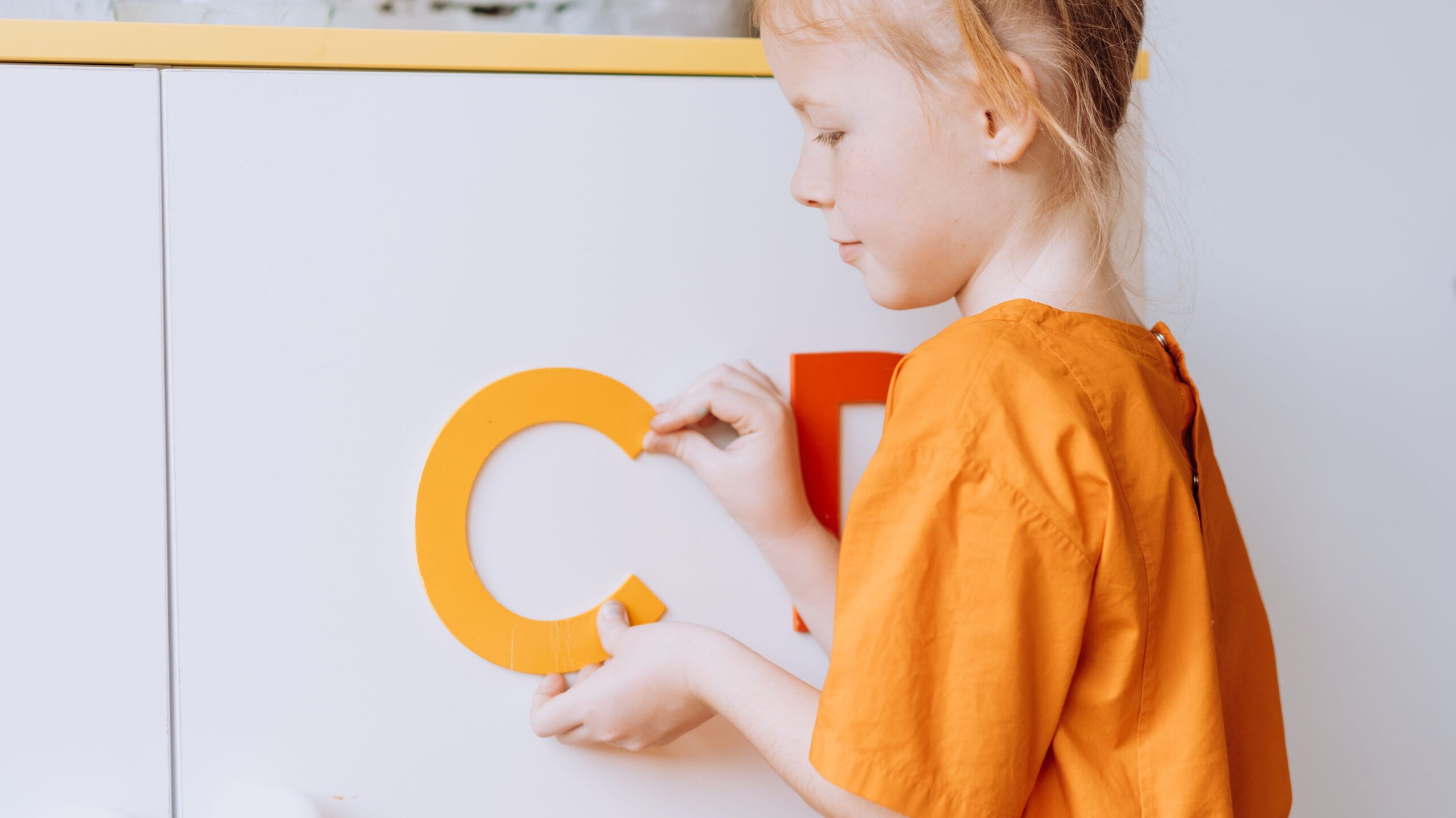
Write large letters on separate sheets of paper and place them on the floor.
Call out a letter.
Your child jumps to the correct one.
To make it more challenging, try saying:
“Jump to the letter that starts the word ‘sun.'”
This game combines listening, movement, and letter recognition in a fun way.
Activity 16: Build Simple Words
Once your child confidently recognizes several letters, begin combining them into easy words.
Start with simple CVC (consonant-vowel-consonant) words such as:
- Cat
- Dog
- Sun
- Hat
- Pig
Use magnetic letters, alphabet blocks, or printable cards.
At this stage, the focus should be on exploring sounds—not spelling perfectly.
Common Mistakes That Can Slow Alphabet Learning
Sometimes, small teaching habits unintentionally make learning more difficult.
Here are a few to watch out for:
| Instead of… | Try… |
|---|---|
| Teaching all 26 letters at once | Introduce a few letters at a time. |
| Focusing only on worksheets | Include games, songs, crafts, and movement. |
| Correcting every mistake immediately | Encourage effort and gentle practice. |
| Comparing children with siblings or classmates | Celebrate individual progress. |
| Making lessons too long | Keep sessions short, playful, and consistent. |
Children develop literacy skills at different speeds, and patience is one of the most valuable teaching tools.
Frequently Asked Questions
At what age should children start learning the alphabet?
Many children begin recognizing letters between 2 and 5 years old, although readiness varies. The emphasis should be on playful exposure rather than formal instruction.
Should I teach uppercase or lowercase letters first?
Many educators recommend introducing uppercase letters first because they are generally easier to distinguish visually. Once children recognize them confidently, gradually introduce lowercase letters.
How many letters should children learn each week?
For most preschoolers, learning one or two new letters per week, while reviewing previously learned ones, provides a manageable pace without overwhelming them.
Is the ABC song enough to teach the alphabet?
The ABC song is a helpful starting point, but children also need opportunities to recognize letters, hear their sounds, trace their shapes, and use them in meaningful activities.
What if my child keeps confusing letters like b, d, p, and q?
Letter reversals are common during early literacy development.
Continue providing playful practice using tracing, matching games, and multisensory activities. With time and repeated exposure, most children naturally learn to distinguish these letters.
Final Thoughts
Alphabet learning is about much more than memorizing twenty-six letters.
It’s the beginning of a lifelong journey into reading, writing, communication, and learning.
Every alphabet song, scavenger hunt, storybook, and letter game helps children build confidence while discovering that learning can be exciting.
Remember that progress doesn’t happen overnight.
Some children quickly recognize every letter.
Others need more repetition, encouragement, and playful practice.
Both paths are completely normal.
By creating a positive learning environment filled with curiosity, creativity, and patience, you’re giving your child one of the strongest possible foundations for future reading success.
One letter at a time, those small discoveries grow into big achievements.
References
This article is informed by educational guidance and literacy research from trusted organizations, including:
- National Association for the Education of Young Children (NAEYC)
- Reading Rockets
- Reading Is Fundamental (RIF)
- Scholastic Parents
- American Academy of Pediatrics (AAP)
Continue Exploring on NatureNestia
You may also enjoy:
- Number Tracing Worksheets 1–20
- Math Activities for Kindergarten
- Creative Activities for Kids
- Make Learning Fun for Kids
- Sensory Activities for Toddlers
- Montessori Activities for Toddlers
- Social Skills Activities for Kids

Aina Arif is a mother of two young children and the founder of NatureNestia. Based in Pakistan, she spent three years as an early childhood educator before becoming a full-time parent and writer. She writes about learning through play, managing difficult behaviour, and building strong family bonds.