
By Aina Arif | Updated: June 2026 | 12 min read
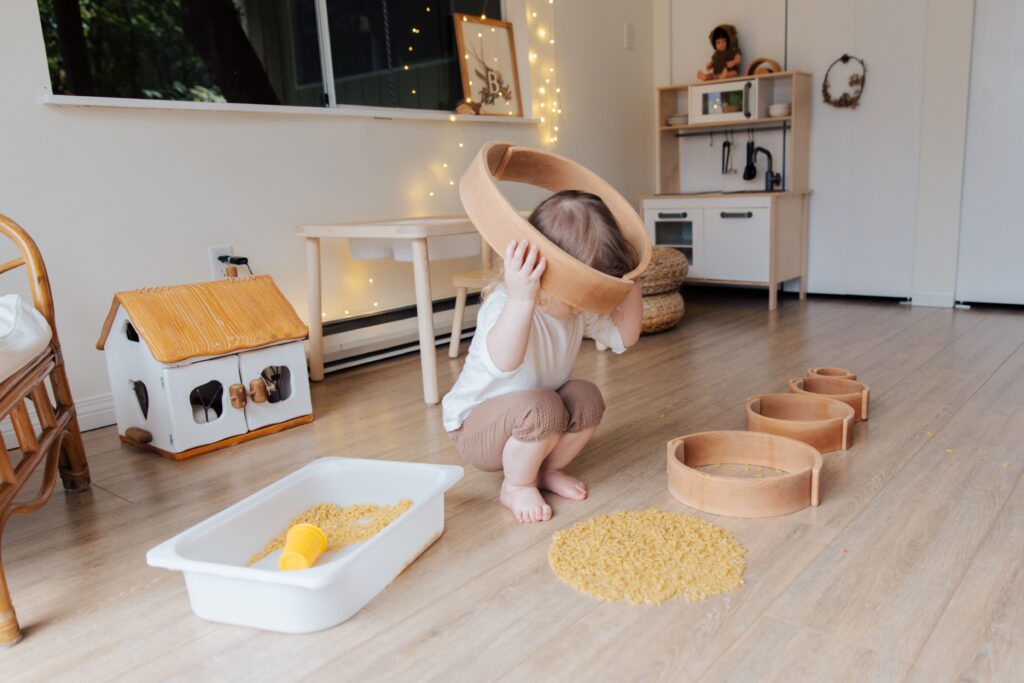
Toddlers are naturally curious. They want to pour water, stack objects, open containers, carry baskets, and copy everything adults do. While these everyday moments may look like simple play, they’re actually valuable learning opportunities.
That’s the idea behind the Montessori approach.
Instead of entertaining children with noisy toys or directing every activity, Montessori encourages parents to prepare an environment where toddlers can explore, make choices, and learn independently. The focus isn’t on teaching academic skills early—it’s on helping children develop confidence, concentration, coordination, and practical life skills through meaningful experiences.
In this guide, you’ll discover simple Montessori-inspired activities you can do at home using everyday household items. These activities are designed for toddlers between 1 and 3 years old and support learning through movement, repetition, and hands-on exploration.
What Makes an Activity “Montessori”?
Many parents think Montessori requires expensive wooden toys or specially designed classrooms.
In reality, Montessori is more about how children learn than what they play with.
A Montessori-inspired activity usually has these characteristics:
- It uses simple, real-life materials.
- It focuses on one skill at a time.
- It allows the child to work independently.
- It has a clear beginning and end.
- It encourages repetition without pressure.
- It respects the child’s pace of learning.
For example, pouring beans from one bowl to another may seem ordinary to an adult, but for a toddler it strengthens hand control, concentration, and independence.
Preparing Your Home for Montessori Learning
You don’t need to redesign your entire house to follow Montessori principles.
Small changes can make a big difference.
Consider creating a child-friendly space by:
- Placing toys on low, open shelves.
- Offering only a few activities at a time.
- Using baskets or trays to organize materials.
- Keeping child-sized tools within easy reach.
- Rotating activities every week or two instead of displaying everything at once.
A calm, organized environment helps toddlers focus better and make independent choices.
Practical Life Activities
Practical life activities are the heart of Montessori learning.
Young children love participating in real household tasks because they feel useful and capable. These experiences also strengthen fine motor skills, concentration, and self-confidence.
Pouring From One Pitcher to Another
Materials
- Two small pitchers or cups
- Dry beans, lentils, or water
- A tray
- A small sponge (if using water)
How to do it
Demonstrate slowly how to pour from one container into the other.
Then step back and let your toddler try.
Don’t worry about small spills. Cleaning them up is part of the learning process.
Why this activity works
Pouring develops hand-eye coordination, wrist control, concentration, and independence. It also teaches children to care for their own workspace.
Transferring Objects With a Spoon
Materials
- Two bowls
- A spoon
- Pom-poms, large beads, or dry pasta
How to do it
Invite your toddler to transfer each object from one bowl to the other using only the spoon.
Allow them to repeat the activity as many times as they wish.
Skills developed
- Fine motor control
- Hand stability
- Focus
- Patience
Folding Small Washcloths
Many toddlers enjoy copying everyday household routines.
Materials
- Clean washcloths or small towels
How to do it
Show your child one simple fold.
Avoid correcting every attempt.
The purpose isn’t creating perfectly folded towels—it’s practicing coordination and independence.
Skills developed
- Bilateral coordination
- Sequencing
- Concentration
- Practical life skills
Watering Indoor Plants
Caring for living things helps children develop responsibility.
Materials
- Small watering can
- Indoor plants
How to do it
Show your toddler how much water each plant needs.
Encourage them to check the soil and water carefully.
This activity often becomes a favorite daily responsibility.
Skills developed
- Responsibility
- Coordination
- Care for the environment
- Independence
Wiping the Table
Children love using real tools instead of toy versions.
Materials
- Small spray bottle (filled with water)
- Soft cleaning cloth
How to do it
Spray the table once or twice.
Demonstrate slow circular wiping motions.
Allow your toddler to clean independently without worrying about perfection.
Why it works
Real household tasks help toddlers feel capable while strengthening coordination and concentration.
A Gentle Reminder for Parents
One of the biggest differences between Montessori and traditional teaching is the role of the adult.
Instead of constantly explaining, correcting, or praising every step, try becoming an observer.
Show the activity once.
Then allow your child to explore independently.
Resist the urge to interrupt unless safety is involved.
You may be surprised by how long toddlers stay focused when they’re trusted to work at their own pace. Montessori educators emphasize that simple demonstrations followed by uninterrupted practice often lead to deeper concentration and independence.
Sensorial Activities That Help Toddlers Understand the World
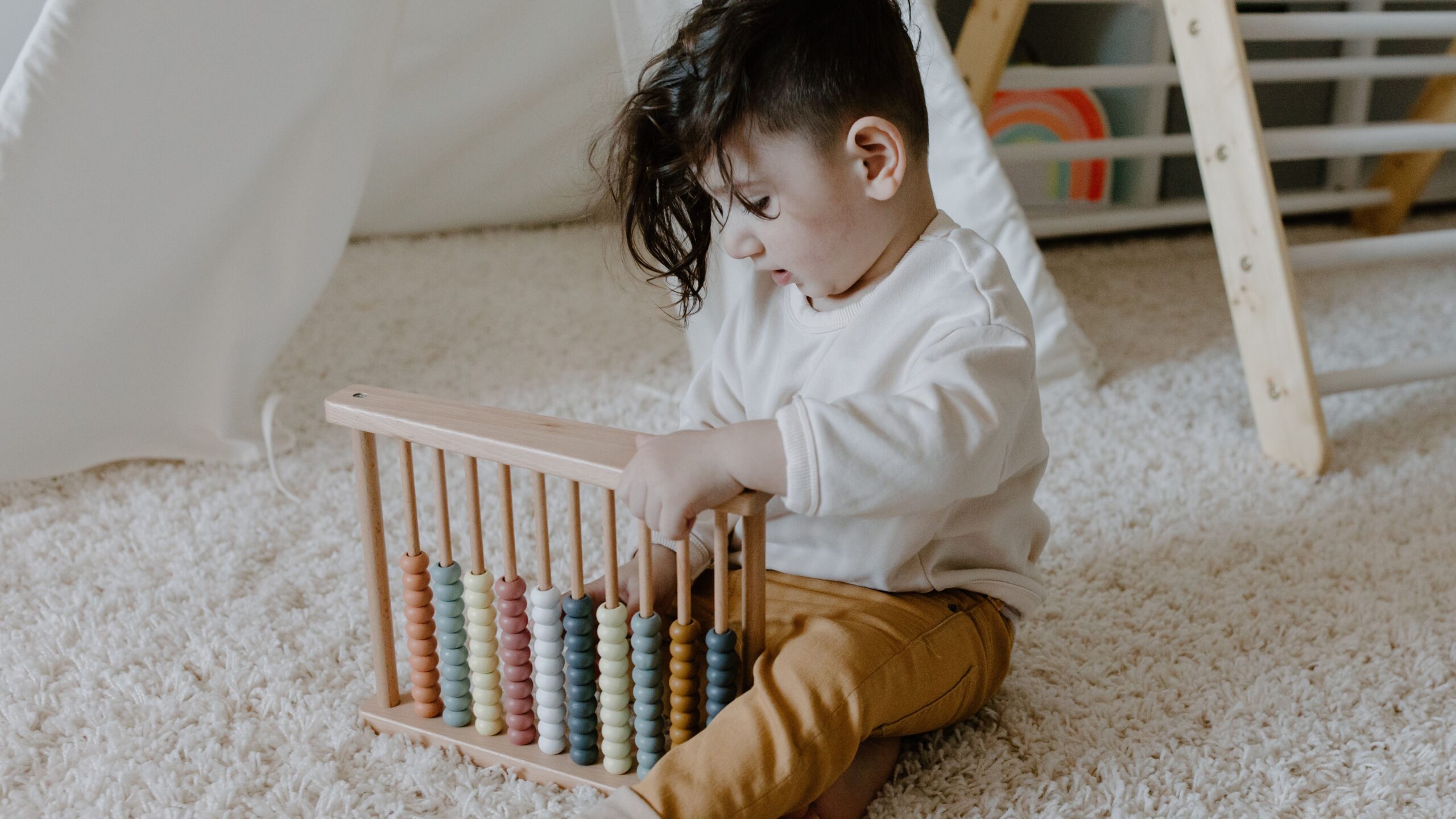
Toddlers explore everything through their senses. They touch different textures, notice colors, compare sizes, listen to sounds, and investigate how objects feel in their hands.
Montessori sensorial activities are designed to organize these everyday experiences so children gradually learn to observe, compare, and classify the world around them.
The goal isn’t to memorize facts—it’s to help children notice details independently.
Mystery Bag Exploration
Materials
- A small cloth bag
- Safe household objects with different textures
Examples:
- Wooden spoon
- Soft sponge
- Large shell
- Toy animal
- Pine cone
- Rubber ball
How to do it
Place the objects inside the bag.
Invite your toddler to reach inside without looking.
Encourage them to describe what they feel before pulling the object out.
Ask questions like:
- Is it smooth or rough?
- Is it soft or hard?
- Is it heavy or light?
There are no wrong answers. The conversation is just as valuable as the activity itself.
Skills developed
- Sensory awareness
- Vocabulary
- Observation
- Concentration
Color Sorting Basket
Young children naturally notice colors long before they can name all of them.
Materials
- Colored pom-poms
- Bottle caps
- Building blocks
- Small bowls
How to do it
Choose two or three colors to begin.
Invite your toddler to sort each object into the matching bowl.
Once they become confident, gradually introduce more colors.
Why this activity works
Sorting strengthens visual discrimination while encouraging logical thinking and concentration.
Matching Natural Treasures
Nature provides wonderful Montessori learning materials.
Materials
- Leaves
- Small stones
- Pine cones
- Flowers
- Twigs
How to do it
Collect matching natural objects during a walk.
Mix them together on a tray.
Ask your child to find matching pairs.
You can also sort them by:
- Size
- Shape
- Texture
- Color
Skills developed
- Observation
- Classification
- Language development
- Appreciation for nature
Sound Matching Game
Listening carefully is an important part of early learning.
Materials
- Small containers
- Rice
- Beans
- Pasta
- Sand
How to do it
Fill matching containers with the same material.
Shake one container.
Ask your toddler to find the container that makes the same sound.
Keep the activity playful without worrying about perfect answers.
Skills developed
- Auditory discrimination
- Concentration
- Memory
- Problem-solving
Fine Motor Activities That Prepare Little Hands
Before children learn to write, button shirts, or use scissors, they need strong hand muscles and good finger coordination.
Montessori activities strengthen these skills naturally through purposeful movement.
Posting Sticks Into a Container
Materials
- Popsicle sticks
- An empty spice container or tissue box with a narrow opening
How to do it
Demonstrate how to place one stick into the opening.
Allow your toddler to continue independently.
The repetitive movement is calming and helps improve precision.
Skills developed
- Hand-eye coordination
- Finger control
- Concentration
- Patience
Opening and Closing Containers
Toddlers love discovering how things work.
Materials
Gather a variety of safe containers such as:
- Small jars
- Plastic food containers
- Empty spice bottles
- Travel containers with lids
How to do it
Invite your child to open each container and close it again.
Avoid rushing or correcting them.
This simple activity often keeps toddlers engaged for surprisingly long periods.
Skills developed
- Wrist strength
- Finger coordination
- Independence
- Problem-solving
Clothespin Transfer
This activity provides excellent finger-strength practice.
Materials
- Clothespins
- Small basket or cardboard box
How to do it
Show your toddler how to squeeze the clothespin before attaching it to the edge of the basket.
If squeezing is difficult, offer help only when needed.
With practice, children become more confident.
Skills developed
- Finger strength
- Fine motor control
- Hand coordination
- Focus
Sticker Peel and Place
Simple sticker activities require careful finger movements.
Materials
- Reusable stickers
- Construction paper
How to do it
Encourage your toddler to peel one sticker at a time and place it anywhere on the paper.
Talk about the colors or shapes while they work.
This activity is especially helpful for developing the pincer grasp used later for writing.
Skills developed
- Pincer grip
- Finger control
- Creativity
- Hand-eye coordination
Let Repetition Happen Naturally
Parents sometimes worry when toddlers repeat the same activity over and over again.
In Montessori, repetition isn’t considered boredom—it’s an important part of learning.
A child may pour water ten times, stack blocks repeatedly, or transfer beans between bowls every day.
Each repetition strengthens coordination, confidence, and concentration.
Instead of encouraging children to move quickly from one activity to another, allow them to continue for as long as they remain interested.
This freedom helps toddlers develop persistence and a genuine love of learning.
Language Activities That Encourage Natural Communication
In Montessori education, language develops through everyday conversations rather than memorization alone. Toddlers learn new words when they hear adults describe real objects, daily routines, and meaningful experiences.
Instead of testing your child with questions, invite them into conversations throughout the day.
The more children hear rich vocabulary in real situations, the more confidently they begin expressing themselves.
Object Naming Basket
Materials
- A small basket
- 6–8 familiar household objects
Examples:
- Spoon
- Brush
- Cup
- Toy car
- Apple
- Sock
How to do it
Place one object on the mat at a time.
Clearly say its name while pointing to it.
Invite your toddler to repeat the word if they want to, but don’t insist.
After introducing several objects, ask simple prompts like:
- “Can you find the spoon?”
- “Where is the brush?”
Keep the activity relaxed and enjoyable.
Why this activity works
Children learn vocabulary more effectively when they connect words with real objects they can touch and explore.
Skills developed
- Language development
- Listening
- Memory
- Object recognition
Picture-to-Object Matching
Materials
- Printed picture cards
- Matching household items or toys
How to do it
Place the picture cards on a mat.
Ask your toddler to match each picture with the real object.
For example:
- Picture of a banana → Real banana
- Picture of a cup → Real cup
- Picture of a spoon → Real spoon
This activity connects language with real-world experiences.
Skills developed
- Vocabulary
- Observation
- Matching skills
- Concentration
Everyday Conversation Walk
One of the best Montessori language activities doesn’t require any materials.
Take a slow walk around your home or garden.
Talk about what your child notices.
For example:
- “The flower feels soft.”
- “The bird is flying high.”
- “The leaves are moving because the wind is blowing.”
Instead of asking constant questions, simply describe what you both observe.
This naturally expands vocabulary without feeling like a lesson.
Encouraging Independence Through Everyday Tasks
One of the biggest goals of Montessori is helping children confidently say:
“I can do it myself.”
Independence isn’t about expecting toddlers to do everything perfectly.
It’s about giving them opportunities to participate in daily life.
Even small responsibilities help children develop confidence and responsibility.
Snack Preparation Station
Materials
- Child-safe knife
- Banana
- Soft fruits
- Small plate
How to do it
Show your toddler how to slice a banana or peel a boiled egg.
Allow them to prepare their own snack with supervision.
Resist the urge to step in unless necessary.
Small mistakes are part of learning.
Skills developed
- Independence
- Fine motor control
- Concentration
- Practical life skills
Putting Away Toys
Cleaning up is another valuable Montessori activity—not a punishment.
Materials
- Open baskets
- Low shelves
How to do it
Label baskets with simple pictures if needed.
Demonstrate where each toy belongs.
Invite your toddler to return one item at a time.
Avoid rushing the process.
Children enjoy cleaning more when the environment is simple and organized.
Skills developed
- Responsibility
- Organization
- Decision-making
- Independence
Dressing Practice
Getting dressed independently takes time and patience.
Materials
- Easy-to-wear clothing
- Child-sized coat
- Shoes with Velcro
How to do it
Allow extra time each morning.
Instead of dressing your child quickly, encourage them to:
- Put on socks.
- Zip a jacket.
- Fasten simple buttons.
- Wear shoes independently.
Offer help only when truly needed.
Every successful attempt builds confidence.
Skills developed
- Self-care
- Coordination
- Patience
- Independence
Less Is Often More
Many parents believe more toys create better learning opportunities.
Montessori takes the opposite approach.
A shelf filled with dozens of noisy toys can easily overwhelm a toddler.
Instead, choose a small selection of purposeful activities.
For example:
- One practical life activity
- One sensorial activity
- One language activity
- One puzzle
- One open-ended toy
Rotating materials every week or two keeps children interested without creating unnecessary clutter.
Follow Your Child’s Interests
Every toddler develops unique interests.
Some children spend weeks pouring water.
Others become fascinated by animals, music, nature, or building blocks.
Rather than constantly introducing new activities, observe what captures your child’s attention.
If they love sorting objects, offer new sorting opportunities.
If they enjoy caring for plants, let them water flowers every morning.
Following a child’s natural curiosity often leads to deeper concentration and longer engagement.
Montessori Isn’t About Perfection
Many families feel they can’t practice Montessori because they don’t own wooden toys or perfectly designed playrooms.
The truth is much simpler.
A loving home, everyday household materials, patience, and opportunities for independence matter far more than expensive equipment.
The goal isn’t to create a picture-perfect Montessori home.
The goal is to raise a confident child who enjoys learning, solving problems, and participating in everyday life
Common Montessori Mistakes Parents Should Avoid
Starting Montessori at home doesn’t require perfection, but a few common mistakes can make activities less effective.
Being aware of these habits can help create a calmer and more enjoyable learning environment.
| Common Mistake | A Better Montessori Approach |
|---|---|
| Buying too many toys | Offer a few purposeful activities and rotate them regularly. |
| Correcting every mistake | Allow children to learn through trial and error. |
| Rushing the activity | Let your toddler work at their own pace. |
| Expecting immediate results | Focus on the learning process instead of perfection. |
| Doing everything for your child | Encourage independence whenever it’s safe to do so. |
Remember, Montessori is about building confidence—not completing activities perfectly.
A Simple Montessori Routine for Toddlers
Toddlers thrive when their days follow a predictable rhythm. You don’t need a strict timetable, but having a gentle routine helps children know what to expect.
Here’s an example of a Montessori-inspired day:
| Time | Activity |
|---|---|
| Morning | Practical life activity (watering plants, helping prepare breakfast) |
| Mid-Morning | Outdoor exploration or nature walk |
| Before Lunch | Sensorial or language activity |
| Afternoon | Independent play with open-ended materials |
| Evening | Storytime, family conversation, and bedtime routine |
A consistent routine helps toddlers feel secure while allowing plenty of time for free exploration.
How to Know an Activity Is Working
Parents often wonder whether their child is actually learning.
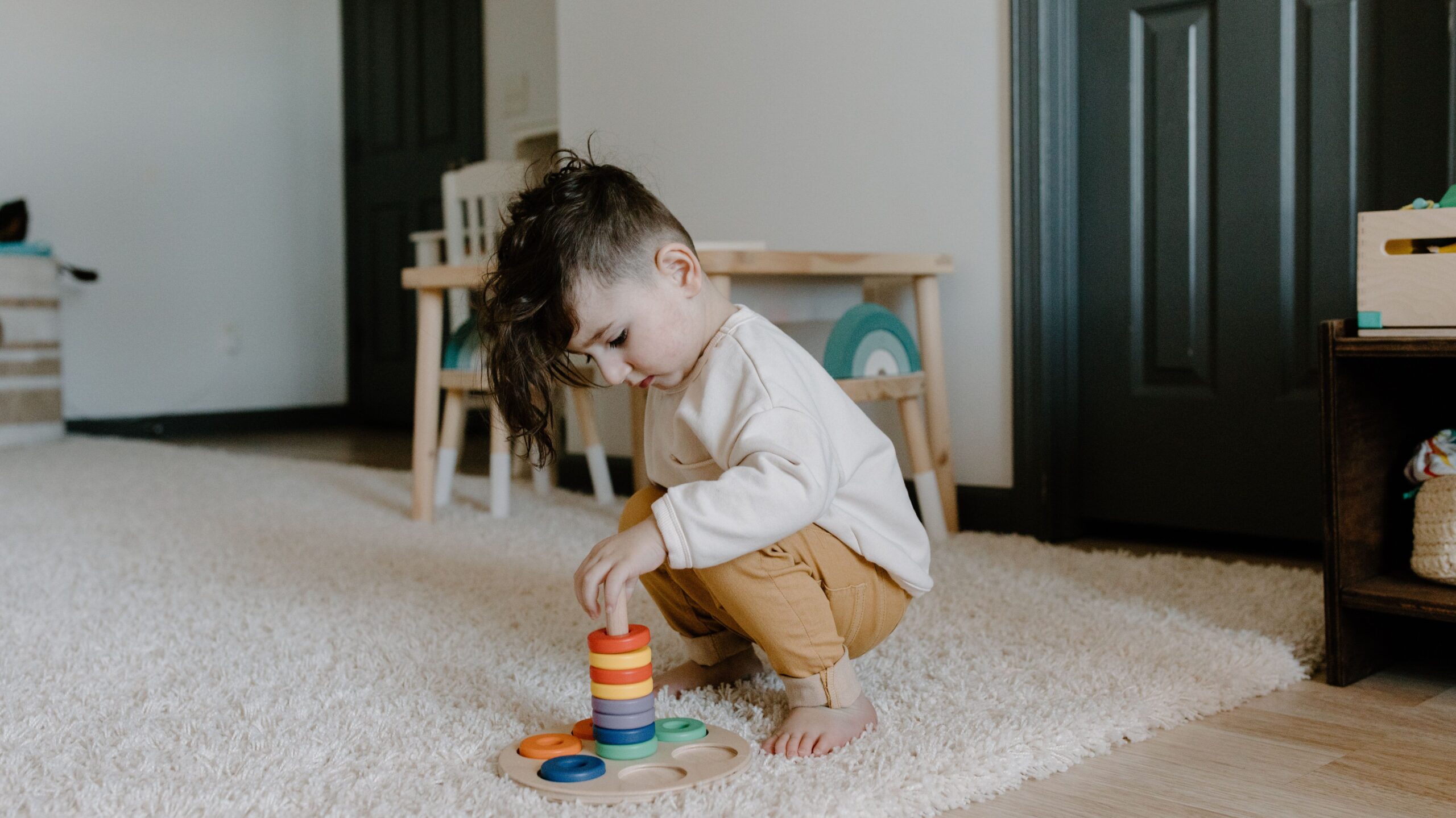
Instead of looking for perfect results, watch for these positive signs:
- Your toddler repeats the activity willingly.
- They become more focused over time.
- They try solving small problems without asking for help.
- They show pride after completing a task.
- They begin using newly learned skills during everyday routines.
These small moments are meaningful indicators of healthy development.
Frequently Asked Questions
What is the best age to start Montessori activities?
Children can begin enjoying simple Montessori-inspired experiences as early as infancy. Practical life and sensorial activities become especially engaging between 1 and 3 years of age, when toddlers naturally want to explore their environment independently.
Do I need expensive Montessori toys?
No. Many Montessori activities use everyday household materials such as bowls, spoons, cloths, baskets, measuring cups, natural objects, and simple kitchen tools.
The learning experience matters far more than the cost of the materials.
How long should a Montessori activity last?
Follow your child’s interest rather than the clock.
Some toddlers may concentrate for only five minutes, while others may repeat the same activity for twenty minutes or longer.
Allow them to stop when they naturally lose interest.
Should I help my toddler during every activity?
Begin by demonstrating slowly.
Then step back and observe.
Offer help only when it’s truly needed or when safety is involved.
Giving children opportunities to solve small challenges independently builds confidence.
Can Montessori be practiced in a regular home?
Absolutely.
You don’t need a dedicated classroom.
Simple routines, organized spaces, child-sized materials, and opportunities for independence can all bring Montessori principles into everyday family life.
Final Thoughts
Montessori activities aren’t about raising a “perfect” child or creating a picture-perfect home.
They’re about respecting a toddler’s natural curiosity and giving them opportunities to participate in real life.
Whether your child is pouring water, watering plants, matching colors, preparing a snack, or folding a small towel, they’re developing skills that go far beyond the activity itself. They’re building confidence, independence, patience, coordination, and a lifelong love of learning.
The most valuable Montessori material isn’t an expensive wooden toy—it’s a caring adult who trusts a child enough to let them explore, make mistakes, and discover the world at their own pace.
Small, meaningful moments repeated every day often have the greatest impact on a child’s growth.
References
This guide is based on principles and educational resources from trusted organizations and Montessori educators, including:
- Association Montessori Internationale (AMI)
- American Montessori Society (AMS)
- Montessori Public
- National Association for the Education of Young Children (NAEYC)
- Zero to Three
Explore More on NatureNestia
Continue supporting your toddler’s development with these helpful guides:
- Fine Motor Activities for Preschoolers
- Math Activities for Kindergarten
- Social Skills Activities for Kids
- Creative Activities for Kids
- Screen Time for Kids
- Indoor Activities for Kids
- Potty Training Tips for Toddlers

Aina Arif is a mother of two young children and the founder of NatureNestia. Based in Pakistan, she spent three years as an early childhood educator before becoming a full-time parent and writer. She writes about learning through play, managing difficult behaviour, and building strong family bonds.