
By Aina Arif | Updated: June 2026 | 11 min rea
Every parent wants their child to grow into a kind, confident, and respectful person. While reading, writing, and math are essential, social skills are just as important because they help children build friendships, express emotions, solve conflicts, and work well with others.
The good news is that social skills aren’t something children are simply born with—they develop through everyday experiences, conversations, and play. Whether your child is naturally outgoing or a little shy, simple activities at home and in the classroom can help them become better listeners, thoughtful communicators, and caring friends.
In this guide, you’ll discover engaging social skills activities that encourage teamwork, empathy, communication, emotional awareness, and problem-solving. These ideas are suitable for parents, teachers, homeschoolers, and caregivers who want to help children develop lifelong interpersonal skills in a fun and natural way.
Why Social Skills Matter More Than Many Parents Realize
Imagine two children who both perform well in school.
One child confidently introduces themselves, works well in group activities, shares ideas respectfully, and resolves disagreements calmly.
The other struggles to make friends, becomes frustrated during teamwork, and finds it difficult to express emotions.
Although both children may have similar academic abilities, their daily experiences at school and in life can be very different.
Strong social skills help children:
- Build healthy friendships.
- Express feelings appropriately.
- Work as part of a team.
- Develop self-confidence.
- Handle disagreements respectfully.
- Adapt to new environments.
- Become independent problem-solvers.
These abilities continue to benefit children throughout school, future careers, and personal relationships.
The Core Social Skills Every Child Should Practice
Instead of trying to teach dozens of behaviors at once, focus on a few essential life skills that children use every day.
| Social Skill | Why It Matters |
|---|---|
| Communication | Helps children express thoughts and needs clearly. |
| Listening | Encourages respect and better understanding. |
| Empathy | Helps children understand how others feel. |
| Sharing | Builds cooperation and friendships. |
| Teamwork | Teaches children to work toward a common goal. |
| Patience | Helps children wait, take turns, and manage frustration. |
| Problem-Solving | Encourages children to find peaceful solutions to disagreements. |
Rather than teaching these skills through lectures, children learn them best by practicing them during games, conversations, and everyday situations.
Learning Through Play Works Best
Children rarely learn social skills by being told what to do.
For example, telling a child to “share your toys” is much less effective than giving them opportunities to practice sharing during a game.
Play creates natural situations where children learn to:
- Wait for their turn.
- Cooperate with others.
- Follow simple rules.
- Solve small disagreements.
- Encourage teammates.
- Celebrate success together.
Because these lessons happen naturally, children are more likely to remember them.
Before Starting Social Skills Activities
Every child has a different personality.
Some children enjoy meeting new people, while others need extra time to feel comfortable.
Avoid comparing your child with siblings, classmates, or friends.
Instead:
- Celebrate small improvements.
- Encourage effort instead of perfection.
- Practice regularly.
- Keep activities enjoyable rather than competitive.
- Give children opportunities to learn from mistakes.
Confidence grows through positive experiences—not pressure.
Communication Skills
Communication is the foundation of every healthy relationship.
Children who learn to express themselves clearly often find it easier to make friends, ask for help, and solve everyday problems.
The following activities encourage children to speak confidently while also learning to listen respectfully.
Conversation Ball Game
You’ll need:
- A soft ball
How to play:
Stand in a circle with family members or classmates.
Throw the ball to one person while asking a simple question, such as:
- What’s your favorite animal?
- What made you smile today?
- If you could visit any place, where would you go?
The person holding the ball answers before asking someone else a new question.
This activity encourages children to speak one at a time while listening carefully to others.
Skills developed:
- Speaking confidence
- Listening
- Eye contact
- Turn-taking
Finish the Story Together
You’ll need:
No materials are required.
How to play:
Start with one sentence.
For example:
“One sunny morning, a little rabbit discovered a mysterious box…”
Each child adds one sentence to continue the story.
The story can become funny, adventurous, or completely imaginative.
There are no right or wrong answers.
Skills developed:
- Communication
- Creativity
- Active listening
- Cooperation
Show and Tell at Home
Many children become nervous speaking in front of others.
Practicing at home helps build confidence before they do it in school.
Ask your child to choose one favorite object.
It could be:
- A toy
- A drawing
- A book
- A family photo
- A souvenir
Encourage them to explain:
- Why they chose it.
- Where they got it.
- Why it’s special.
- How it makes them feel.
Family members can ask one or two friendly questions afterward.
Skills developed:
- Public speaking
- Confidence
- Answering questions
- Expressing thoughts clearly
Helping Shy Children Participate
Not every child enjoys speaking in front of a group immediately.
If your child is shy:
- Start with one-on-one conversations.
- Join the activity with them.
- Avoid forcing participation.
- Praise effort instead of performance.
- Give them extra time to respond.
Many confident adults were quiet children who simply needed patience, encouragement, and regular opportunities to practice.
Building Empathy Through Everyday Activities
Empathy is the ability to understand and care about how someone else feels. Children who develop empathy are more likely to build strong friendships, resolve conflicts peacefully, and show kindness in everyday situations.
The best way to teach empathy isn’t through long lectures—it’s by giving children opportunities to imagine how others might feel.
Emotion Detective
You’ll need:
- Emotion flashcards, magazine pictures, or family photos
How to play:
Show your child one picture at a time and ask questions such as:
- How do you think this person feels?
- What clues helped you decide?
- What might have happened before this picture?
- What could someone do to help them feel better?
There isn’t always one correct answer. The goal is to encourage thoughtful conversations about emotions.
Skills developed:
Kindness Challenge
Rather than asking children to “be kind,” encourage them to practice kindness through simple actions.
Create a daily kindness challenge such as:
- Help a sibling tidy up.
- Write a thank-you note.
- Compliment a friend.
- Hold the door open for someone.
- Share a favorite toy.
- Help set the dinner table.
At the end of the day, talk about how these actions made both the giver and receiver feel.
Skills developed:
Walk in Someone Else’s Shoes
This simple role-play activity helps children see situations from different perspectives.
Present everyday scenarios, for example:
“A new student joins your class and doesn’t know anyone.”
Ask questions like:
- How might they feel?
- What would you do to make them feel welcome?
- What would you hope someone would do for you?
Role-playing helps children think beyond their own experiences.
Skills developed:
- Perspective-taking
- Compassion
- Problem-solving
- Communication
Learning to Work as a Team
Children often hear the phrase “Work together,” but teamwork is a skill that develops with practice.
Team activities teach children how to listen, share ideas, solve problems, and celebrate success togetherBuild It Together Challenge
You’ll need:
- Building blocks
- LEGO bricks
- Cardboard boxes
- Cups or craft sticks
How to play:
Give children one challenge, such as:
- Build the tallest tower.
- Create a bridge.
- Design a small house.
- Build a zoo for toy animals.
The rule is simple: everyone must contribute an idea before building begins.
Encourage children to discuss their plans instead of rushing into the activity.
Skills developed:
- Teamwork
- Communication
- Planning
- Cooperation
Puzzle Partners
Choose a puzzle that requires cooperation.
Instead of letting one child complete it alone, encourage everyone to work together by:
- Sorting edge pieces.
- Looking for matching colors.
- Helping each other find missing pieces.
Celebrate the team’s effort rather than focusing on who placed the most pieces.
Skills developed:
- Cooperation
- Patience
- Shared problem-solving
- Encouraging others
Pass the Drawing
This activity usually leads to lots of laughter while teaching flexibility.
You’ll need:
- Paper
- Colored pencils or markers
How to play:
One child starts a drawing and works on it for one minute.
When the timer ends, they pass the paper to the next person, who adds something new.
Continue until everyone has contributed.
At the end, admire the finished artwork and talk about how every person’s idea helped create something unique.
Skills developed:
- Creativity
- Cooperation
- Respect for others’ ideas
- Flexibility
When Conflicts Happen During Play
Disagreements are a normal part of childhood. In fact, they can become valuable learning opportunities when adults respond calmly.
Instead of immediately solving every disagreement, guide children by asking questions like:
- What happened?
- How do you think your friend feels?
- What could you do differently next time?
- Can you think of a solution that feels fair to everyone?
These conversations teach children to solve problems rather than depend on adults to fix every situation.
Praise the Skill, Not Just the Outcome
Many adults naturally say:
“Good job! You won!”
Try praising behaviors instead.
For example:
- “I noticed how patiently you waited for your turn.”
- “You listened carefully to your friend.”
- “That was thoughtful of you to share your crayons.”
- “You kept trying even when the game became difficult.”
Children repeat the behaviors that receive positive attention.
Real-Life Practice Matters Most
Social skills aren’t only learned during planned activities.
Everyday moments provide valuable opportunities to practice.
For example, children can learn while:
- Ordering food at a restaurant.
- Greeting neighbors.
- Saying “thank you” to a cashier.
- Helping prepare dinner.
- Playing with cousins.
- Visiting grandparents.
- Working on a school project with classmates.
These small experiences gradually build confidence that carries into school and future relationships.
Helping Children Manage Big Emotions
Every child experiences frustration, disappointment, excitement, and anger. Social skills aren’t about never having strong emotions—they’re about learning how to express those emotions in healthy ways.
Children who can recognize and manage their feelings often find it easier to solve problems, make friends, and handle everyday challenges.
These activities encourage emotional regulation in a playful and supportive way.
The Feelings Thermometer
You’ll need:
- A printed or hand-drawn thermometer
- Colored markers
How to play:
Draw a thermometer with different emotion levels.
For example:
- 😊 Calm
- 🙂 Happy
- 😐 Worried
- 😠 Angry
- 😭 Very Upset
Ask your child to point to how they’re feeling throughout the day.
Then ask:
- What happened?
- What could help you feel better?
- Would taking deep breaths, talking, or having quiet time help?
Over time, children begin recognizing emotions before they become overwhelming.
Skills developed:
- Emotional awareness
- Self-control
- Communication
- Problem-solving
Red Light, Green Light with a Twist
This classic game becomes a great self-control activity.
You’ll need:
An open space indoors or outdoors.
How to play:
One person stands at one end and calls out:
- Green Light – Walk forward.
- Yellow Light – Walk slowly.
- Red Light – Freeze immediately.
Add extra fun commands such as:
- Blue Light – Clap twice.
- Purple Light – Spin once.
- Orange Light – Hop like a bunny.
Children must listen carefully before reacting.
Skills developed:
- Listening
- Self-control
- Focus
- Following directions
Teaching Children How to Solve Problems
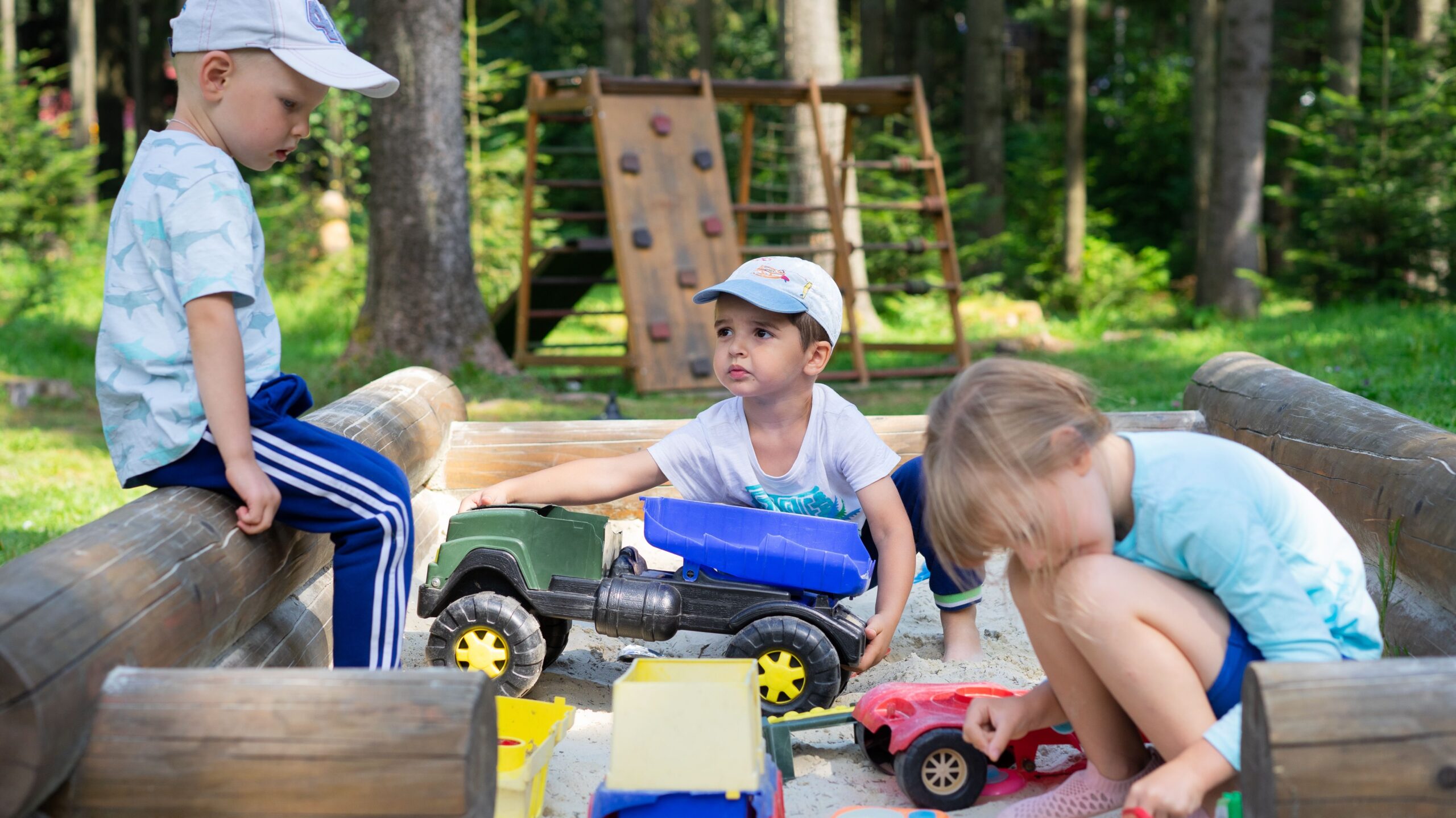
Conflicts between children are completely normal.
Instead of solving every disagreement for them, parents can guide children through a simple problem-solving process.
Encourage them to ask:
- What happened?
- How does everyone feel?
- What solutions can we think of?
- Which solution is fair for everyone?
- What can we do differently next time?
This approach teaches children to think before reacting.
The Solution Wheel
You’ll need:
- Paper
- Markers
How to play:
Draw a large circle and divide it into sections.
Write one possible solution in each section.
Examples include:
- Take turns
- Share
- Ask politely
- Play something else
- Take a short break
- Ask an adult for help
Whenever a disagreement happens, encourage your child to spin the wheel or choose one solution.
Eventually they’ll begin using these strategies independently.
Skills developed:
- Conflict resolution
- Decision-making
- Communication
- Emotional regulation
Friendship Skills That Last a Lifetime
Making friends is exciting, but keeping friendships requires practice.
Children learn friendship skills by experiencing trust, kindness, respect, and cooperation every day.
Friendship Web
You’ll need:
- A ball of yarn
How to play:
Sit together in a circle.
One child holds the yarn, says something kind about another person, and gently tosses the yarn to them while holding onto one end.
Continue until everyone has received the yarn.
Soon a beautiful web forms in the center.
Explain that friendships become stronger when everyone supports one another.
Skills developed:
- Kindness
- Encouragement
- Communication
- Teamwork
Compliment Circle
Children often hear corrections throughout the day, but they also need opportunities to notice positive qualities in others.
Sit together in a circle.
Each child gives one genuine compliment to the person sitting next to them.
Examples:
- “I like how you always share your toys.”
- “You’re really good at drawing.”
- “Thank you for helping me yesterday.”
Encourage children to make compliments specific and sincere.
Skills developed:
- Empathy
- Positive communication
- Confidence
- Respect
Helping Hands Mission
Assign children a simple teamwork mission.
For example:
- Organize books together.
- Clean up toys.
- Water the plants.
- Prepare the dinner table.
- Pack a picnic basket.
After completing the task, discuss:
- What went well?
- How did teamwork help?
- What could we improve next time?
Children begin understanding that cooperation makes difficult tasks easier.
Skills developed:
- Responsibility
- Cooperation
- Leadership
- Problem-solving
Everyday Moments Are the Best Classroom
Many parents think social skills only develop during organized activities.
In reality, the best lessons often happen naturally.
Children practice social skills when they:
- Welcome a new student.
- Apologize after making a mistake.
- Wait patiently in a queue.
- Thank someone for helping them.
- Comfort a friend who’s feeling sad.
- Help a younger sibling.
- Work together during family chores.
These everyday interactions shape character far more than occasional lessons.
Progress Looks Different for Every Child
Some children naturally enjoy meeting new people.
Others need more time before they feel comfortable joining conversations or group activities.
Both personalities are perfectly normal.
Rather than expecting immediate confidence, celebrate gradual progress.
Perhaps your child:
- Smiled at a new classmate.
- Shared a toy without being asked.
- Spoke during group time.
- Waited patiently for their turn.
- Solved a disagreement calmly.
These small moments are meaningful signs of growth.
Helping Children Practice Social Skills Every Day
Social skills aren’t learned in a single afternoon. Like reading or riding a bicycle, they improve through regular practice and positive experiences.
The good news is that you don’t need special classes or expensive resources. Everyday routines provide countless opportunities for children to communicate, cooperate, and show kindness.
Here are a few simple ways to encourage social growth throughout the week:
- Invite your child to greet neighbors politely.
- Encourage them to order their own meal at a restaurant.
- Let them help welcome guests into your home.
- Give them small responsibilities during family
- gatherings.
- Encourage conversations during dinner instead of using phones or television.
- Make time for unstructured play with siblings or friends.
These small experiences gradually become lifelong habits.
Common Mistakes Adults Make When Teaching Social Skills
Sometimes, even with good intentions, adults accidentally make it harder for children to develop confidence.
Avoid these common mistakes:
| Instead of… | Try This… |
|---|---|
| Solving every disagreement immediately | Guide children to think of possible solutions. |
| Forcing shy children to speak | Give them time and encourage small steps. |
| Comparing siblings or classmates | Celebrate each child’s individual progress. |
| Focusing only on mistakes | Praise positive behaviors whenever you notice them. |
| Expecting instant improvement | Remember that social skills develop gradually with practice. |
Children learn best in environments where they feel safe, supported, and understood.
How Parents and Teachers Can Work Together
Children learn social behaviors more effectively when the adults in their lives use similar expectations.
For example, both parents and teachers can encourage children to:
- Use polite words like “please” and “thank you.”
- Listen without interrupting.
- Respect personal space.
- Take turns during activities.
- Speak kindly, even when they disagree.
- Include others in games whenever possible.
When children experience consistent expectations at home and school, they feel more confident applying those skills in different situations.
Frequently Asked Questions
At what age should children start learning social skills?
Social skills begin developing from infancy through everyday interactions with parents and caregivers. As children grow, they continue learning through play, conversations, family routines, and friendships. It’s never too early to model kindness, sharing, and respectful communication.
What if my child is naturally shy?
Being shy isn’t a problem that needs to be fixed.
Many shy children become thoughtful, caring, and confident adults when they receive patience and encouragement. Avoid forcing social interactions. Instead, create opportunities for your child to participate at their own pace while celebrating small successes.
How can I improve my child’s communication skills?
The best way is through regular conversation.Ask open-ended questions, read books together, encourage storytelling, play pretend games, and most importantly, listen carefully when your child speaks. Children become better communicators when they feel heard.
Can social skills be taught through games?
Absolutely.
Games naturally teach children to wait their turn, cooperate, solve problems, follow rules, and communicate with others. That’s why play remains one of the most effective ways to build strong social skills.
Why does my child struggle to make friends?
Every child develops differently.
Some children need more time to feel comfortable in social situations. Focus on helping them practice conversation, kindness, listening, and confidence instead of worrying about the number of friends they have. Quality friendships are often more meaningful than having many acquaintances.
Final Thoughts
Helping children develop strong social skills is one of the greatest gifts parents and educators can provide.
While academic success is important, qualities such as kindness, empathy, communication, patience, and teamwork shape how children build relationships throughout their lives.
Remember that progress doesn’t happen overnight. Every shared toy, every thoughtful conversation, every apology, and every act of kindness is another step toward raising a confident and compassionate individual.
The most valuable lessons often happen during ordinary moments—playing a game together, helping a sibling, listening to a friend’s feelings, or working as a team to solve a problem.
With patience, encouragement, and consistent practice, children can develop the confidence and social skills they need to thrive at home, in school, and beyond.
References
For additional information about child development and social-emotional learning, explore these trusted resources:
- Collaborative for Academic, Social, and Emotional Learning (CASEL)
- American Academy of Pediatrics (AAP)
- Centers for Disease Control and Prevention (CDC)
- National Association for the Education of Young Children (NAEYC)
- UNICEF Parenting
Continue Reading on NatureNestia
If you enjoyed this guide, you may also like:
- Screen Time for Kids: Healthy Limits, Risks, and Practical Tips
- Creative Activities for Kids
- Math Activities for Kindergarten
- Fine Motor Activities for Preschoolers
- Picky Eater Solutions
- Sibling Rivalry Solutions

Aina Arif is a mother of two young children and the founder of NatureNestia. Based in Pakistan, she spent three years as an early childhood educator before becoming a full-time parent and writer. She writes about learning through play, managing difficult behaviour, and building strong family bonds.