
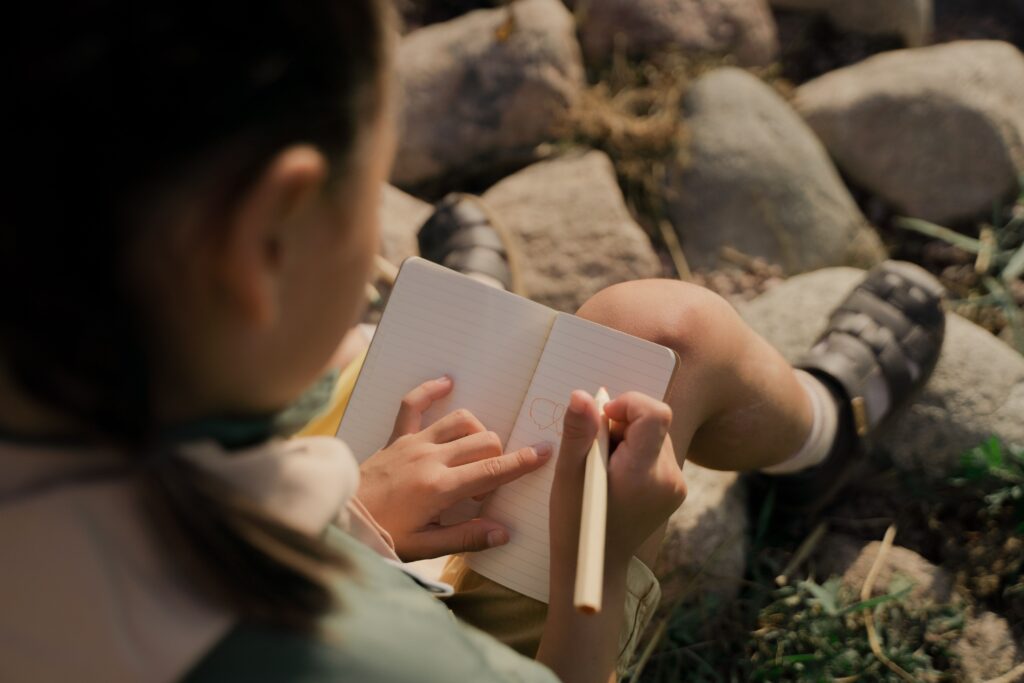
A nature journal is one of the simplest tools for turning everyday walks and backyard time into real learning. It costs almost nothing, works for nearly any age, and gives children a habit they can keep for years. Here’s how to start one with your child and what to include so it stays interesting.
Age group: 4 to 10 years (younger kids can dictate while you write)
Time needed: 10 to 15 minutes per entry
Cost: Almost free
Mess level: Low
What Is a Nature Journal?
A nature journal is a notebook where a child records what they see, hear, and notice in nature. Entries can include drawings, written notes, pressed leaves, or simple observations like the weather or which birds visited the garden that day. Unlike a diary, it focuses entirely on the outdoors, which makes it an easy habit to build around walks, garden time, or even a few minutes on the balcony.
Why Nature Journaling Is Great for Kids
- Observation skills: Children learn to slow down and really notice details like leaf shapes, bird colors, or weather patterns.
- Writing and drawing practice: Journaling combines creativity with early literacy skills in a low-pressure way.
- Patience and routine: Returning to the journal regularly builds a simple, repeatable habit.
- Science foundations: Recording dates, weather, and changes over time introduces basic data collection.
- Emotional benefits: Time spent quietly observing nature has a calming effect for many children.

Materials You Will Need
- A blank or lightly lined notebook (sturdy enough for outdoor use)
- Pencils, colored pencils, or crayons
- A clipboard (helpful for writing while standing or sitting outside)
- Glue stick (for pressing leaves or petals into pages)
- Optional: a small magnifying glass, measuring tape, or a simple field guide
Tip: Let your child choose and decorate their own notebook. Ownership over the journal makes them more excited to use it.
How to Start a Nature Journal
Step 1: Pick a Starting Point
Decide where journaling will happen: a backyard, a nearby park, or even watching from a window. You don’t need a big natural space to begin.
Step 2: Set Up the First Page
Have your child write or dictate the date, the weather, and the location. This becomes a simple, repeatable format for every entry.
[Add your photo: the first journal page being set up]
Step 3: Choose One Thing to Observe
Rather than trying to record everything, pick one focus for the day: a tree, a bird, an insect, or even the clouds. This keeps the activity from feeling overwhelming.
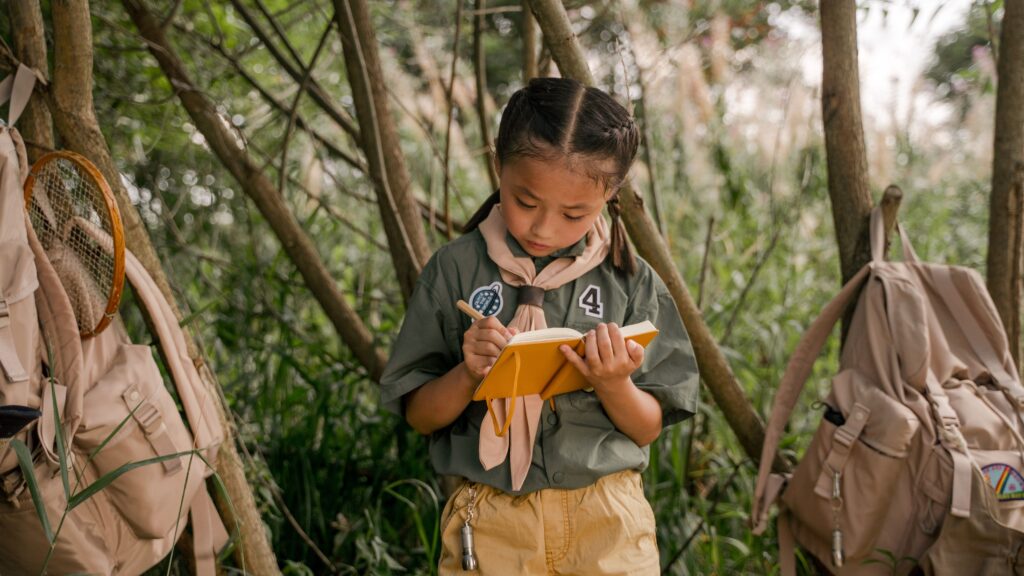
Step 4: Draw or Write What They See
Younger children can draw a simple picture while you write a sentence they dictate. Older children can write a few sentences themselves describing shape, color, size, or behavior.
[Add your photo: your child drawing or writing in their journal]
Step 5: Add a Physical Detail (Optional)
Press a leaf, tape in a small feather, or trace around a stone directly on the page for a hands-on touch.
Step 6: Date and Review Past Entries
Occasionally look back at older pages together. Ask, “What’s changed since then?” This builds a sense of time and seasonal change.
What to Include in Each Entry
- Date and weather: A quick note at the top of every page builds a simple pattern.
- Location: Backyard, park, or window view.
- One main observation: A bird, insect, plant, or the sky.
- A drawing: Even a rough sketch is valuable; detail isn’t the goal.
- Three describing words: Color, texture, size, or sound.
- A question: Encourage your child to write or ask one question about what they observed, like “Why do ants walk in a line?”
- A physical item (optional): A pressed leaf, a small taped feather, or a leaf rubbing.
Journal Prompts to Use When They’re Unsure What to Write
- What is the weather like today, and how does it feel?
- Describe one plant you can see. What color and shape is it?
- Can you hear any birds or insects right now? What do they sound like?
- Find something small and describe it using three words.
- What is different in the garden since your last entry?
- Draw the sky right now. What shapes do the clouds make?
- Pick one bug or animal and describe what it’s doing.
- What is your favorite thing you noticed today, and why?
Making It a Habit
Keep it short. Five to ten minutes is enough for most children. Long sessions can make it feel like a chore.
Same time, same place. Journaling after a regular walk or right after breakfast on weekends helps it become routine.
No pressure on skill. The goal is observation, not perfect drawing or spelling. Avoid correcting too much, especially for younger children.
Celebrate consistency, not detail. Praise effort and regular entries over how polished a page looks.
Seasonal check-ins. Revisit the same tree or spot each season and compare entries. This is one of the most powerful ways to show real change over time.

Troubleshooting Common Problems
My child says they don’t know what to write. Use one of the prompts above, or simply ask three questions out loud and have them answer in the journal.
They lose interest after a few days. Shorten each session, or turn it into a shared activity where you journal alongside them.
Their drawings don’t look like real plants or animals. That’s completely normal and not the point. Focus on what they noticed, not artistic accuracy.
We don’t have much nature nearby. A single potted plant, a window view, or even a park bench is enough to start. Urban nature journaling works the same way, just with fewer subjects to choose from.
Age-Appropriate Adjustments
Preschoolers (4 to 5): Focus on drawing and dictation. Write their words for them under their picture.
Early primary (6 to 8): Introduce short written sentences alongside drawings, and begin adding dates and weather notes.
Older kids (9 to 10): Encourage full paragraphs, labeled diagrams, and independent research into anything they’re curious about, like a bird’s name or an insect’s behavior.
Safety Tips
- Supervise journaling near water, uneven ground, or busy areas.
- If pressing plants into the journal, avoid unknown or potentially irritating plants.
- Remind children not to pick plants or disturb insects unnecessarily; observing without touching is often enough.

Frequently Asked Questions
What age can start a nature journal?
Children as young as 4 can participate through drawing and dictation, even before they can write independently.
Do I need to buy a special notebook?
No. Any notebook works. A sturdier cover helps if it will be carried outdoors often.
How often should we journal?
Once or twice a week is enough to build a habit without it feeling like a chore. Daily is fine too if your child enjoys it.
What if my child isn’t interested in writing?
Let drawing carry most of the entry, and keep written notes to a single word or short phrase you write for them.
Final Thoughts
A nature journal doesn’t need to be elaborate to be valuable. A few minutes, a notebook, and a single question are enough to build an observation habit that sharpens over weeks and months. Keep it light, let your child lead what they notice, and the habit tends to build itself.
[Add your own experience here: what your child chose to draw or write about first, and how the habit has grown.]

Aina Arif is a mother of two young children and the founder of NatureNestia. Based in Pakistan, she spent three years as an early childhood educator before becoming a full-time parent and writer. She writes about learning through play, managing difficult behaviour, and building strong family bonds.