
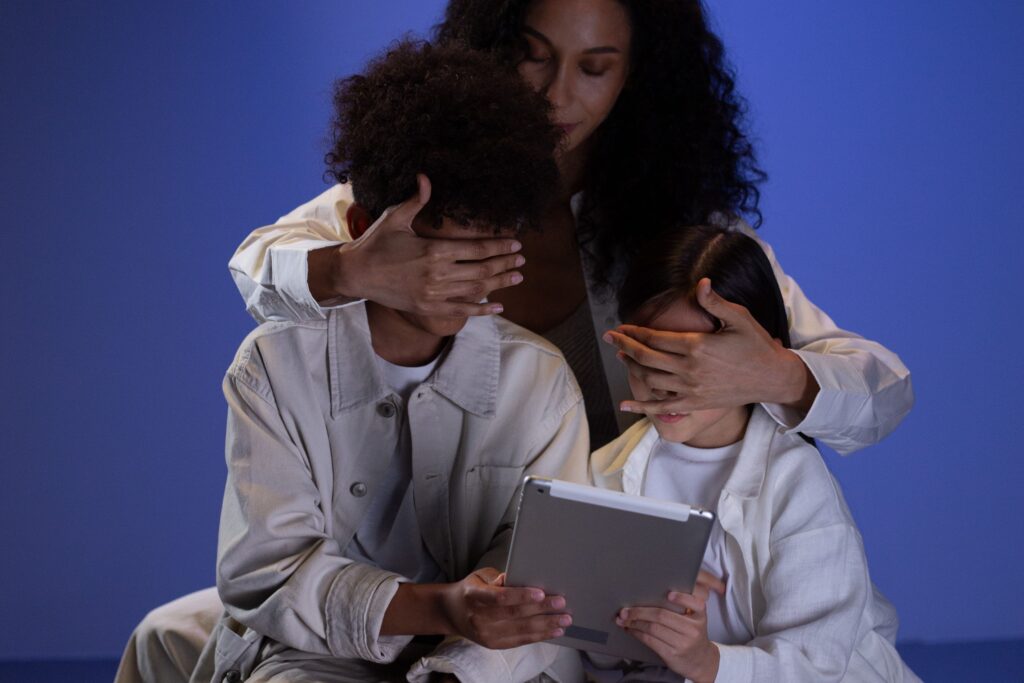
I didn’t think I needed to worry about “online safety” until my son was almost four. In my head, that phrase belonged to teenagers and phones, not a preschooler watching cartoons on a tablet in the next room while I made dinner. Then one evening I glanced over his shoulder and realized the app had auto-played straight from a nursery rhyme video into something with the same characters, but off — flashing, aggressive, clearly not made for kids, just designed to look like it was. He wasn’t upset by it. He was just watching, glassy-eyed, the way kids watch anything that moves and makes noise. That was almost worse than if he’d cried.
That was the night I stopped thinking of “online safety” as a someday problem, something for older kids with their own phones. It’s a now problem, for a lot of families, often years earlier than we expect.
The Assumption I Had to Unlearn
I’d assumed that if content was on a kids’ platform, or inside a kids’ profile, it was automatically safe. It’s a reasonable assumption to have — the branding says “kids,” the icon looks friendly, there’s a whole “kids mode” toggle that implies someone has already done the filtering for you. It’s also wrong more often than most parents realize.
Platforms that host children’s content are still largely driven by algorithms optimizing for watch time, not age-appropriateness. And imitation content — videos that copy a familiar character’s look and title to get recommended alongside the real thing — is a well-documented problem across most major platforms, not a rare glitch you got unlucky with. Some of it is just badly made. Some of it is intentionally unsettling, made specifically to slip past filters because shock value keeps young viewers watching longer.
Once I understood that, the fix wasn’t “give him less screen time,” which was my first, slightly panicked instinct. The real fix was smaller and less dramatic: stop assuming the platform is doing the supervising for me, and start doing a bit of that supervising myself, upfront, once, so I didn’t have to hover every single time afterward.
What We Actually Changed
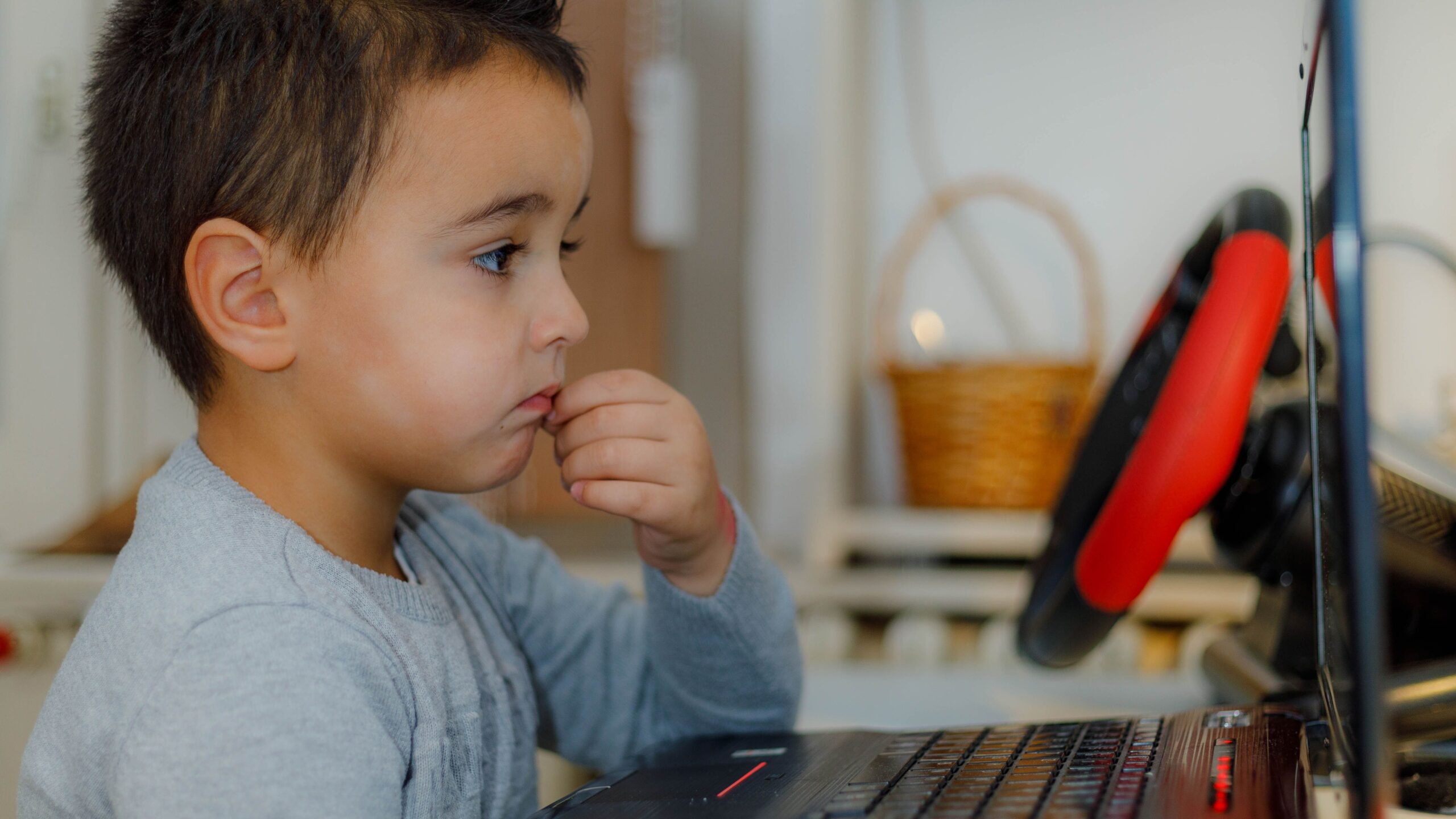
The first thing I did was boring but effective: I sat and watched an entire session with him, start to finish, instead of setting him up and walking away like I usually did. It took maybe twenty minutes out of my evening, and it told me more than any article had. I found out which channels autoplayed into strange content within two or three videos. I found out which ones stayed genuinely safe episode after episode. I found out that typing even an innocent search term into the search bar could surface thumbnails I didn’t want him near, even if the actual videos behind them turned out to be harmless — because thumbnails alone can be upsetting to a small child.
From there, I built a short list of pre-approved channels and shows he could pick from, rather than letting him search or scroll freely through recommendations. It’s a small shift in how the device is used, but it moves control away from a recommendation algorithm — which has no idea he’s three — and back to me, someone who actually does. He still gets to choose what to watch. He just chooses from a shortlist I’ve already sat through myself.
I also turned off autoplay everywhere I could find the setting. On its own, that one change removed most of the risk we’d actually run into, since a huge amount of the content I didn’t want him near wasn’t something he searched for on purpose. It was something that played next, automatically, while I was in the kitchen and not in the room to catch it.
Alongside that, I set a firm rule for myself, not for him: no tablet in a room I’m not also in, at least for now. It’s less convenient than letting him take it to his room for twenty quiet minutes, and some days I really do want those twenty quiet minutes. But at his age, I decided the trade-off wasn’t worth it yet.
The Part I Didn’t Expect: It’s Also a Conversation, Not Just Settings
Settings can only do so much, especially as kids get a little older and start using devices at school, at a cousin’s house, or on a friend’s tablet — places entirely outside anything I can control from our living room. So alongside the technical changes, I started having very small, age-appropriate conversations with him. Not about “predators” or anything heavy or scary — he’s far too young for that framing, and frankly so am I, some days. Just simple things, said casually, not as a big sit-down talk: “if a video ever makes you feel confused or a little scared, you can turn it off and come tell me, and you won’t be in trouble.”
That last part — “you won’t be in trouble” — turned out to matter more than I expected. Child safety organizations generally recommend building this kind of open, non-punitive habit early, well before it feels urgent, precisely so a child already knows how to come to you rather than learning it for the first time in a moment that actually matters, when fear or embarrassment might make them hide something instead.
It felt strange having any version of that conversation with a preschooler who still needs help buttoning his own shirt. But I’d genuinely rather it feel a little early than a little late. Waiting for a scary moment to have the first conversation means the first conversation happens under the worst possible conditions — after something’s already gone wrong, with a child who’s now anxious on top of confused.

Things I Got Wrong Along the Way
I want to be honest about a few missteps, because I think the polished version of this story — “we changed some settings and everything was fine” — isn’t quite the whole truth.
For a while, I overcorrected and banned screens almost entirely for about ten days, which mostly just made bedtime and dinner prep genuinely harder for me, without teaching him anything useful about how to navigate media safely. Complete avoidance isn’t really a life skill; at some point he’s going to be around screens with less supervision than I can provide, whether at school, at a relative’s house, or years from now with his own device, and some guided exposure now, with me right there, seemed more useful long-term than pretending screens don’t exist.
I also, early on, reacted too visibly when I saw something concerning — gasping, grabbing the tablet fast, turning it off abruptly. It scared him more than the content itself had, a couple of times. I learned to calmly say “let’s watch something else” and switch it, without making my own alarm the main event. Kids pick up on our reaction as much as, sometimes more than, what actually happened on screen.
What I’d Tell a Parent Just Starting to Think About This
Start with autoplay, not with taking devices away entirely. It’s the single change that removes the most risk for the least conflict, and honestly, your child probably won’t even notice it happened.
Watch one full session with your child before assuming any platform or channel is safe, even ones with a strong “kids” reputation. What looks safe from the app icon and the first video is not always safe two or three videos later, once the algorithm starts choosing for you.
Build the pre-approved list once, and let choosing within it feel like real choice to your child, so it doesn’t feel like restriction from their side, even though it fully is one from yours.
And don’t wait for a scary moment to start the conversation. Ours started with something mild — a strange video, not a genuinely dangerous one — and I’m glad it happened that way. It gave us a low-stakes reason to start talking about “coming to tell me” before anything more serious ever had the chance to come up.
Where We Are Now
He still watches his shows. I still let him have that time, mostly guilt-free now, because I’ve seen how much it’s genuinely helped me get dinner made and given him a kind of downtime he clearly needs after a full day. What’s different isn’t how much he watches. It’s that I no longer assume the app is watching out for him on my behalf. I am — just with a little less hovering, and a lot less anxiety, than that first strange evening made me think I’d need for the years ahead.
Aina Arif is a mother of two and the founder of NatureNestia. She writes about the parts of parenting that don’t always make it into the parenting books.

Aina Arif is a mother of two young children and the founder of NatureNestia. Based in Pakistan, she spent three years as an early childhood educator before becoming a full-time parent and writer. She writes about learning through play, managing difficult behaviour, and building strong family bonds.